

Many golfers spend hours working on driving distance, yet most strokes during a round happen on the green. Studies from the United States Golf Association (USGA) show that putting typically accounts for 40–45% of total strokes in an average round. This means that improving your putting accuracy can significantly lower your score.
But here’s the overlooked truth: technique alone isn’t always the problem. The equipment you use—especially your putter—plays a critical role in putting performance. The right putter can improve alignment, provide better distance control, and help you build consistency under pressure.
Golf coaches often say that putting is a game of confidence. When your putter fits your stroke and feels balanced, your decision-making becomes easier and your stroke becomes smoother. As a result, golfers often see immediate improvement in their short game.
This guide explains how the right putter can transform your short game. You’ll learn how putter design influences putting accuracy, how professional golfers choose their putters, and what features matter most when selecting the right club for your game.
If you’re searching for practical golf scoring tips that deliver measurable results, improving your putter setup is one of the smartest places to start.
Why Is the Putter the Most Important Club for Golf Scoring?
Short answer: The putter influences nearly half of your strokes in a round, making it the single most impactful club for lowering scores.
Most golfers underestimate how much putting affects their final score. According to data from the PGA Tour, professional players average around 29 putts per round. Amateur golfers typically average 34–36 putts. That difference alone can account for several strokes per round.
Improving putting accuracy therefore offers one of the fastest ways to reduce scores.
Why Putting Matters So Much
- Nearly half of all strokes occur on the green
- Better putting improves scoring consistency
- Confidence increases when you trust your equipment
- Distance control prevents costly three-putts
Consider a simple scenario:
| Skill Level | Average Putts Per Round | Impact on Score |
|---|---|---|
| Beginner | 36+ | Higher scores due to three-putts |
| Intermediate | 32–34 | Moderate scoring consistency |
| Advanced | 28–30 | Stronger short-game performance |
Even reducing two putts per round can lower your score by multiple strokes over time. That is why choosing the right putter becomes a key part of improving putting performance.
How Does the Right Putter Improve Putting Accuracy?
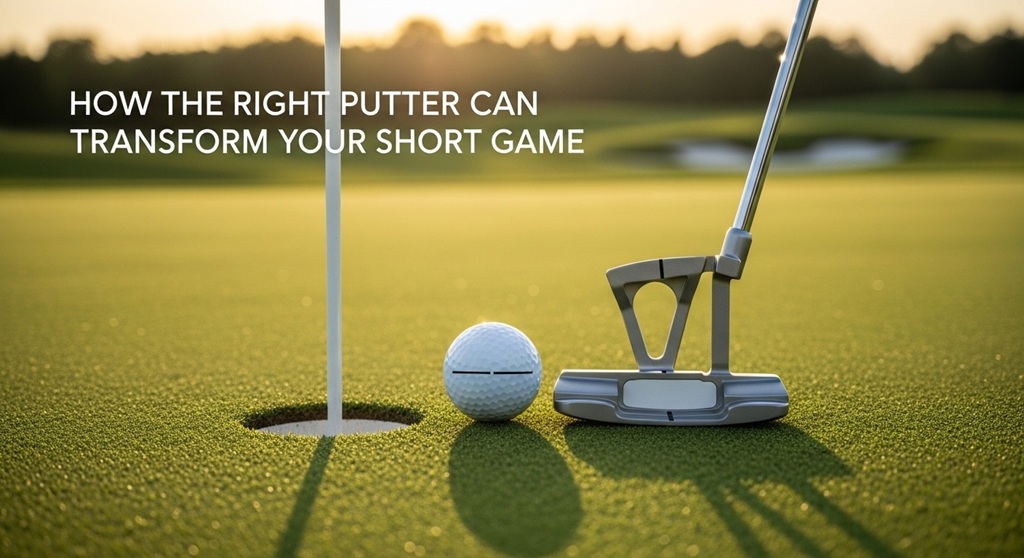
Short answer: A properly fitted putter improves alignment, stroke consistency, and distance control—three factors that directly affect putting accuracy.
Putting accuracy depends on a combination of mechanics and equipment design. The right putter helps guide the stroke path and improves visual alignment.
Key Ways a Putter Influences Accuracy
1. Alignment Support
Modern putters often include alignment lines or visual guides on the clubhead. These help golfers aim the putter face directly toward the target line.
Research published in golf equipment testing studies shows that golfers using alignment-assisted putters improved aim accuracy by 10–20% during practice trials.
2. Face Balance and Stroke Type
Different golfers have different putting strokes. Some strokes move straight back and through, while others follow a slight arc.
- Face-balanced putters suit straight strokes
- Toe-hang putters suit arc-style strokes
Using the wrong style can lead to inconsistent ball contact and reduced putting performance.
3. Weight Distribution
Modern putters use perimeter weighting to stabilize the clubhead. This reduces twisting on off-center strikes and helps maintain consistent ball roll.
The result is better distance control and improved putting accuracy.
What Types of Putters Are Available?
Short answer: The three main putter styles are blade putters, mallet putters, and mid-mallet putters, each designed for different strokes and preferences.
Understanding putter styles helps golfers select equipment that matches their stroke mechanics.
Blade Putters
Blade putters feature a traditional, narrow clubhead design.
- Preferred by experienced golfers
- Offers more feel and feedback
- Works well with arc strokes
Many professional golfers continue to use blade putters because of the control they offer on fast greens.
Mallet Putters
Mallet putters have a larger clubhead with higher stability.
- Higher forgiveness
- Better alignment aids
- Improved stability on off-center hits
Because of their design, mallet putters often improve putting performance for beginners and intermediate golfers.
Mid-Mallet Putters
Mid-mallet putters combine elements of blade and mallet designs.
- Moderate forgiveness
- Balanced feel
- Suitable for multiple stroke types
These are popular among golfers seeking versatility.
What Features Should You Look for in a Putter?
Short answer: Focus on length, grip style, alignment aids, and head weight when selecting a putter.
The right specifications ensure that the putter works with your natural stance and stroke.
Important Putter Features
| Feature | Why It Matters |
|---|---|
| Putter Length | Ensures proper posture and eye position |
| Head Weight | Improves distance control |
| Grip Size | Reduces wrist movement |
| Alignment Lines | Helps aim accurately |
Professional club fitting sessions often measure these factors to maximize putting accuracy.
Can the Right Putter Reduce Three-Putts?
Short answer: Yes. A putter that improves distance control and alignment can significantly reduce three-putts.
Three-putts usually occur when golfers misjudge distance on the first putt. Equipment can influence this more than many players realize.
A study analyzing amateur golfers found that improving first-putt distance control reduced three-putts by nearly 30% during practice rounds.
How the Right Putter Helps
- More consistent roll off the clubface
- Better feedback for speed control
- Improved alignment on longer putts
Over an entire season, reducing just one three-putt per round can significantly improve scoring averages.
How Do Professional Golfers Choose Their Putters?
Short answer: Professionals select putters based on stroke mechanics, green speed preferences, and extensive testing.
PGA Tour players often spend hours working with equipment specialists to find the perfect putter configuration.
Factors Professionals Consider
- Stroke arc analysis using motion technology
- Green speed compatibility
- Head weight customization
- Grip preference
For example, many tour professionals test multiple putters under identical conditions before choosing one for competition.
This data-driven approach highlights how equipment selection influences putting performance.
How Can You Choose the Best Putter for Your Game?
Short answer: Test multiple putters, analyze your stroke style, and focus on comfort and alignment.
While equipment technology continues to evolve, the most important factor remains how the putter fits your stroke.
Practical Golf Scoring Tips for Choosing a Putter
- Test both blade and mallet designs
- Check eye position relative to the ball
- Focus on alignment confidence
- Practice distance control during testing
Golf instructors often recommend spending time on the practice green before committing to a new putter.
Small improvements in putting accuracy can produce measurable results during real rounds.
Conclusion: Why the Right Putter Can Change Your Golf Game
Improving your short game doesn’t always require a complete swing overhaul. Often, meaningful progress begins with the equipment you use on the green.
The right putter can improve alignment, stabilize your stroke, and provide the feedback needed for consistent distance control. Because putting accounts for nearly half of your strokes, even small improvements can significantly lower your score.
Golfers who focus on putting performance frequently see faster results than those who focus only on long-game distance.
If you want to sharpen your short game, start by evaluating your current putter. Test different designs, analyze your stroke type, and choose a putter that supports your natural mechanics.
Call to Action: Next time you visit the practice green, test different putters and track your results. Improving putting accuracy could be the easiest way to transform your golf scoring performance.
Frequently Asked Questions (FAQs)
1. What putter style is best for beginners?
Mallet putters are often recommended for beginners because they provide more forgiveness and better alignment aids. Their larger head design improves stability and helps maintain consistent contact with the ball.
2. Does putter length affect putting accuracy?
Yes. Putter length affects posture, eye alignment, and stroke mechanics. If the putter is too long or too short, it can disrupt your stance and reduce accuracy.
3. How often should golfers replace their putter?
Most golfers only replace their putter when performance declines or technology significantly improves. Unlike drivers, putters can remain effective for many years.
4. Are expensive putters better?
Not necessarily. The best putter is the one that matches your stroke and feels comfortable during practice and play. Proper fitting matters more than price.
5. What grip size is best for putting?
Larger grips help reduce wrist movement and promote a smoother stroke. Many golfers prefer oversized grips for improved control.
6. Can practice alone improve putting performance?
Practice is essential, but equipment fit also matters. A properly fitted putter can make practice sessions more effective by supporting consistent mechanics.
Read More Also: Three essential estate planning documents
Find out: What does being ‘trauma-informed’ mean?




Leave a Reply