
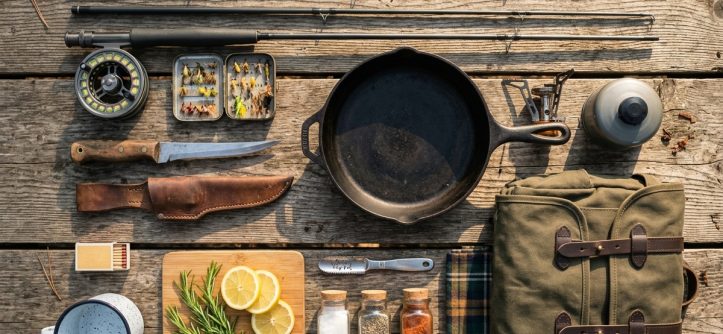
You’ve got the campsite booked and the rods rigged, but the moment your first fish hits the bank, a different kind of question appears: now what? Catching your own dinner sounds simple until you’re holding a wriggling fish with no plan, no knife, and no fire. A good catch-and-cook trip depends less on luck and more on having the right gear staged before you leave. Even small tackle choices matter—hook sizing affects both your catch rate and how easily you can clean your fish, and a quick look at hook 4 0 //fishinggearshops.com/fishing-gear/rods-reels/hooks-tackle/3-0-vs-4-0-hook/ sizing helps you match your hooks to the fish you actually plan to eat. Here’s what to pack so the eating part goes as well as the catching part.
Quick Answer
To cook what you catch on a camping trip, you need three gear categories: catch-and-handle tools (rod, hooks sized to your target fish, pliers, a sharp fillet knife, a cutting board), a cooking setup (stove or fire grate, pan or foil, oil, seasonings, and a heat-proof surface), and safety items (cooler with ice, clean water, food-safe storage, and a trash bag for scraps). Pack by cooking method, not by category count, and keep cleaning tools separate from eating tools.
Key Takeaways
- Match your hook size to the fish you intend to eat—hooks that are too large or too small both cost you clean, legal catches.
- A sharp fillet knife and a dedicated cleaning surface are the two items most often left at home and most missed at the water.
- Decide your cooking method (fire, stove, foil, or pan) before you pack, because each method requires different gear.
- Food safety on a camping trip means ice, clean water, and separating raw fish handling from eating surfaces.
- Check local fishing regulations for size and bag limits before you harvest anything, since not every catch is legal to keep.
What Belongs in a Catch-and-Cook Gear Kit
A catch-and-cook kit is different from a standard camping kitchen box or a standard tackle box. It’s the overlap between the two: the tools that turn a live fish into a cooked meal without a return trip to the car. Think of it in three layers—catching, cleaning, and cooking—and pack each layer so it can be reached independently.
Catching and Handling Tools
Start with your normal fishing setup, then add the items that make handling a fish you plan to eat easier and more humane:
- Rod and reel matched to your target species
- Hooks in one or two sizes appropriate to the fish you expect—undersized hooks can gut-hook small fish you intended to release, while oversized hooks can miss the fish you meant to keep
- Needle-nose pliers or forceps for quick hook removal
- A wet rag, glove, or landing mat so you can grip the fish without stripping its protective slime layer
- A stringer, live well, or cooler with ice if local rules allow keeping fish on a stringer
Hook sizing is worth a short pause before your trip. A hook that’s too small for the species you’re after tends to bend or pull free, and a hook that’s too large can fail to set at all. If you’re weighing whether a mid-size hook fits your target fish better than a larger one, compare the two side by side before you commit. The right choice depends on the fish’s mouth size and your bait, not on a universal rule.
Cleaning and Filleting Tools
This is where most catch-and-cook trips fall apart. Cleaning a fish on a rock with a dull pocketknife is slow, messy, and often unsafe. Pack:
- A sharp fillet knife with a flexible blade, plus a second knife or a sharpening stone as backup
- A small cutting board or a dedicated cleaning mat you don’t mind getting fishy
- A bucket or bag for guts and scraps—never leave them at the water or in camp
- Clean water and paper towels or a rag for wiping hands and surfaces
- A separate bag or container for the cleaned fillets so they stay off your other gear
If you plan to cook the fish whole instead of filleting it, you can skip the fillet knife in favor of a sturdy chef’s knife and a pair of kitchen shears, but you’ll still want a dedicated cleaning surface. A piece of heavy foil or a silicone mat works in a pinch and folds flat in your pack.
Cooking Gear by Method
Cooking method drives the gear list more than any other decision. Use this table as a starting point and pack only the row that matches your plan.
| Cooking Method | Core Gear | Best For | Main Trade-off |
|---|---|---|---|
| Campfire grate or grill | Fire grate, tongs, foil, oil, seasonings | Whole fish, larger fillets, groups | Depends on dry wood and fire rules; harder to control heat |
| Portable camp stove | Stove, fuel, frying pan, spatula, oil | Fillets, quick meals, rainy days | Extra weight and fuel; some areas ban stoves during fire bans |
| Foil packets | Heavy-duty foil, butter or oil, vegetables, seasonings | Simple one-packet meals, minimal cleanup | Easy to overcook; limited control over browning |
| Skewers over coals | Metal skewers, heat-proof gloves, basting brush | Chunks of firm fish | Delicate fish fall apart; requires steady coals |
Whichever method you choose, add a heat-proof surface to set hot pans on, a lighter or fire starter, and a small container for used oil or grease so you don’t pour it on the ground.
How to Plan Meals Around What You Catch
Don’t build a menu that depends on catching dinner. Build a menu that has a fallback, then treat the fish as a bonus. This is the difference between a relaxed trip and a hungry, frustrated one.
Strategies for a Realistic Meal Plan
- Bring a backup protein. Canned beans, cured sausage, or dehydrated meals cost little space and remove the pressure of a skunked afternoon.
- Pack ingredients that pair with any white fish. Oil or butter, lemon, garlic, salt, pepper, and a simple spice blend work across species.
- Prep vegetables at home. Chopped onions, peppers, and potatoes cook faster and save knife work at camp.
- Match your hook plan to your meal plan. If you want a pan-sized fish for one, don’t size your tackle for trophy fish.
Portioning Rules of Thumb
A rough guide most campers find workable: a whole pan-sized fish feeds one person, and a pound of cleaned fillets feeds about two. These vary widely by species and appetite, so treat them as a starting point rather than a rule. If you’re cooking for a group, plan for one backup portion per person.
Food Safety and Leave-No-Trace Essentials
Fish spoils faster than most campers expect, especially in warm weather. Handle it like you would at home, but with more caution because you have no refrigerator.
- Ice or a cooler: Keep cleaned fish on ice until you cook it. If you can’t refrigerate it, cook it the same day.
- Clean water: Bring enough for handwashing, surface wiping, and rinsing tools, separate from drinking water.
- Separate surfaces: Never clean fish on the same surface you’ll eat from without washing it first.
- Scrap disposal: Pack out guts, scales, and bones unless local rules specifically allow burying or discarding them in the water. Leaving scraps in camp attracts wildlife.
- Regulations: Check size limits, bag limits, and any restrictions on keeping certain species before you leave. Rules vary by water body and season.
Common Mistakes That Ruin Catch-and-Cook Trips
Most of these are avoidable with a few minutes of planning.
- Forgetting a sharp knife and a cleaning surface. This is the single most common gap. A dull blade and a dirty rock turn a five-minute job into a frustrating one.
- Sizing hooks wrong for the fish you plan to eat. Oversized hooks reduce hookups on smaller fish; undersized hooks bend and gut-hook fish you meant to release.
- Relying on catching dinner. Always pack a backup meal.
- Leaving fish uncleaned too long. Clean and chill fish as soon as you reasonably can.
- Ignoring fire bans. Many areas restrict open fires during dry seasons, which can eliminate your cooking plan. A camp stove is often the safer backup.
- Not checking regulations. Keeping an undersized or protected fish can result in fines, and it’s an avoidable mistake.
Frequently Asked Questions
Do I need a special knife to clean fish at camp?
A flexible fillet knife is the most practical choice, but any sharp knife with a thin blade will work. What matters more than the specific knife is that it’s sharp and that you have a dedicated cleaning surface.
How long can I keep a caught fish before cooking it?
In cool weather, a few hours on ice is generally fine. In warm weather, clean the fish promptly and keep it on ice, or cook it the same day. If you have no way to keep it cold, plan to cook it soon after catching.
Can I cook fish directly on a campfire?
Yes, but you’ll get better results with a grate, a foil packet, or a skewer. Direct flame tends to char the outside before the inside cooks through, and delicate fish fall apart. Steady coals work better than open flames.
What’s the easiest fish meal for a beginner camper?
A foil packet with a cleaned fillet, a little oil or butter, salt, pepper, and sliced vegetables is hard to beat. It requires minimal gear, is forgiving of timing, and leaves almost no cleanup.
Do I need a fishing license to keep fish for a meal?
In most places, yes. Regulations vary widely, so check the rules for your specific water body before you fish, and confirm size and bag limits for the species you plan to keep.
What should I do with fish scraps at camp?
Pack them out in a sealed bag whenever possible. Burying or discarding scraps in the water may be allowed in some areas, but it’s often restricted, and scraps left near camp attract wildlife.
Conclusion
A catch-and-cook trip works best when you plan the meal backwards from the cleanup. Bring a sharp knife, a dedicated cleaning surface, and a cooking method you can actually execute at your site. Size your hooks to the fish you intend to eat, keep a backup meal in your pack, and treat food safety as part of the gear list rather than an afterthought. Pack those three layers—catching, cleaning, and cooking—and the eating part of your trip becomes the easiest part of the day.



Leave a Reply