
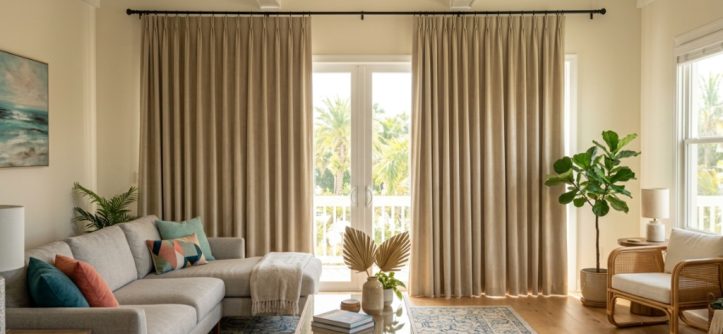
Florida’s intense sun and humid subtropical climate create a unique challenge for homeowners. Your air conditioning works overtime for eight months of the year, and standard window coverings often fail to block the heat that radiates through glass. The result? High electric bills and rooms that feel stuffy even when the AC is running. The solution isn’t just any curtain—it’s a thermallly insulated window treatment designed specifically for your climate. This guide walks you through exactly how to choose, buy, and use energy efficient curtains Florida residents can rely on, without wasting money on the wrong product.
Key Takeaways
- Focus on three-layer construction with a dense inner core to ensure real thermal resistance, not just a dark color.
- Choose curtains with a high R-value (between 0.3 and 0.5) and a light-reflecting backing to combat Florida’s solar gain.
- Installation is just as important as the fabric: mount the rod high and wide to seal the window pocket and eliminate air gaps.
- Pairing curtains with cellular shades offers the best energy savings, cutting heat transfer by up to 40% more than curtains alone.
- Always verify the manufacturer’s claimed energy efficiency with independent test data or reputable review platforms before purchasing.
What Actually Makes a Curtain “Energy Efficient” in Florida?
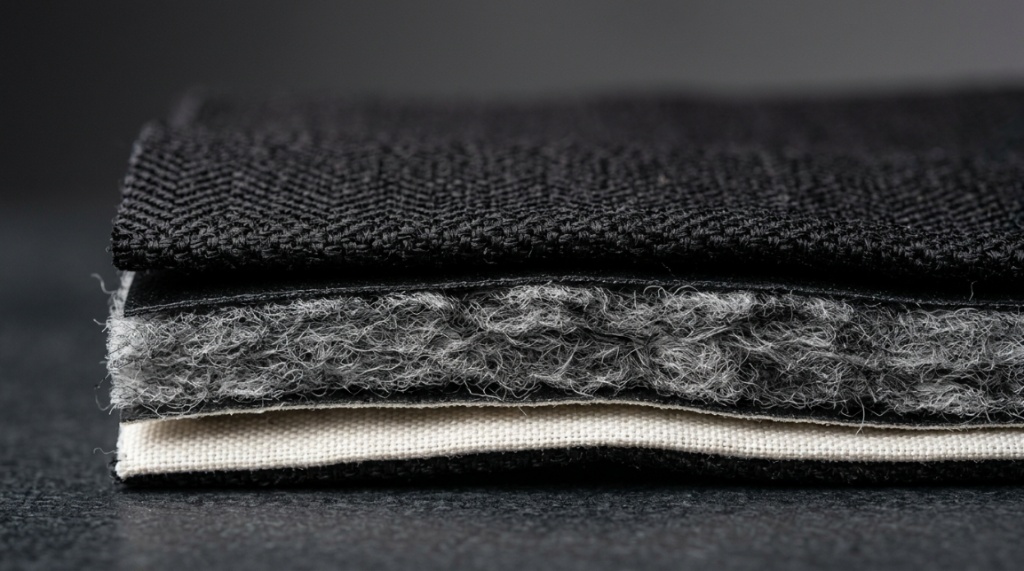
Not every curtain labeled “thermal” will perform well in Florida’s specific conditions. The state’s energy challenge is twofold: intense direct solar radiation and high outdoor humidity. An effective curtain must address both. The most critical element is the inner lining. A truly energy-efficient curtain uses a multi-layer construction—typically three layers. The outer fabric protects against UV rays, the middle layer (usually polyester or acrylic foam) acts as a thermal break, and the backing is often a reflective material like white acrylic or aluminum vapor. This combination blocks solar heat from entering the room and prevents indoor cool air from escaping through the window glass.
Another vital but often overlooked factor is the weave density. A loosely woven linen curtain, even if thick, allows heat to pass through easily. You need a tightly woven fabric with a high thread count. When you hold the curtain up to a light source, you should not see any pinpricks of light. That tight weave is your first line of defense against solar gain. If you want to compare specific products, you can check detailed breakdowns of energy-efficient curtains Florida homeowners have found effective, which often include fabric specifications and performance insights.
Key Performance Metrics to Look For (Beyond Color)
When shopping online or in a store, you’ll encounter terms like “thermal,” “blackout,” and “insulated.” These words are used loosely. You need to look for specific, measurable data.
R-Value and U-Value
The R-value measures the material’s resistance to heat flow. For curtains, the maximum R-value you typically find is around 0.5. While this sounds low, it is significant when layered over a window. Look for an R-value of at least 0.3. More importantly, check the U-value, which measures the rate of heat transfer. A lower U-value is better. Curtains with an insulating thermal backing specifically list these numbers. If a product page doesn’t display them, that is often a red flag that the manufacturer is not testing or verifying performance,
For automated upkeep after cooling your space, check out our guide on finding a Cheap Robot Vacuum Mop Combo in Washington Without Sacrificing Quality.
Light Blocking vs. Heat Blocking
Blackout curtains block light, which is excellent for sleeping, but they do not automatically block heat. Heat is transferred via infrared radiation. A curtain needs a metallic or reflective backing to bounce that radiation back outside. Without it, the curtain absorbs the heat and slowly releases it into the room. During a Florida summer, this absorption effect becomes noticeable by late afternoon. If you see the word “thermal” but no mention of a reflective core or specific test results for solar reflectance, the product may only be a standard blackout curtain with a marketing upgrade.
How to Choose the Right Fabric for Florida’s Climate
The fabric content determines durability, heat resistance, and moisture management. Florida’s humidity can cause some materials to mildew or shrink. You want a fabric that is synthetic or a synthetic blend, as natural fibers like cotton absorb moisture and lose their thermal efficiency when damp.
Polyester and Acrylic Blends
Polyester is the workhorse of thermal curtains. It’s durable, resistant to UV damage, and does not absorb water. Look for a high-denier polyester (thicker threads) or a velvet-like texture that increases density. Acrylic is also excellent because it resists fading and has a natural wool-like warmth without the weight.
The Reflective Backing
Inspect the back of the curtain. It should have a distinct layer of white acrylic foam or a metallic coating. This backing serves two purposes: it reflects solar heat, and it creates an air pocket between the fabric and the window. That air pocket is the actual insulation. If the backing is merely a thin layer of colored dye, it won’t help you.
What to Avoid
Avoid pure cotton curtains, even if they are labeled as heavy. Cotton is breathable, which is great for bedsheets, but terrible for window insulation. Also, avoid grommet tops if you need the maximum sealed environment. Grommets create large gaps where air leaks. A rod-pocket or back-tab style header hugs the rod more tightly, preventing air circulation behind the curtain.
Measuring and Installation: The Missing 20% of Efficiency
You can buy the most expensive curtain on the market, but if it doesn’t cover the window properly, you’ll lose up to 50% of the potential energy savings. The fit is as important as the fabric.
Width: Wider Is Better
Your curtain panel must be significantly wider than the window. Aim for a combined width of at least 1.5 to 2 times the window width. For a 50-inch window, you need 100 inches of total curtain fabric. This allows the curtains to gather in folds. The folds create tiny air pockets that act as mini-insulators. If the curtain is just barely wider than the window, it hangs flat and conducts heat directly.
Installation Height
Mount the rod 4 to 6 inches above the window frame. This prevents warm air from flowing down from the ceiling and bypassing the curtain barrier. Whether you mount inside the frame or outside, the critical rule is to overlap the curtain edge onto the wall by at least 2 inches on each side. This seals the sides where most air leakage occurs.
The Floor Gap
The bottom of the curtain must pool slightly on the floor or touch the sill completely. A 1-inch gap at the bottom is acceptable if you need airflow for condensation, but a floor-length curtain that just skims the floor is best. This seals the convection current that pushes hot air from the window into the room.
Where to Buy and How to Verify Claims
In Florida, you have three main purchasing avenues: big-box home improvement stores, online retailers, and custom drapery shops. Each has trade-offs.
Big-Box Stores vs. Online
Home improvement stores like Home Depot or Lowe’s carry brands like Eclipse and Nicetown. These are budget-friendly and offer immediate satisfaction, but the selection of truly high-R-value curtains is limited. Online retailers like Amazon offer a vast selection, but you cannot feel the fabric. When buying online, filter reviews for keywords like “Florida heat” or “thermal” and ignore reviews that only mention light blocking. Also, check the return policy. You want to buy from a site that allows returns on opened curtains, so you can test them in your actual window.
Reading the “Certification” Labels
Be cautious of marketing labels. You will often see “Energy Saving Certified” on a package. This is rarely a third-party certification. A reliable indication is compliance with ASHRAE standards or a visible test report from a recognized lab like SGS or Intertek. If the product page or tag does not provide specific numbers (like a 25% reduction in heat gain), treat the claim with skepticism. For a deeper dive into what specific brands promise versus how they perform in real homes, the review roundup covers the nuances of various options on the market.
Combining Curtains with Other Window Treatments
The single best way to maximize energy efficiency is to layer your curtains over a cellular shade. This is not just redundancy; it is strategic physics.
The Layering Strategy
Install a white or light-colored cellular shade (also known as a honeycomb shade) directly against the glass. The honeycomb structure traps air. Then, hang your thermal curtain over it. The shade handles the initial solar radiation. The curtain then blocks the heat that passes the shade and reflects the rest. This combination can reduce heat transfer through the window by up to 45% compared to a single treatment.
Seasonal Adjustments
In the summer, keep the curtains closed during the peak sun hours (1 PM to 5 PM). In the winter, if you get a rare cold snap, open the curtains during the day to let the sun warm the room, then close them at night to keep the heat in. This manual adjustment is the most significant behavioral change you can make to increase the efficiency of any window covering.
Lifespan and Maintenance Considerations
Florida’s climate is brutal on textiles. The sun’s UV rays will degrade fabrics, and humidity invites mildew. Your energy-efficient curtains should last at least five to seven years with proper care.
Cleaning Rules
Check the tag. Most thermal curtains with a foam backing cannot be machine washed—the foam will crack and delaminate. Typically, you should vacuum them with a brush attachment every two weeks and spot clean only. If you must wash them, hand wash cold and hang dry in the shade. Never put them in a dryer, as the heat will destroy the reflective backing. This is a frequent mistake that leads to premature replacement.
UV Degradation
Even with a backing, the front face of the curtain will fade over time. To extend the life, keep the curtain pulled back during the early morning when the sun is lower and less intense. Alternatively, apply a clear UV film to the window glass itself. This blocks 99% of UV rays without impacting how dark the room gets, protecting your curtain’s fabric and your flooring.
Frequently Asked Questions
What is the best color for energy-efficient curtains in Florida?
Light colors with a white or metallic backing are best for reflecting heat. A white or cream front with a white acrylic backing reflects solar radiation effectively. Darker colors absorb heat, which then radiates into the room, making them less effective for summer cooling.
Do blackout curtains lower electric bills?
Yes, but only if they have a thermal backing in addition to being opaque. Standard blackout curtains reduce light but may not block heat transfer significantly. Look for “thermal” plus a high R-value to ensure electric bill savings.
Can I use thermal curtains on a sliding glass door?
Yes, but you need extra-wide and extra-long panels. For sliding doors, use a curtain track with a curved corner and panels with a heavy core. The weight of the curtain is essential to prevent gaps, and using two panels that overlap in the middle with a magnetic closure is recommended.
Should I hang curtains inside or outside the window frame?
Outside the frame is better for energy efficiency. Mounting high on the wall and extending wide creates a larger air pocket and seals the window frame. Inside-mount curtains leave a gap at the top and sides where warm air escapes.
Are custom thermal curtains worth the extra cost in Florida?
Potentially, but only if you have non-standard window sizes. Custom curtains ensure a perfect seal, which is crucial. If your windows are standard sizes (36, 48, 60 inches), high-quality off-the-shelf panels can perform equally well at half the cost.
Conclusion
Selecting the right window coverings in Florida is not about finding the “prettiest” curtain—it is about understanding heat physics and your own window architecture. Look for multi-layer construction with a reflective backing, prioritize a tight weave, and measure for a precise fit. Never underestimate the importance of installation height and overlapping the window frame. By combining a well-constructed curtain with a cellular shade and following the maintenance guidelines, you can dramatically reduce your cooling load, lower your energy bills, and increase your comfort. Start by measuring your windows and identifying the specific gaps in your current window treatments—your AC (and your wallet) will immediately benefit.



Leave a Reply