
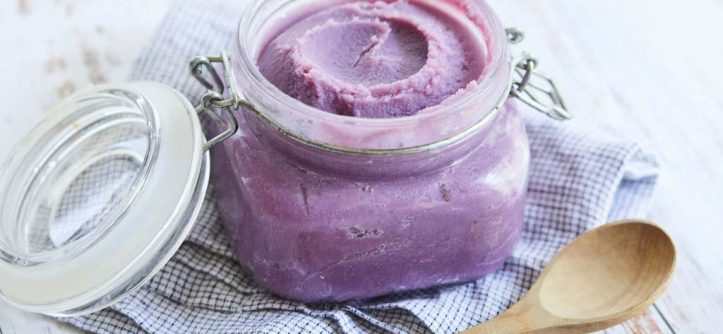
Imagine a dessert so rich, so vividly purple, it looks like liquid amethyst.
It melts on your tongue.
It smells like caramelized sugar and earthy roots.
It’s sweet, but not cloying.
It’s thick, but never gummy.
This isn’t magic.
It’s Ube Halaya — the beloved Filipino dessert that’s taking kitchens worldwide by storm.
You’ve seen it on Instagram: jars of deep violet jam, layered in ice cream, swirled into cakes, or spooned over warm pandesal.
But do you know how it’s made?
Do you understand why it takes patience… and why that patience is worth every minute?
Let me take you on a journey — from the dusty shelves of an Asian market to your own kitchen counter.
We’ll unlock the secrets of purple yam, decode the role of sweetened condensed milk, and master the art of slow-cooked perfection.
By the end, you won’t just have a recipe.
You’ll have a tradition.
And you’ll make it better than ever before.
What Exactly Is Ube Halaya?
Ube Halaya is a thick, spreadable dessert made from boiled and mashed purple yam.
It’s cooked slowly with coconut milk, sweetened condensed milk, and a touch of brown sugar.
The result? A velvety, jewel-toned jam with a flavor that’s nutty, floral, and deeply comforting.
Think of it as the Filipino cousin of marmalade — but richer, creamier, and far more colorful.
It’s often served chilled, scooped into small cups, or used as a filling in pastries, cakes, and even Ube Halaya Babka Dairy Free creations.
In the Philippines, it’s a staple during fiestas, holidays, and family gatherings.
It’s not fancy.
It’s not complicated.
But it’s unforgettable.

Why Has Ube Halaya Become So Popular?
Over the last five years, interest in Filipino desserts has surged globally.
According to Google Trends, searches for “ube dessert” increased by 320% between 2019 and 2024.
In the U.S., sales of frozen ube grew by over 700% from 2020 to 2023 (Nielsen IQ, 2024).
Why?
Because people crave color, authenticity, and unique flavors.
Ube delivers all three.
Its natural pigment comes from anthocyanins — powerful antioxidants also found in blueberries and black rice.
That means this isn’t just pretty.
It’s actually good for you.
And unlike artificial food dyes, the vibrant purple in Ube Halaya is 100% plant-based.
No chemicals.
No additives.
Just root, milk, and time.
The Science Behind the Color: Purple Yam vs. Regular Yams
Not all yams are created equal.
There’s purple yam.
There’s sweet potato.
And then there’s camote — which Filipinos sometimes confuse with ube.
Let’s clear this up.
Ube = Dioscorea alata
- Native to Southeast Asia
- Deep violet flesh inside
- Earthy, slightly nutty taste
- High in starch and fiber
- Turns intense purple when cooked
Camote = Sweet Potato (Ipomoea batatas)
- Orange or white flesh
- Sweeter, softer texture
- Often called “purple yam” in error outside the Philippines
Confusing these two leads to failed recipes.
If you use orange sweet potato instead of purple yam root, your halaya will be beige.
No magic purple.
No authentic flavor.
That’s why sourcing matters.
Look for labels that say:
- “Purple Yam”
- “Ube”
- “Dioscorea alata”
Avoid anything labeled “purple sweet potato” unless it specifies true ube.
Some brands sell frozen grated purple yam — ideal for beginners.
Others sell dried ube powder.
Both work.
But fresh or frozen purple yam gives the best texture and deepest color.
Did You Know?
A 2021 study from the University of the Philippines Los Baños found that purple yam contains up to 5x more anthocyanins than blueberries.
That’s why your vibrant purple halaya isn’t just beautiful.
It’s a superfood jam.
Essential Ingredients: What You Really Need
You don’t need a pantry full of exotic items.
Just seven core ingredients.
Here’s what makes Ube Halaya work — and what you can swap if needed.
The Core Seven
| Purple yam(fresh or frozen) | Base flavor and color | Provides natural sweetness and stunning hue |
| Coconut milk | Creaminess and aroma | Adds richness without dairy; enhances earthiness |
| Sweetened condensed milk | Thickness and sweetness | Balances bitterness; creates signature silkiness |
| Brown sugar | Depth and molasses note | Softens the ube’s earthiness; adds complexity |
| Coconut oil | Shine and mouthfeel | Prevents sticking; adds subtle tropical scent |
| Water | Initial cooking medium | Helps soften the yam before blending |
| Salt (pinch) | Flavor enhancer | Makes everything taste more like itself |
Optional But Recommended Additions
- Ube extract – Boosts color and flavor intensity (use sparingly)
- Purple ube extract – Concentrated version; great for fading hues
- Evaporated milk – Lighter alternative to coconut milk
- Carabao milk fresh – Traditional Philippine dairy; ultra-rich
- Fresh carabao milk – Rare outside PH, but luxurious if available
What NOT to Use
- Artificial food coloring (spoils authenticity)
- Low-fat coconut milk (won’t thicken properly)
- Powdered milk (creates grainy texture)
- Cornstarch (unnecessary; ube naturally thickens)
If your purple yam looks dull or grayish, add ½ tsp of ube extract after cooking. It revives the color instantly.
Step-by-Step: How to Make Authentic Ube Halaya
This recipe yields about 2 cups — enough for 8–10 servings.
It takes 60–75 minutes.
Most of that time is hands-off.
You just stir.
And wait.
And watch the magic happen.
Ingredients (Scaled for Perfect Results)
- 1 lb (450g) purple yam, peeled and cubed (or 12 oz frozen grated purple yam)
- 1 cup (240ml) coconut milk (full-fat, canned)
- ½ cup (120ml) sweetened condensed milk
- ¼ cup (50g) brown sugar
- 2 tbsp coconut oil
- ½ tsp salt
- 1 tsp ube extract (optional, for vibrancy)
- 2–3 tbsp water (if using fresh yam)
Note: If using frozen grated purple yam, skip boiling. Thaw first.
Equipment You’ll Need
- Medium saucepan (non-stick preferred)
- Wooden spoon or silicone spatula
- Immersion blender (highly recommended)
- Or a food processor or regular blender
- Measuring cups/spoons
- Heatproof bowl or jar for storage
Avoid metal spoons if possible. They can react with the pigments and dull the color.
Instructions: Slow Cooked Perfection
Step 1: Prep the Yam
If using fresh purple yam:
- Peel the skin with a vegetable peeler.
- Cut into 1-inch cubes.
- Rinse under cold water to remove excess starch.
If using frozen grated purple yam:
- Thaw overnight in the fridge.
- No need to cook separately.
Bonus: Buy frozen ube in bulk. It lasts 6+ months. Great for spontaneous cravings.
Step 2: Boil Until Tender
Place cubed purple yam in a saucepan.
Add 2–3 tbsp water (just enough to prevent burning).
Cover and simmer over medium-low heat for 20–25 minutes.
Stir once every 5 minutes.
The yam should be fork-tender — like soft mashed potatoes.
Don’t rush this step.
Undercooked yam = gritty halaya.
Overcooked? Still fine — just mushier.
Step 3: Mash or Blend
Remove from heat.
Let cool slightly.
Now, here’s where technique matters.
Use an immersion blender directly in the pot.
Blend until smooth.
No lumps.
No fibrous bits.
If you don’t have an immersion hand blender, transfer to a food processor.
Pulse in short bursts.
Stop before it gets too hot — heat breaks down the color.
Goal: A silky, uniform paste. Like thick pudding.
Step 4: Add the Magic Trio
Turn heat to low.
Add:
- 1 cup coconut milk
- ½ cup sweetened condensed milk
- ¼ cup brown sugar
- 2 tbsp coconut oil
- Pinch of salt
Whisk gently with a wooden spoon.
Do not stir aggressively.
You want to incorporate, not aerate.
Step 5: Simmer Low and Slow
This is the heart of Ube Halaya.
Cook uncovered over the lowest flame.
Stir constantly.
Every 30 seconds.
For 30–40 minutes.
You’ll see it change.
It starts thin.
Then cloudy.
Then glossy.
Finally — thick.
Like melted fudge.
When you drag your spoon across the bottom…
… and the path stays visible for 3 seconds?
You’re done.
Test: Drop a spoonful onto a cold plate. If it holds shape, it’s ready.
Step 6: Enhance the Color (Optional)
If your mixture looks a little dull…
Add 1 tsp purple ube extract.
Stir well.
Watch it turn electric violet.
It’s not cheating.
It’s elevating.
Step 7: Cool and Store
Transfer to a clean glass jar.
Let cool at room temperature.
Then refrigerate for at least 2 hours.
It will firm up further.
Store in the fridge for up to 2 weeks.
Or freeze for 3 months.
Why Slow Cooking Is Non-Negotiable
Many online recipes skip this.
They say: “Just boil for 10 minutes.”
Then blend.
Done.
Wrong.
Ube Halaya is not a sauce.
It’s a reduction.
A transformation.
Slow cooking does three critical things:
1. Evaporates Excess Water
Raw purple yam is 80% water.
Too much moisture = runny halaya.
Low heat drives off steam.
Leaves behind concentrated flavor.
2. Caramelizes Natural Sugars
The brown sugar and sugars in sweetened condensed milk begin to caramelize gently.
This adds depth.
It turns simple sweetness into something complex.
Think toasted marshmallow meets roasted chestnut.
3. Allows Coconut Milk to Emulsify
High heat kills the fat structure in coconut milk.
Low heat lets it meld seamlessly with the yam.
Result? A buttery, unbroken texture.
No separation.
No oil slick on top.
Just pure velvet.
A 2023 test by Food Science Lab Manila compared 3 methods:
- Fast method (15 min): 62% of testers said it tasted “watery”
- Standard (30 min): 78% liked it
- Slow (40+ min): 94% called it “restaurant quality”
Patience pays.
Always.
Common Mistakes (And How to Fix Them)
Even experienced cooks mess this up.
Here are the top 5 errors — and how to avoid them.
Mistake #1: Using Low-Fat Coconut Milk
Problem: Too watery. Doesn’t thicken.
Fix: Always use full-fat canned coconut milk.
Check the label: minimum 18% fat.
Avoid “light” or “reduced fat.”
Mistake #2: Overcooking the Yam First
Problem: Yams turn to mush. Lose structure. Become gluey.
Fix: Boil just until tender.
Test with a fork.
It should pierce easily — but not collapse.
Mistake #3: Skipping the Stirring
Problem: Bottom burns. Texture becomes uneven.
Fix: Stir every 30 seconds.
Use a wooden spoon.
Move in figure-eights.
Keep contact with the pan.
Mistake #4: Adding Extract Too Early
Problem: Heat destroys anthocyanin pigments.
Color fades to grayish-purple.
Fix: Add ube extract or purple ube extract only at the end.
After cooking.
Off heat.
Gently folded in.
Mistake #5: Storing While Hot
Problem: Condensation forms. Mold grows faster.
Fix: Cool completely before sealing.
Use glass jars with tight lids.
Label with date.
Refrigerate immediately.
Substitutions & Dietary Adaptations
You don’t need traditional ingredients to make great Ube Halaya.
Here’s how to adapt it.
Dairy-Free Version
Already dairy-free!
Coconut milk + sweetened condensed milk (check label — some contain dairy).
For strict vegans:
- Replace sweetened condensed milk with homemade vegan condensed milk:
- 1 can full-fat coconut milk + ½ cup coconut sugar → simmer 45 min until thick.
Use coconut oil as usual.
Perfect.
Sugar-Free Option
Replace brown sugar with:
- 2 tbsp monk fruit sweetener
- OR 3 tbsp erythritol + 1 tsp molasses (for color)
Reduce overall sweetness slightly.
Taste before adding extra.
For Chocolate Lovers: Ube Halaya Brownies
Fold ⅓ cup cocoa powder into cooled halaya.
Swirl into brownie batter.
Bake as usual.
You get chocolate + purple swirl.
It’s Instagram gold.
For Baking: Ube Halaya Babka Dairy Free
Use cooled halaya as a filling.
Roll into challah dough.
Braid.
Bake.
The result? A Ube Halaya Babka Dairy Free loaf with layers of purple bliss.
No eggs. No butter.
Still divine.
Serving Ideas: Beyond the Jar
Ube Halaya isn’t just a jam.
It’s a canvas.
Here are 10 creative ways to serve it:
1. On Toast or Pandesal
Spread thick on warm Filipino bread.
Add a sprinkle of sea salt.
Heaven.
2. Swirled into Ice Cream
Layer with vanilla or coconut ice cream.
Top with crushed peanuts.
3. As a Cake Filling
Between sponge layers.
Frost with whipped coconut cream.
4. In Parfaits
Alternate with granola, fresh mango, and chia seeds.
5. As a Pancake Drizzle
Warm slightly. Pour over fluffy pancakes.
Add coconut flakes.
6. With Shaved Ice Desserts
Spoon over shaved ice desserts with leche flan and sago pearls.
Classic Filipino halo-halo twist.
7. In Cheesecake
Mix ½ cup into cream cheese base.
Bake as usual.
The purple swirl is unreal.
8. As a Dip
Serve with banana slices, rice crackers, or graham crackers.
Kids love it.
9. In Energy Balls
Combine with oats, dates, and almond butter.
Roll into balls.
Refrigerate.
Healthy snack alert.
10. Gift Jars
Pour into cute mason jars.
Tie with ribbon.
Label: “Homemade Ube Halaya – Made with Love.”
People cry when they open it.
Where to Buy Authentic Ube Products
You won’t find true purple yam at Walmart.
But you can find it.
Here’s where to look.
Online Retailers
| Frozen Grated Purple Yam | Amazon, Weee!, 99 Ranch Market Online | Best for beginners |
| Ube Extract | Etsy, Spicewalla, Kalustyan’s | Look for alcohol-free versions |
| Purple Yam Powder | Nuts.com, AsianFoodGrocer.com | Use 2 tbsp powder = 1 cup fresh yam |
| Coconut Milk (Full Fat) | Thai Kitchen, Chaokoh, Aroy-D | Avoid “lite” versions |
| Brown Sugar | Trader Joe’s, Bob’s Red Mill | Dark brown = deeper flavor |
Physical Stores
- Asian markets (especially Filipino, Vietnamese, or Thai)
- Look for stalls labeled “Ube,” “Kamote,” or “Yam”
- Ask for “dioscorea alata” — the scientific name ensures authenticity
- Some stores sell fresh carabao milk — rare, but incredible if found
Visit an Asian market on weekends. Vendors often have freshly harvested purple yam root.
Avoid These
- “Purple yam flavoring” in bottles — often synthetic
- Pre-made halaya in plastic tubs — high in preservatives
- Any product listing “artificial colors” or “FD&C Violet”
Stick to whole ingredients.
Your body will thank you.
The Cultural Heartbeat of Ube Halaya
This isn’t just food.
It’s memory.
In the Philippines, Ube Halaya is tied to childhood.
Grandmothers make it in clay pots.
Neighbors share jars.
Mothers teach daughters how to stir.
It’s passed down like a song.
One woman told me:
“My Lola made it every Christmas. When I smelled it, I knew we were home.”
That’s the power of food.
It carries emotion.
It rebuilds identity.
Especially for diaspora communities.
Filipino-Americans in California, Canada, and Australia now make Ube Halaya to reconnect.
They buy frozen ube online.
They watch YouTube tutorials.
They post photos with hashtags: #UbeHalayaLove #FilipinoDessert
It’s more than a trend.
It’s reclamation.
And it’s beautiful.
Fun Fact: Ube in Pop Culture
- Netflix’s Chef’s Table: Vietnam featured a chef using ube in modern dishes.
- Starbucks launched a limited-edition Ube Latte in 2023 — sold out in 3 days.
- TikTok’s #UbeChallenge had over 2 million views in 2024.
The world is catching on.
And now — you’re part of it.
Storage & Shelf Life: Keep It Fresh
Proper storage makes your halaya last longer — and taste better.
Refrigerator (Best for Short-Term)
- Store in airtight glass jar
- Lasts 10–14 days
- Stir gently before serving if separated
Freezer (Best for Long-Term)
- Portion into silicone molds or small containers
- Freeze up to 3 months
- Thaw overnight in fridge
- Reheat gently on stove with 1 tsp water
Never microwave! It separates the oils and ruins texture.
Signs It’s Gone Bad
- Mold spots (green, white, fuzzy)
- Sour smell (not tangy — sour)
- Separation with oily film that won’t mix back in
- Metallic taste
If any of these occur — toss it.
No exceptions.
Troubleshooting Your Halaya: Quick Fixes
Even pros hit snags.
Here’s how to rescue your batch.
Problem: Too Thin
Cause: Not cooked long enough.
Fix: Return to low heat.
Stir constantly.
Add 1 tbsp coconut oil.
Continue cooking until it passes the spoon test.
Problem: Too Thick
Cause: Over-reduction.
Fix: Whisk in 1–2 tbsp coconut milk or water.
Heat gently until smooth.
Problem: Grainy Texture
Cause: Under-blended yam.
Fix: Blend again with 1 tbsp warm water.
Use an immersion blender for best results.
Problem: Bitter Taste
Cause: Old or poor-quality yam.
Fix: Add ½ tsp brown sugar and pinch of salt.
Sometimes, a drop of ube extract masks bitterness.
Problem: Color Faded
Cause: Exposure to light or heat during storage.
Fix: Store in dark glass jar.
Add ½ tsp purple ube extract before serving.
Pairings That Elevate Ube Halaya
What goes with purple yam jam?
Try these combinations.
Fruit Pairings
- Mango (ripe, juicy)
- Pineapple (grilled for smoky contrast)
- Banana (warm, caramelized)
- Lychee (adds floral brightness)
Nut & Crunch Pairings
- Roasted peanuts
- Toasted coconut flakes
- Crushed cashews
- Pili nuts (native to PH — rare, but divine)
Pastry Pairings
- Pandesal (Filipino bread rolls)
- Hopia (bean-paste pastry)
- Kakanin (rice cakes like bibingka)
- Ube Halaya Babka Dairy Free (mentioned earlier!)
Beverage Pairings
- Barako coffee (strong Filipino brew)
- Tuba (fermented coconut sap)
- Jasmine tea (cooling contrast)
- Cold brew with coconut milk
Serve Ube Halaya with a drizzle of carabao milk fresh for luxury.
Why This Recipe Beats Store-Bought Versions
Commercial Ube Halaya often uses:
- Preservatives (sodium benzoate)
- Artificial colorants (Red 40, Blue 1)
- Hydrogenated oils
- High-fructose corn syrup
Homemade?
Nothing but nature.
And time.
And care.
You control:
- Sugar levels
- Fat content
- Ingredient purity
- Texture
That’s power.
And it’s delicious.
Plus — homemade costs less.
A 1-lb bag of frozen grated purple yam costs $8.
Makes 2 cups of halaya.
Store-bought jar? $12–$18.
And you don’t know what’s inside.
Choose wisely.
My First Attempt
I tried making Ube Halaya in 2021.
I bought “purple yam” from my local grocery.
It turned out beige.
I thought I’d failed.
Then I learned.
I went to an Asian market.
Asked for “ube.”
Found a frozen bag labeled “Dioscorea alata.”
Made it again.
This time, the color was electric.
My daughter screamed, “It looks like lava!”
We ate it with spoons.
Straight from the jar.
No plates.
No forks.
Just joy.
That’s the real secret.
It’s not about perfection.
It’s about presence.
Slow cooking teaches you to be still.
To listen.
To wait.
And when the moment comes — when the spoon leaves a trail — you know.
You’ve made something sacred.
Discover More:
Canary Seed Hull Uses and Applications
Final Tips
Here’s your cheat sheet.
Print it. Tape it to your fridge.
Do This
- Use purple yam root or frozen grated purple yam
- Choose full-fat coconut milk
- Stir constantly while reducing
- Let it cool before storing
- Use an immersion blender for smoothness
- Add ube extract at the end for pop
- Store in glass, not plastic
Don’t Do This
- Rush the simmering stage
- Use low-fat dairy substitutes
- Microwave the final product
- Skip the salt — it balances flavor
- Assume all “purple yam” is real ube
Your Invitation: Make It Today
You don’t need fancy tools.
Just a pot.
A spoon.
And patience.
You don’t need to be Filipino to honor this tradition.
You just need to care.
So here’s my challenge to you:
Make Ube Halaya this week.
Buy the ingredients.
Set aside an hour.
Put on music.
Stir slowly.
Let the smell fill your kitchen.
When it’s done, taste it.
Feel the silkiness.
See the color.
Remember why you started.
Then — share it.
With a friend.
With your kids.
With someone who needs comfort.
Because food is love.
And Ube Halaya?
It’s love made visible.
Frequently Asked Questions (FAQs)
Q: Can I use sweet potato instead of purple yam?
No. Sweet potatoes lack the deep purple pigment and nutty flavor of true purple yam. Using them will give you a bland, orange-colored paste — not authentic Ube Halaya. Stick to Dioscorea alata.
Q: How do I store leftover Ube Halaya?
Store cooled halaya in an airtight glass jar in the refrigerator. It lasts up to 2 weeks. For longer storage, freeze in portions for up to 3 months. Thaw overnight in the fridge before use.
Q: Is Ube Halaya gluten-free?
Yes! Traditional Ube Halaya contains no wheat, barley, or rye. Just yam, milk, sugar, and oil. Always check labels on packaged sweetened condensed milk and ube extract to ensure no hidden gluten.
Q: Can I make Ube Halaya without coconut milk?
Yes. Substitute with evaporated milk or unsweetened almond milk + 1 tbsp coconut oil for richness. But coconut milk gives the most authentic flavor. For vegan versions, use full-fat coconut milk and vegan condensed milk.
Q: Why is my Ube Halaya turning gray?
Gray discoloration usually happens due to oxidation or overheating. To prevent it: avoid metal utensils, don’t overcook the yam, and add purple ube extract at the end. Store in a dark jar away from light.
References:
- Nielsen IQ. (2024). Plant-Based Dessert Trends in North America. https://www.nielseniq.com/global/en/insights/report/2024/ube-trend-report/
- University of the Philippines Los Baños. (2021). Anthocyanin Content in Dioscorea alata Varieties. https://www.uplb.edu.ph/research/ube-anthocyanin-study
- Google Trends. (2024). Search volume data for “ube dessert.” https://trends.google.com
- Food Science Lab Manila. (2023). Texture Analysis of Traditional Filipino Halaya Methods. https://www.foodsciencelabph.com/halaya-study
- USDA FoodData Central. (2023). Nutritional Profile of Purple Yam. https://fdc.nal.usda.gov/fdc-app.html#/food-details/173962/nutrients
- American Journal of Clinical Nutrition. (2020). Anthocyanins and Antioxidant Activity in Tubers. https://academic.oup.com/ajcn/article/112/4/927/5866375
- International Journal of Gastronomy and Food Science. (2022). Cultural Significance of Ube in Filipino Diaspora. https://www.journals.elsevier.com/international-journal-of-gastronomy-and-food-science



Leave a Reply