
A compact hatchet is one of the most useful tools you can own. It chops kindling, handles campsite tasks, and serves as a reliable emergency tool. However, keeping one in a small apartment or tiny home comes with real responsibility. Storing a sharp blade safely in a limited space requires planning, the right accessories, and a clear set of habits.
This article walks you through everything you need to know. You will learn how to choose the right hatchet for small spaces, store it safely, handle it properly indoors, and teach others in your household to respect it. Whether you live in a studio apartment, a van, or a compact cabin, these tips will help you manage this tool with confidence.
Choosing the Right Compact Hatchet for a Small Space
Not every hatchet suits a small living environment. Size, weight, and blade design all matter when space is limited.
A compact hatchet typically measures between ten and fourteen inches in length. This size is easy to store, light to carry, and powerful enough for most outdoor tasks. Longer axes are harder to manage indoors and require more storage room. Therefore, sticking to a compact size makes practical sense for anyone with limited square footage.
Look for a hatchet with a reliable sheath. A sheath is the protective cover that fits over the blade. It is not optional. Without one, a sharp blade becomes a genuine hazard in any enclosed space. Many quality hatchets include a leather or polymer sheath as standard. If yours does not come with one, buy a separate sheath before bringing the tool indoors.
Additionally, consider the handle material. Fiberglass and hickory handles are both durable and common. Fiberglass handles resist moisture and cracking, which matters in environments with temperature changes. Hickory handles feel natural and absorb shock well. Either choice works well in a small living space.
Understanding the Risks of Keeping Sharp Tools Indoors
A hatchet is not a kitchen knife. It is a heavy, axe-type tool designed for serious cutting tasks. Treating it casually indoors creates unnecessary risk.
The most common hazards include accidental contact with the blade, improper placement near foot-traffic areas, and access by children or pets. However, all of these risks are manageable. The key is building good habits from day one.
Never lean a hatchet against a wall without its sheath. Never place it on a table, bed, or countertop with the blade exposed. Additionally, avoid storing it in a drawer with other items, as this leads to accidental cuts when reaching inside. Small axes deserve dedicated storage, not improvised arrangements.
Understanding the risk is not about fear. It is about respect for the tool and the people sharing your space.
Safe Indoor Storage Solutions for a Compact Hatchet
Finding the right storage method is the most important step. Fortunately, several options work well even when space is tight. These are practical indoor storage tools approaches that combine safety with smart use of limited room.
Wall-Mounted Tool Racks
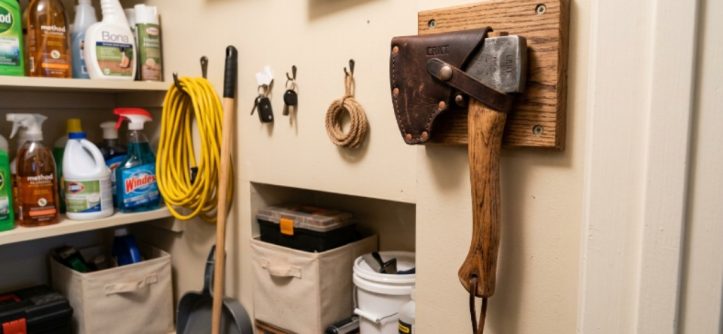
Wall-mounted racks are one of the best solutions for small spaces. They keep the hatchet off the floor, out of reach of young children, and visible at all times. A rack with a locking strap or closed bracket holds the hatchet securely, even with the sheath on.
Mount the rack in a utility closet, mudroom, or entryway. Choose a spot that adults can reach easily but children cannot access without assistance. Keep the sheath on the blade at all times when the tool is on the rack.
Dedicated Tool Bags and Cases
A padded tool bag or hard case offers portable and secure storage. This option works especially well for people who move frequently or store their hatchet between seasonal uses. The bag should close fully and have no exposed zippers near the blade area.
Additionally, a dedicated case protects the sheath itself from wear and tear. This extends the life of both the covering and the blade edge beneath it.
High Shelving in Closets
A high shelf inside a closet is a simple and effective storage spot. Place the hatchet flat with the sheathed blade facing away from the shelf edge. Use a small bin or container to keep it from rolling or sliding.
This method works well in studio apartments where wall space is limited. The closet keeps the tool out of sight and out of reach without requiring any special hardware.
Lockable Storage Boxes
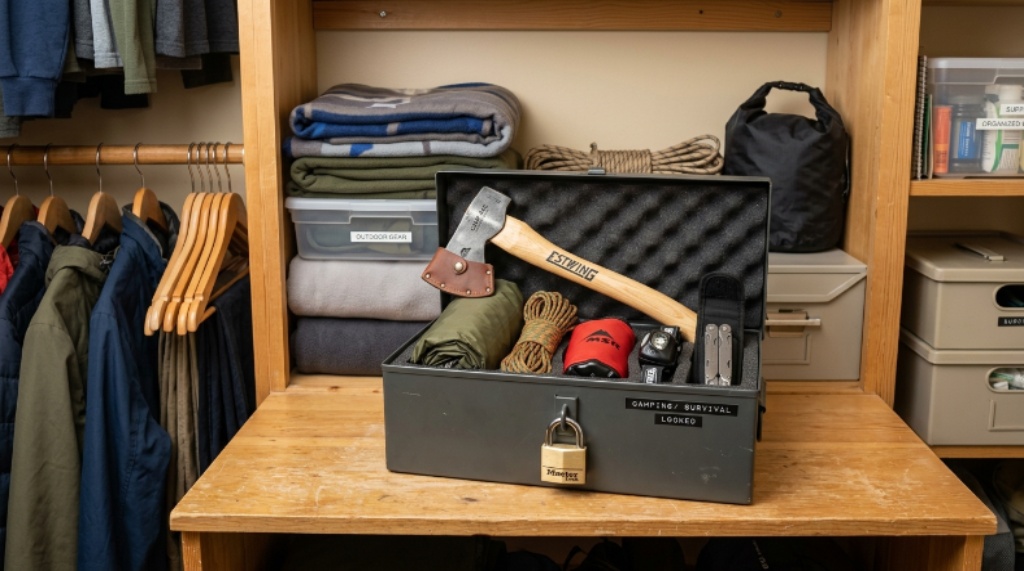
A lockable storage box is the safest choice when children or unsupervised guests are regularly present. These boxes are compact, affordable, and available in metal or heavy-duty plastic. They double as space-saving gear for other tools and outdoor equipment.
Choose a box that fits under a bed, inside a wardrobe, or in a vehicle trunk. The lock adds a layer of accountability and ensures the hatchet cannot be accessed without intention.
Handling a Compact Hatchet Safely Indoors
Proper handling habits matter just as much as proper storage. When you bring a hatchet indoors, a few simple rules keep everyone safe.
Always carry the hatchet with the blade pointing downward and away from your body. Hold the handle firmly near the base. Never carry it over your shoulder or hold it loosely at your side. These habits reduce the chance of accidental injury during transport from storage to use.
When passing the hatchet to another person, always hand it handle-first with the sheath still on. Never toss or slide it across a surface. Additionally, make eye contact before the handoff so the other person is prepared to receive it.
Avoid using a hatchet for tasks it is not designed for. Do not use it to pry open boxes, hammer nails, or cut wire. Misuse damages the blade and creates unpredictable results in a confined space. Therefore, use the right tool for every job and reserve the hatchet for its intended purpose.
Maintaining Your Hatchet in a Small Space
A well-maintained hatchet is a safer hatchet. Regular care keeps the blade sharp, the handle solid, and the sheath intact.
Here are the key maintenance steps:
- Inspect the blade monthly for nicks, chips, or rust. A damaged blade requires more force to use, which increases the risk of slipping.
- Oil the blade lightly after cleaning to prevent rust, especially in humid environments.
- Check the handle for cracks, splinters, or looseness at the head. A loose head is dangerous and should be repaired or replaced before the next use.
- Clean the sheath regularly and check for wear. A sheath that no longer fits snugly should be replaced immediately.
- Sharpen the blade using a whetstone or honing puck at the first sign of dullness. A sharp blade requires less force than a dull one, which makes it more predictable and safer.
Maintenance takes very little time. However, skipping it regularly leads to a tool that performs poorly and carries more risk in a small, enclosed environment.
Teaching Others in Your Household About Hatchet Safety
If you share your space with others, everyone needs to know the rules. You do not need to give a formal safety course. A short, direct conversation is enough.
Cover the basics: where the hatchet is stored, how to handle it correctly, and what to do if someone finds it in an unexpected place. Establish a clear rule that the hatchet is never moved from its storage spot without telling you first.
Additionally, if children live in or regularly visit your home, consider adding a lock to the storage solution. Children are naturally curious. Therefore, passive safety measures work better than relying on instruction alone.
Conclusion
Owning a compact hatchet in a small living space is entirely practical when handled responsibly. The right tool, paired with a proper sheath and a dedicated storage spot, removes most of the risk. Whether you use wall-mounted racks, a lockable box, or high closet shelving, the goal is the same: keep the blade protected, the tool accessible to adults, and the storage consistent.
Small axes are powerful tools that deserve serious respect indoors. Additionally, regular maintenance, proper carrying habits, and a household safety conversation go a long way toward making this tool a useful and safe part of your everyday gear. With the right approach, a compact hatchet fits comfortably into even the smallest of living spaces.
Frequently Asked Questions
Is it legal to keep a hatchet inside a home or apartment?
In most regions, keeping a hatchet inside a private residence is entirely legal. However, it is always worth checking local regulations, especially in managed housing communities or rental properties with specific rules about tools and weapons.
What is the safest way to store a hatchet in a studio apartment?
A lockable storage box placed under the bed or in a closet is one of the safest options. Pair it with a quality sheath to ensure the blade is always covered when not in use.
How do I keep a hatchet away from children in a small space?
Use a combination of high shelving and a lockable container. Physical barriers work more reliably than instructions alone when young children are present.
How often should I sharpen a compact hatchet?
Sharpen the blade whenever it begins to feel dull during use. For most home users, this means sharpening a few times per year depending on how frequently the tool is used.
Can I store a hatchet in a vehicle for emergency use?
Yes. A compact hatchet stored in a lockable box in your vehicle boot is a practical emergency tool. Ensure it is secured so it cannot shift during driving and always keep the sheath on the blade.




Leave a Reply