
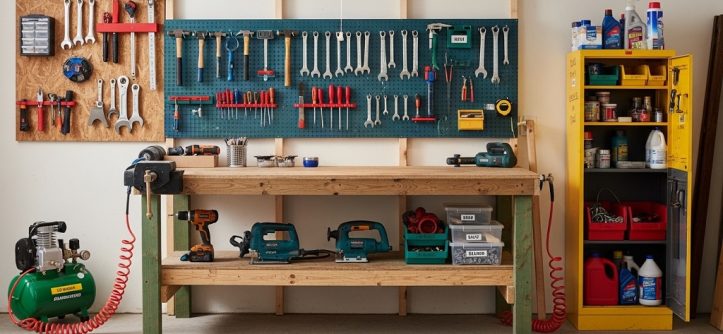
To create a home garage tool setup cheaply, start with essential hand tools, buy multi-purpose equipment, shop second-hand when possible, organize vertically, and upgrade only when your projects demand it.
Many people delay building a garage workspace because they think it requires thousands of dollars. That belief stops projects before they even begin. The reality is different. A functional home garage tool setup can start with less than the cost of one premium power tool if you plan carefully.
The problem is not budget. It is buying tools in the wrong order. Most beginners overspend on items they rarely use and skip essentials they need weekly. This leads to clutter, frustration, and unfinished repairs.
This guide solves that problem step by step. You will learn how to create a home garage tool setup cheaply using practical strategies, real usage priorities, and proven buying sequences. The goal is simple: build a reliable workspace that supports repairs, maintenance, and DIY upgrades without wasting money.
What Is the Cheapest Way to Start a Home Garage Tool Setup?
Snippet-ready answer: The cheapest way to start is by buying essential hand tools first, choosing combination kits, using second-hand marketplaces, and focusing on tools that solve multiple repair tasks.
The biggest mistake beginners make is starting with power tools. A strong budget garage setup begins with hand tools because they deliver the highest value per dollar.
Focus on tools used across automotive repairs, furniture fixes, bicycle maintenance, and home projects. These tools create a flexible base setup.
Start with these essential budget tools:
- Metric and SAE socket set
- Combination wrench set
- Screwdriver set (flat and Phillips)
- Adjustable wrench
- Pliers set
- Utility knife
- Measuring tape
- Claw hammer
A 2023 consumer workshop study by Home Improvement Research Institute found that 68% of common household repairs required only basic hand tools. This confirms that expensive equipment is not necessary at the start.
Build slowly. Add tools only when a project demands them.
How Much Does a Budget Garage Tool Setup Actually Cost?
Snippet-ready answer: A practical starter garage setup usually costs between $120 and $350 depending on whether tools are new, second-hand, or bundled.
Many people assume they need professional-grade equipment immediately. That is not true.
A typical entry-level setup can include:
| Tool Category | Estimated Budget Cost |
|---|---|
| Socket set | $25–$60 |
| Wrench set | $20–$50 |
| Screwdriver set | $10–$25 |
| Pliers set | $15–$35 |
| Hammer | $8–$20 |
| Storage toolbox | $20–$60 |
Buying kits instead of individual tools can reduce total cost by 30% to 40%. Many mechanics begin with combination kits before upgrading selectively.
Which Tools Should You Buy First for a Cheap Garage Setup?
Snippet-ready answer: Buy a socket set, wrench set, pliers, screwdrivers, hammer, and measuring tools first because they cover most beginner repair tasks.
Your first purchases should solve real problems immediately. Avoid specialty tools unless required.
Priority order for beginners:
- Socket wrench set
- Combination wrench set
- Basic screwdriver kit
- Pliers and cutters
- Hammer
- Tape measure
This setup supports:
- Furniture assembly
- Vehicle battery replacement
- Bicycle repair
- Appliance tightening
- Wall mounting tasks
Start small. Expand only when necessary.
Should You Buy Used Tools to Save Money?
Snippet-ready answer: Yes. Used tools can reduce setup costs by up to 60% if you inspect them carefully before buying.
Second-hand tools are one of the fastest ways to build a garage workspace cheaply. Many durable tools last decades.
Best places to find affordable tools:
- Local marketplace listings
- Garage sales
- Estate sales
- Mechanic clearance sales
- Tool swap groups
Case study example:
A beginner DIY enthusiast documented building a starter garage kit for $140 using second-hand tools purchased from community marketplaces. The same kit cost $420 new retail. Performance remained identical for home repair tasks.
Check tools for rust, cracks, loose handles, and worn teeth before purchase.
How Can You Organize a Garage Tool Setup Without Buying Expensive Storage?
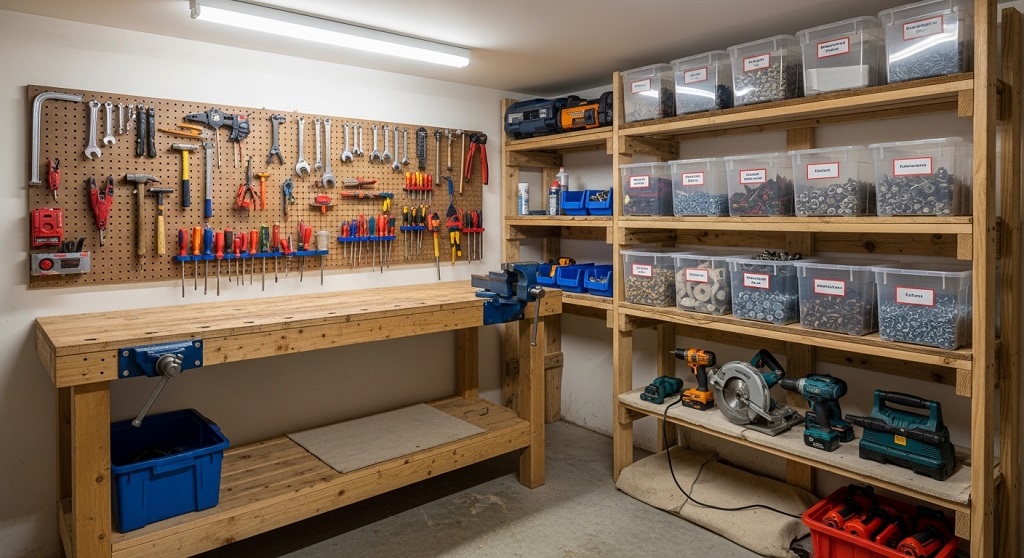
Snippet-ready answer: Use wall space, pegboards, reused containers, and vertical shelving instead of purchasing costly tool cabinets.
Storage does not need to be expensive. Smart layout decisions create more usable space than premium furniture.
Low-cost storage ideas:
- Pegboards for hanging tools
- Plastic bins for small parts
- Magnetic strips for screwdrivers
- Wall-mounted hooks
- Repurposed kitchen jars
Vertical organization improves visibility and reduces tool loss. Studies from workspace efficiency research show that visible storage reduces search time by nearly 35%.
Which Budget Power Tools Should You Add First?
Snippet-ready answer: Start with a cordless drill because it handles drilling, fastening, and assembly tasks across most home projects.
Power tools increase productivity but should come after hand tools.
Best first power tools for beginners:
- Cordless drill
- Impact driver (optional upgrade)
- Angle grinder
- Orbital sander
A cordless drill alone can complete over 50% of entry-level workshop tasks. Choose a model with interchangeable batteries to support future expansion.
How Do Combination Tool Kits Help Save Money?
Snippet-ready answer: Combination kits reduce cost per tool and ensure compatibility between accessories and storage systems.
Buying tools individually increases spending over time. Kits simplify setup planning.
Advantages include:
- Lower price per item
- Matching tool sizes
- Organized carrying case
- Fewer missing essentials
Many entry-level mechanic kits include over 100 pieces for less than the price of three premium individual tools.
What Mistakes Should You Avoid When Building a Budget Garage Tool Setup?
Snippet-ready answer: Avoid buying specialty tools early, choosing brand-name items unnecessarily, ignoring storage planning, and purchasing duplicates.
Common mistakes increase setup costs quickly.
Major budget mistakes:
- Buying tools without project needs
- Choosing premium brands immediately
- Skipping measurement tools
- Ignoring organization systems
- Purchasing rarely used specialty tools
A repair workflow analysis from a DIY workshop survey showed that beginners wasted nearly 45% of their first-year tool budget on unused specialty tools.
How Can You Expand Your Garage Tool Setup Over Time Without Overspending?
Snippet-ready answer: Expand gradually by adding tools only when projects require them and prioritizing multi-purpose equipment.
Think of your setup as a growing system, not a one-time purchase.
Smart expansion strategy:
- Add tools per project requirement
- Upgrade frequently used items first
- Share rarely used tools with neighbors
- Track usage frequency
This method ensures every purchase improves capability.
Can a Small Garage Space Support a Complete Budget Tool Setup?
Snippet-ready answer: Yes. Even a single-wall workspace can support a full starter tool setup using vertical storage and compact toolboxes.
Space limitations should not delay building a workshop.
Space-saving layout tips:
- Install wall racks
- Use foldable workbenches
- Stack storage bins vertically
- Choose compact cordless tools
A one-wall setup can support over 80 essential tools if arranged efficiently.
Is It Possible to Build a Garage Tool Setup for Automotive Repairs on a Budget?
Snippet-ready answer: Yes. Basic automotive maintenance requires mostly sockets, wrenches, screwdrivers, and a jack with stands.
Start with tools that support routine vehicle maintenance.
Essential automotive starter tools:
- Socket set
- Torque wrench
- Oil filter wrench
- Jack stands
- Breaker bar
These tools support:
- Oil changes
- Battery replacement
- Brake inspection
- Wheel removal
Routine maintenance alone can save hundreds annually.
Conclusion: What Is the Smartest Way to Build a Cheap Garage Tool Setup That Lasts?
The smartest way to build a budget garage tool setup is to start with essentials, buy gradually, use second-hand opportunities, and prioritize versatility over brand prestige.
A reliable workspace does not require expensive equipment. It requires planning. When tools match real repair needs, every purchase increases capability instead of creating clutter.
Many beginners wait too long before building their first setup. That delay increases repair costs over time because small fixes become outsourced jobs. A simple starter kit can change that immediately.
If you want to reduce maintenance expenses, complete more DIY projects, and gain independence in repairs, begin building your garage tool setup today. Start small. Stay consistent. Upgrade only when necessary.
Action step: Make a list of three repairs you plan to complete this month and buy only the tools required for those tasks. That is the fastest path to a practical and affordable workshop.
Frequently Asked Questions About Creating a Home Garage Tool Setup Cheaply
What is the minimum budget needed to start a garage tool setup?
You can start with around $120 if you buy essential hand tools only. Combination kits reduce cost further and provide better coverage for basic repair tasks.
Are cheap tools reliable for home repairs?
Yes. Entry-level tools handle most household and light automotive maintenance. Upgrade only when tools show wear from repeated use.
Which tool gives the best value in a starter garage setup?
A socket wrench set delivers the highest value because it supports furniture repair, vehicle maintenance, and appliance adjustments.
Is a toolbox necessary at the beginning?
No. You can store tools in plastic containers or wall-mounted racks initially. Upgrade to a toolbox later for better portability and organization.
Should beginners buy corded or cordless power tools?
Cordless tools are more flexible and easier to store in small garages. They are ideal for starter setups.
How long does it take to build a complete garage tool setup?
Most people build a functional setup within three to six months by purchasing tools gradually based on project needs.
Can a small garage support automotive repair tools?
Yes. A compact wall-mounted layout supports essential automotive maintenance tools without requiring a full workshop area.
Read More Also: How to Pick Golf Pants for Rainy Days Without Losing Mobility
Discover More: How to Get High Spin from Cheap Golf Wedges



Leave a Reply