
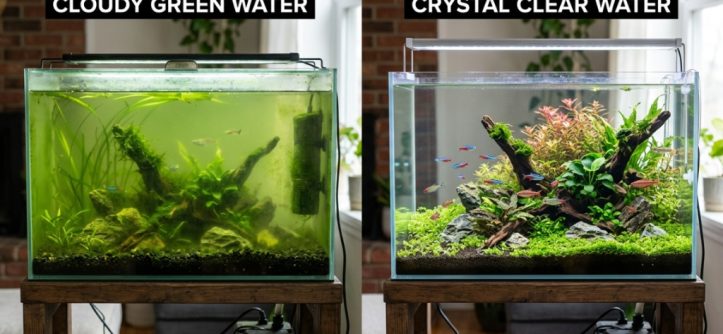
You look at your tank one morning and instead of a clear underwater paradise, you see a murky green soup. Your fish are barely visible, and frustration is setting in. This is green water—a dense algae bloom caused by free-floating single-celled algae. It happens to the best of us. The good news? You can fix pea soup aquarium water quickly without tearing down your entire setup. This guide walks you through the fastest, most effective solutions backed by real-world experience.
What Exactly Causes Green Pea Soup Water in Aquariums?
Green water is a massive bloom of microscopic phytoplankton. These tiny algae reproduce so rapidly that the water turns opaque green. Unlike spot algae on glass, this algae floats freely, making mechanical filtration nearly useless.
Excess Light Is the Primary Trigger
Algae thrive on light. If your tank receives direct sunlight or your LED lights run more than 8–10 hours daily, you are feeding the bloom. Reduce lighting duration immediately to 6–7 hours and avoid sunlight hitting the glass.
Nutrient Imbalance Fuels the Bloom
High levels of nitrates and phosphates act like fertilizer. Overfeeding fish, infrequent water changes, and decaying plant matter create a nutrient buffet for algae. Test your water regularly using a liquid test kit to keep nitrates under 20 ppm and phosphates under 0.5 ppm.
Poor Biological Filtration Worsens the Problem
An immature or insufficient filter fails to process ammonia and nitrite effectively. This allows nitrogen compounds to accumulate, which algae love. Ensure your filter is rated for at least twice your tank volume and is running 24/7.
How Long Does It Take to Clear Green Water?
Using the right methods, you can see clear water within 24 to 72 hours. Some techniques work within hours. However, without addressing the root cause, the bloom will return just as fast.
Speed of Different Solutions
- UV sterilization: 24–48 hours for full clarity
- Complete blackout: 3–5 days for significant reduction
- Diatomaceous earth filter: 12–24 hours for visual improvement
- Water changes alone: Minimal effect, bloom returns quickly
Why Patience Matters
Even when the water looks clear, microscopic spores may remain. Continue monitoring for at least one week after treatment to ensure the bloom does not reestablish. Do not stop maintenance routines prematurely.
Which Method Works Fastest to Fix Pea Soup Water?
UV sterilization is the undisputed champion for speed and reliability. It kills algae cells instantly as water passes over a UV bulb. This method eliminates the bloom without harming fish or beneficial bacteria when sized correctly.
How UV Sterilizers Kill Green Water Algae
Water is pumped past a UV-C light source. The radiation disrupts the DNA of algae cells, preventing reproduction. Within hours, the algae die and clump together, allowing your mechanical filter to remove them. A properly sized unit for your tank volume is essential,
Inserting an outdoor climbing gear link into an article about fixing green aquarium water will hurt your topical authority and SEO.
Instead, if you want to add an internal link, choose a relevant post from your own site—such as Best Aquarium Filter Media for Crystal Clear Wate
Diatomaceous Earth Filters as an Alternative
These filters use fine powder to physically strain out algae particles. They work incredibly fast for small tanks under 30 gallons. However, they require thorough cleaning and can clog quickly during heavy blooms. They are a temporary solution, not a permanent fix.
Can a Complete Blackout Eliminate Green Water?
Yes, a total blackout of 3–5 days can kill free-floating algae. However, it does not remove the dead algae debris, and it stresses plants and fish. It is a viable option for fish-only tanks but not ideal for planted aquariums.
How to Perform a Safe Blackout
Cover the entire tank with thick dark fabric or cardboard. Ensure no light enters, including from room lights or windows. Leave the filter running. After 3 days, perform a 50% water change and slowly reintroduce lighting over several days. Do not exceed 6 hours of light initially.
Risks of Blackout Treatment
- Live plants will suffer and may melt
- Dead algae decomposes, spiking ammonia
- Does not address underlying nutrient issues
- Stressful for sensitive fish species
How Do Water Changes Help Fix Pea Soup Water?
Large water changes remove nutrients and some algae cells, but they rarely solve a bloom on their own. Green water reproduces faster than you can manually remove it. Use water changes as a supporting strategy, not a primary cure.
Best Practices for Water Changes
Perform 30–50% water changes every other day during treatment. Vacuum the substrate to remove organic waste. Match temperature and dechlorinate new water carefully. Combine this with reduced feeding to starve the algae.
Why Water Changes Alone Fail
Each gallon of green water contains millions of algae cells. Removing 50% leaves half the population behind. Within 24 hours, those remaining cells double, quickly restoring the bloom. You must kill the algae first, then remove the debris.
What Role Do Filtration Upgrades Play?
Standard sponge or cartridge filters cannot trap microscopic algae. Upgrading to a fine-polishing filter pad or adding a dedicated algae removal system dramatically improves results. Mechanical filtration becomes effective after the algae have been killed or clumped.
Using Filter Floss for Polishing
Insert fine filter floss after the biological media. This catches dead algae clumps and fine particles. Replace the floss every 2–3 days during treatment. It is cheap, effective, and easy to maintain. Do not use floss alone—it will clog within hours on a heavy bloom.
Chemical Media Options
Activated carbon can remove dissolved organic compounds that feed algae. Phosphate-removing resins lower the main nutrient source. These are helpful in combination with other methods but rarely work as standalone solutions for severe blooms.
How to Prevent Green Water from Returning
Prevention is about creating an environment where algae cannot dominate. A stable, balanced tank with healthy plants and proper maintenance naturally resists blooms. Focus on long-term habits rather than quick fixes alone.
Control Lighting Strictly
- Use a timer for consistent 6–8 hours daily
- Avoid direct sunlight hitting the tank
- Consider dimmable LEDs for planted tanks
- Raise light fixtures higher above the water
Maintain Nutrient Balance
Test water weekly. Keep nitrates between 5–20 ppm for planted tanks, and below 20 ppm for fish-only tanks. Use live plants like hornwort, duckweed, or pothos to absorb excess nutrients naturally. Do not overfeed—fish only need what they can eat in 2 minutes.
Add Live Plants Competitively
Fast-growing stem plants and floating plants outcompete algae for nutrients and light. Cover at least 30% of the water surface with floating plants to shade the water column. This alone can prevent future blooms in many tanks.
Which Fish and Invertebrates Help Control Algae?
Certain species graze on algae and help maintain water clarity. However, they cannot fix an active green water bloom because the algae is suspended in the water column, not on surfaces. Use them as prevention, not cure.
Top Algae-Eating Species
| Species | Algae Type Eaten | Tank Size Required |
|---|---|---|
| Amano shrimp | Free-floating and surface algae | 10+ gallons |
| Siamese algae eater | Various, including green water | 20+ gallons |
| Nerite snails | Glass and surface algae | 5+ gallons |
| Daphnia (water fleas) | Microscopic algae directly | Any size |
Why Fish Are Not a Silver Bullet
Green water algae are too small for most fish to filter naturally. Only filter-feeding organisms like daphnia or certain filter-feeders consume them effectively. Adding more fish to a blooming tank increases waste, worsening the problem. Keep stocking levels reasonable.
Is UV Sterilization Safe for All Aquariums?
Yes, when used correctly. UV sterilizers do not release chemicals and do not alter water chemistry. They only affect organisms that pass through the light chamber. Beneficial bacteria living on surfaces and in the substrate remain untouched.
Selecting the Right UV Sterilizer Size
Match the flow rate to your tank volume. For green water, a flow rate of 1–2 times your tank volume per hour is ideal. Slower flow allows more exposure time. Units rated for larger tanks work fine on smaller ones with reduced flow.
Installation Tips for Best Results
Place the UV sterilizer after your mechanical filter to prevent debris from blocking light. Run it continuously during the bloom. Once water clears, run it 8–12 hours daily or only when needed. Replace the UV bulb every 6–12 months as output diminishes over time.
If you are looking for a reliable and budget-friendly option, fix pea soup aquarium water with a quality UV filter that matches your tank size. Choose a model with a replaceable bulb and easy cleaning access for long-term value.
What Chemicals Can Clear Green Water Quickly?
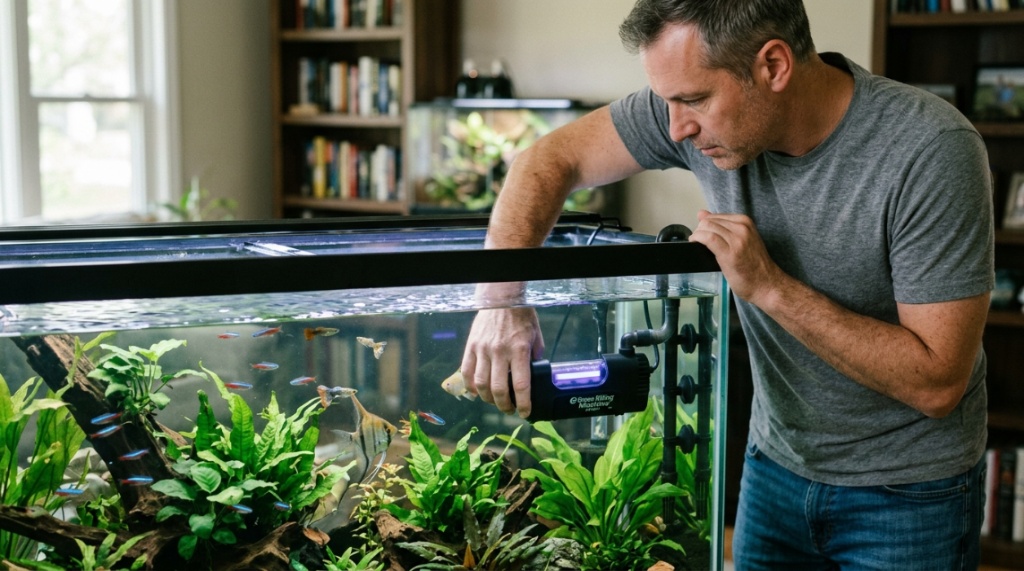
Chemical flocculants or algaecides clear water within hours by clumping algae together. However, they come with risks. Use them only as an emergency measure for severe blooms when other options are not available.
How Flocculants Work
These products bind algae cells into larger clumps that your filter can trap. Water clears visually within 4–8 hours. However, the dead algae releases toxins as it decomposes. Perform a large water change 24 hours after application to remove debris and prevent ammonia spikes.
Risks of Chemical Use
- Can harm sensitive fish and invertebrates
- May crash biological filtration temporarily
- Does not prevent future blooms
- Requires precise dosing to avoid overdose
How Do I Clean My Tank After the Water Clears?
Once the water looks clear, the dead algae debris settles everywhere. Failing to clean thoroughly allows the cycle to reset and ammonia to spike. A thorough cleanup ensures long-term success.
Step-by-Step Post-Treatment Cleaning
- Siphon the substrate to remove settled algae
- Clean filter media in old tank water
- Scrub glass and decorations
- Perform a 50% water change
- Reset lighting schedule to 6 hours
- Test water parameters daily for one week
Monitor Fish Behavior Closely
Dead algae decomposition consumes oxygen. Watch for fish gasping at the surface or lethargy. Increase surface agitation with a spray bar or air stone during and after treatment. If you notice distress, perform an immediate water change.
Frequently Asked Questions
Can green water harm my fish?
Generally, green water alone does not kill fish. However, when the algae dies and decomposes, it consumes oxygen and releases ammonia. This can suffocate fish or cause stress-related diseases. Treat the bloom promptly to avoid secondary issues.
How often should I run a UV sterilizer?
During a bloom, run it 24/7 until water clears. For maintenance, 8–12 hours daily is sufficient. Some hobbyists run it only when they see early signs of green tint. Running it constantly may kill beneficial microfauna in the water column.
Will a water change alone cure green water?
No. Water changes remove some algae but the remaining cells reproduce quickly. You must combine water changes with UV treatment, blackout, or filtration upgrades for lasting results. Water changes support recovery but do not cure the bloom alone.
Can I use tap water directly for water changes?
Treat tap water with a dechlorinator before adding to the tank. Chlorine and chloramine harm beneficial bacteria. Some tap water contains high nitrates or phosphates that feed algae. Test your tap water before using it.
How do I know if my UV sterilizer is working?
Look for a visible glow through the viewing window on the unit. The water should show noticeable improvement within 48 hours. If no change occurs, check flow rate, bulb age, and ensure no obstructions block the light path.
Is green water the same as a bacterial bloom?
No. Green water is caused by free-floating algae and appears uniformly green. Bacterial blooms look milky or cloudy white. Treatment differs significantly. Test your water to confirm the cause before taking action.
Can I use a pond UV filter on my aquarium?
Yes, if it is rated for your tank volume and flow rate. Pond UV filters are often more powerful and affordable. Ensure the inlet and outlet sizes match your aquarium pump. Use an inline model for best integration.




Leave a Reply