
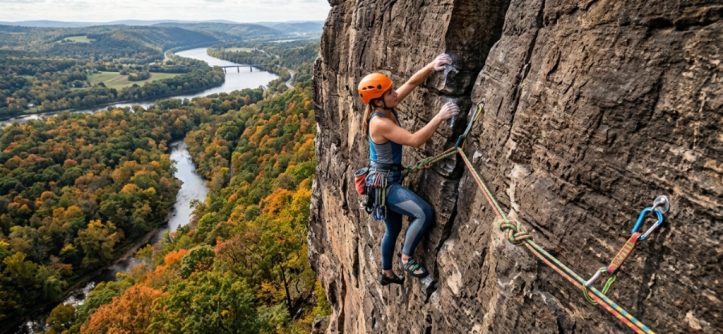
You are standing at the base of a climb in the Pocono region, rope bag in hand, wondering if the cord in your hands will hold. That moment of doubt is not just uncomfortable; it is dangerous. The truth is that choosing safe climbing ropes Pennsylvania climbers can trust is about understanding dynamic elongation, sheath slippage, and the specific wear patterns caused by local rock types.
Did you know that the sandstone found in Central Pennsylvania’s climbing areas can accelerate sheath abrasion by 30% compared to granite? Most accidents involving rope failure do not happen because of a single cut. They happen because of accumulated micro-damage that the climber never saw coming. Whether you are trad climbing at Safe Harbor, bouldering at Haycock, or setting top ropes at Ralph Stover, the rope you choose must match your specific terrain. The problem is that many climbers buy a “general purpose” rope that is neither safe nor appropriate for Pennsylvania’s mixed conditions. In this guide, we will strip away the marketing jargon and give you the exact criteria for selecting a rope that will keep you alive.
What Makes a Climbing Rope “Safe” for Pennsylvania’s Terrain?
A safe climbing rope meets UIAA standards for impact force, dynamic elongation, and static elongation. For Pennsylvania’s varied terrain—including sharp sandstone and mossy granite—you need a rope with high abrasion resistance and low sheath slippage. The magic number is a sheath percentage between 33% and 38% of total rope weight, which offers the best protection against the region’s abrasive rocks.
The UIAA Standards That Actually Matter
Not all safety certifications are created equal. The UIAA 101 standard tests ropes for impact force during a fall. For Pennsylvania’s mixed routes, look for ropes with an impact force rating below 9 kN. This means the rope absorbs energy effectively, reducing the shock on your body and gear. Many budget ropes marketed for “general climbing” fail this test on Pennsylvania’s sharper edges. Always check for the UIAA label, not just the CE mark.
Why Sheath Slippage Is Critical in Pennsylvania
Sheath slippage occurs when the outer covering moves independently of the core fibers. In Pennsylvania’s humid climate, this happens faster due to moisture absorption. A safe rope should have sheath slippage of less than 5 mm per meter. Test this by marking your rope at 2 meters, then running it through your belay device several times. If the mark moves more than 1 cm, the sheath is unsafe for lead climbing on local routes like the ones at Birdsboro.
Dry Treatment vs. Non-Treated Ropes
Pennsylvania’s weather can change from sunny to torrential rain in 20 minutes. A dry-treated rope resists water absorption by up to 50% compared to untreated ropes. Wet ropes lose up to 30% of their strength. For year-round climbing in the Keystone State, choose a rope with full dry treatment (not just the sheath). This prevents internal core damage from moisture.
Which Rope Diameter Is Safest for PA Climbing?
The safest diameter for Pennsylvania climbing is 9.5 mm to 10.2 mm. Thinner ropes (8.9 mm or below) are lighter but wear out 40% faster on the abrasive sandstone found at places like Shining Rock. Thicker ropes (10.5 mm+) last longer but require more belay effort and cause more wear on your gear. The sweet spot is a 9.8 mm rope, which balances durability with handling.
The Risks of Going Too Thin
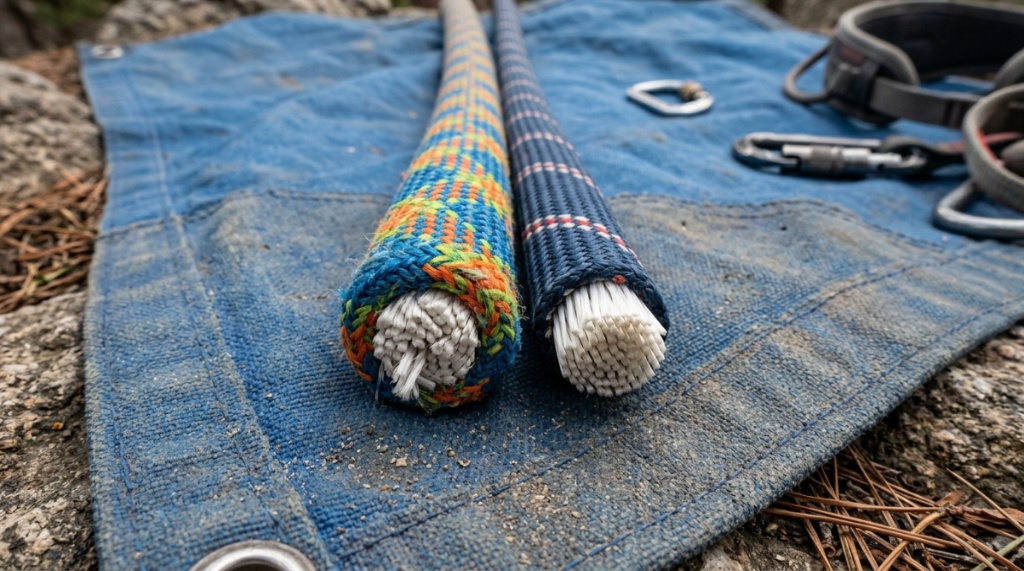
Ultra-skinny ropes (8.5 mm to 9.2 mm) are popular for alpine climbing but are dangerous for PA’s sharp rock. These ropes have fewer sheath strands, so a single sharp edge can cut through to the core. A 9.8 mm rope has approximately 15% more sheath material than a 9.2 mm rope. If you are climbing at Nay Aug Park or any gneiss formation, stick to 9.8 mm or thicker.
How Diameter Affects Your Belay Device
Your belay device must match your rope diameter. A GriGri or ATC rated for 8.9 mm to 11 mm works well with 9.8 mm ropes. However, using a 9.8 mm rope with a device designed for 10.5 mm ropes reduces braking friction by 25%. Check the compatibility chart on your device. The safest combination in Pennsylvania is a 9.8 mm dynamic rope with a tube-style belay device like the Petzl Reverso.
Diameter and Weight Tradeoffs for Multi-Pitch
If you are multi-pitch climbing in the Lost Gorge area, weight matters. A 60-meter 9.8 mm rope weighs roughly 3.8 kg, while a 9.2 mm rope weighs 3.1 kg. That 0.7 kg savings can reduce fatigue, but only if you accept faster rope wear. For most PA routes, the durability of a 9.8 mm rope outweighs the weight penalty.
How Long Should Your Climbing Rope Be for PA Routes?
For Pennsylvania climbing, a 60-meter rope is the standard for 90% of single-pitch routes. However, many classic trad routes in the Shawangunks (just across the border) require 70 meters. If you climb at both PA and NY areas, a 70-meter rope is safer because it eliminates the risk of running out of rope on longer rappels. A 70-meter rope also gives you more flexibility for top-roping at places like McConnells Mill.
Why 50-Meter Ropes Are Rarely Safe
Many climbers bought 50-meter ropes when they were standard, but most PA routes are now bolted for 60-meter ropes. Using a 50-meter rope on a 60-meter route means you cannot safely lower to the ground. You risk getting stranded or using a sketchy knot system to extend your rappel. If you own a 50-meter rope, only use it for specific short routes or gym climbing.
Half Ropes vs. Single Ropes for PA Trad
For traditional climbing in Pennsylvania, single ropes are safer than half ropes. Half ropes require impeccable technique to avoid cutting one against a sharp edge. Pennsylvania’s irregular crack systems increase the chance of rope drag and sheath damage. A single 9.8 mm rope with a dry treatment is the safest and most straightforward option for almost all PA trad routes.
What Is the Best Rope Type for Top-Roping in Pennsylvania?
For top-roping at areas like Ralph Stover or Haycock, a static rope of 10 mm to 11 mm is safest. Static ropes have minimal stretch (under 5% dynamic elongation), meaning less bounce and safer catches. However, static ropes are dangerous for lead climbing because they do not absorb impact force. Use a dynamic rope for leading, and switch to a static rope specifically for top-roping.
Why You Should Not Lead Climb with a Static Rope
Static ropes transmit 100% of fall impact directly to your harness and anchor. This increases the risk of back injury and anchor failure. In Pennsylvania’s shallow bolt placements, the sudden shock can rip a bolt out. Always use a dynamic rope for lead climbing. The safe climbing ropes Pennsylvania market offers both dynamic and static options; choose the right one for your activity.
Sheath Durability for Top-Rope Falls
Top-roping causes repetitive loading on the same section of rope. The sheath at the wear point can degrade after just 20 sessions. Choose a rope with a buried sheath pattern (where strands weave inward) instead of a braided sheath. Buried sheaths reduce external wear by up to 40%. Brands like Sterling and Edelrid use this construction for their top-rope-specific ropes.
Can You Use Hunting Ropes for Climbing in Pennsylvania?
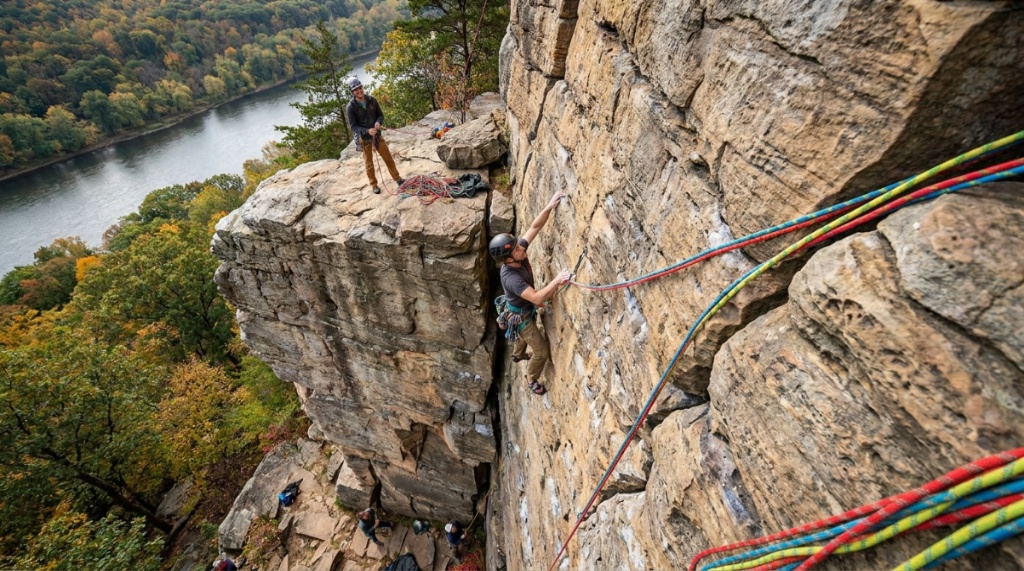
No. Hunting ropes are designed for static loads like hanging game, not dynamic falls from climbing. Hunting ropes often lack the UIAA certification and internal core construction needed for climbing. They can snap under sudden force. Only use ropes specifically certified as climbing ropes. The confusion happens because many outdoor stores sell “climbing” and “hunting” ropes in the same section, but they are not interchangeable.
The Difference Between Climbing and Hunting Rope Construction
Climbing ropes use a kernmantle construction with a twisted or braided core of nylon or Dyneema. Hunting ropes often use a single-braid or solid-braid construction without a separate core. In a fall, the hunting rope stretches unevenly, causing dangerous bounce and potential breakage. Always read the manufacturer’s specifications, not just the label.
Where Climbers Get Confused by Marketing
Some ropes are marketed as “dual-purpose” for climbing and hunting. These are usually static ropes with a low dynamic elongation rating. They are safe for rappelling and top-roping but not for lead climbing. If the product description does not explicitly state “UIAA certified for lead climbing,” do not use it for leading. Stick to ropes from brands like Mammut, Petzl, or Black Diamond that clearly label their intended use.
How to Inspect Your Climbing Rope for PA Conditions
Inspect your rope before every climbing session in Pennsylvania. The local rocks contain sharp minerals like quartz and feldspar that cause micro-cuts. Run your hand along the entire length, feeling for flat spots, fuzziness, or hard lumps. A rope with more than three visible core strands per foot is unsafe. Replace your rope immediately if you find any soft spots or inconsistent diameter.
The “Fold Test” for Core Damage
Fold the rope at a suspicious spot and squeeze. If the core feels crunchy or separated, the rope is damaged. This is common in PA’s sandstone areas where grit gets inside the sheath. You can also roll the rope on a hard surface—a damaged core will create a bumpy track. Replace the rope if the fold test reveals any irregularities.
How Often to Replace Ropes Based on PA Usage
With average use (2-3 times per week) in Pennsylvania’s conditions, replace your rope every 12 to 18 months. For frequent climbers (4+ times per week), replace every 6 to 9 months. Keep a rope log with dates and route types. If you climb at abrasive areas like the Delaware Water Gap frequently, cut that timeline by 25%.
Which Rope Brands Offer the Best Safety for Pennsylvania Climbers?
Brands with the highest UIAA ratings and best dry treatments include Petzl, Beal, Mammut, and Sterling. These brands use the highest density sheath weaves, which resist Pennsylvania’s sharp rocks best. Avoid generic “store brand” ropes because they often use lower sheath percentages (under 30%) that compromise safety. Spend the extra $30–$50 for a reputable brand.
What to Look for in a Budget-Friendly Safe Rope
Safe climbing ropes Pennsylvania does not have to mean expensive. Look for ropes with a UIAA certification, a sheath percentage of at least 33%, and a dry treatment (even if basic). Avoid ropes with “natural” or untreated fibers—they absorb moisture and weaken quickly. For budget options, check brands like Tendon or MaxiDry, which offer solid safety specs at lower prices.
Where to Buy Tested Ropes in Pennsylvania
Local climbing shops like Rock ‘n Road in Philadelphia or Nittany Mountain Works in State College carry certified ropes. Online retailers like REI and Backcountry also list UIAA spec sheets. Regardless of where you buy, request the test certificate for the specific batch. Some batches have lower safety margins than others, so batch-level certification matters.
How Do You Store Climbing Ropes for PA’s Climate?
Store your rope in a breathable rope bag, away from direct sunlight and extreme temperatures. Pennsylvania’s humidity accelerates rope degradation. Keep the rope in a cool, dry basement or closet (55–70°F, below 50% humidity). Avoid garages or cars, where temperatures exceed 100°F and degrade nylon strength by up to 20% per year.
The Dangers of Coil Kinks
Never store your rope tightly coiled or with knots in it. Coil kinks create permanent bends that weaken the fibers. Use a rope bag with a tarp or a daisy-chain system to keep the rope loose. If your rope has memories of old coils, it is time to replace it, because those bends become stress points.
How to Dry a Wet Rope Safely
After climbing in PA’s frequent rain, dry your rope by hanging it loosely over a thick wooden dowel or padded rack. Do not use a heater or fan directly on the rope, as rapid drying creates microfractures in nylon. Let it air dry for 24–48 hours in a room with passive airflow. Never machine dry a climbing rope.
How to Choose Between Dynamic and Static Ropes for Different PA Activities
Use dynamic ropes for all lead climbing and top-roping where falls are possible. Use static ropes only for rappelling, ascending fixed lines, or hauling gear. In Pennsylvania, if you cannot guarantee you will not fall, use a dynamic rope. Many accidents happen when climbers use a static rope on a route they “think” is safe.
Dynamic Ropes for Sport Climbing
For sport climbing at areas like Birdsboro or Safe Harbor, a dynamic rope with a 30–35% dynamic elongation is ideal. This absorbs falls of up to UIAA standard fall factor 2. Look for a rope with at least 5 UIAA falls rating. Most ropes in this category from Petzl or Beal offer 7–8 falls, providing a comfortable safety margin.
Static Ropes for Multi-Pitch Rappels
When rappelling on multi-pitch routes like those at the Lost Gorge, a static rope reduces bounce and makes descending smoother. However, always use a backup prusik knot. Static ropes do not stretch, so a sudden slip turns into a hard stop. Keep the rappel speed slow to avoid overheating the sheath.
| Rope Type | Best Use | Dynamic Elongation | Fall Rating (UIAA) | PA Terrain Suitability |
|---|---|---|---|---|
| Dynamic 9.5 mm | Sport lead climbing | 30–35% | 5–7 falls | Moderate – wear faster |
| Dynamic 9.8 mm | All-around PA climbing | 28–32% | 7–9 falls | Best for abrasive rock |
| Dynamic 10.2 mm | Trad and top-rope | 25–30% | 8–10 falls | Highest durability |
| Static 10 mm | Rappel and ascent | Under 5% | Not rated for falls | Safe only for descents |
What Are the Warning Signs Your Rope Is No Longer Safe?
Immediately retire a rope if you see core strands exposed, any section feels flat or lumps, or the sheath is fuzzy for more than 6 inches. For PA climbing, also retire if the rope smells burnt or feels stiff after a fall. Burnt smell means internal friction damage. Stiffness means the nylon fibers have fused from heat, reducing elongation and increasing impact force.
The “Sheath Sliding” Test
Hold the rope with both hands 2 feet apart. Twist your hands in opposite directions. If the sheath moves independently of the core, the rope is unsafe. This is common in ropes used extensively at abrasive PA crags. Sheath separation means the rope can fail even without a visible cut.
When to Retire a Rope After a Big Fall
After any fall with a factor greater than 1.5 (common in trad climbing when you are above your last piece), retire the rope immediately. A factor 1.5 fall generates over 10 kN of force, which can cause internal core damage invisible to the naked eye. Even if the rope looks fine, replace it. Your life is worth more than $150,When preparing your gear, remember that cold and moisture are the natural enemies of nylon. Just as Cold Corners Reveal the Weak Spots in a Building by exposing hidden insulation gaps, freezing outdoor temperatures or poorly insulated indoor climbing gyms can expose hidden weaknesses in an old, stiff climbing rope.
Frequently Asked Questions
What is the best rope length for beginners in Pennsylvania?
A 60-meter dynamic rope with a 9.8 mm diameter is the best starting point for beginners. This length covers 90% of PA sport and trad routes, and the thickness provides a safety margin for learning proper belay technique.
Can I use an old rope for top-roping only?
Yes, a well-used rope that is no longer safe for lead climbing can still be used for top-roping if it passes inspection. However, retire any rope with visible core damage, cuts, or sheath slippage. Top-roping still generates significant force, so never use a rope that shows obvious wear.
Is a 70-meter rope too long for climbing in Pennsylvania?
No. A 70-meter rope is actually safer for rappelling and multi-pitch routes. It eliminates the risk of running out of rope on descents and gives you more flexibility for top-roping. Many PA climbers are switching to 70-meter ropes for this reason.
How do dry-treated ropes help in PA’s humidity?
Dry-treated ropes absorb up to 50% less water than untreated ropes. In Pennsylvania’s humid summers, this prevents the core from weakening due to moisture. Dry treatment also reduces freezing in winter climbing conditions, making your rope more reliable year-round.
What happens if I use a static rope for lead climbing?
A static rope does not absorb impact energy. In a lead fall, the rope transmits the full force to your harness and anchor points. This can cause severe back injuries, damaged gear, and anchor failure. Never use static ropes for lead climbing under any circumstances.
How often should I wash my climbing rope?
Wash your rope every 20–30 uses or whenever it feels gritty. Pennsylvania’s dirt contains abrasive minerals. Use a rope-specific cleaner or mild soap in cold water. Do not use bleach or fabric softener. Machine wash on a gentle cycle in a pillowcase, then air dry over a padded rack.
Why do some ropes have different UIAA fall ratings?
The UIAA fall rating indicates how many standard falls the rope can withstand before breaking. A rope with 7 falls is stronger than one with 5 falls. For Pennsylvania’s abrasive rocks, choose a rope with at least 7 UIAA falls to ensure a safety margin against hidden damage from sharp edges.
Safe Climbing Is a Choice Every Time You Rack Up
Choosing safe climbing ropes Pennsylvania demands is not about the most expensive brand or the most advanced technology. It is about understanding your local terrain, your climbing style, and the specific wear patterns that affect your gear. Start with a 9.8 mm dynamic rope that is 60-70 meters long, from a reputable brand with full UIAA certification. Inspect it before every session, store it in stable conditions, and retire it without hesitation when it shows the warning signs we discussed. The single best investment you can make is not a fancy rope, but the habit of inspecting it. You have the knowledge now. Your next step is to check the rope you are currently using—run the fold test, look for sheath slippage, and feel for flat spots. If anything feels wrong, replace it today. The rocks in Pennsylvania will still be there tomorrow, but your margin for error will not.



Leave a Reply