

You’ve got the board, the wax, and the wetsuit. But if you can’t get your surfboard to the beach without turning your car into a hazard, none of that matters. Strapping a board to your roof with flimsy rope is a recipe for disaster—both for your board and for the drivers behind you. The real challenge is finding a rack that fits your car, protects your equipment, and doesn’t eat up your entire budget. This guide breaks down exactly what to look for when shopping for the best surfboard car rack, so you can hit the road with confidence and keep your board safe for years to come.
Why a Dedicated Surfboard Rack Matters
Many drivers assume that any roof rack will do the job. That’s not quite true. While a generic cargo rack can carry luggage or kayaks, surfboards have unique needs. They are long, aerodynamic (but awkward), and highly susceptible to heat, pressure, and wind damage. A dedicated surfboard rack is designed with padded cradles and soft straps that hold the board securely without crushing the rails or putting pressure on the stringer.
Using the wrong setup can lead to cracked fiberglass, delamination, or worse—your board flying off the roof at highway speed. Beyond safety, a good rack also makes loading and unloading easier. You shouldn’t need a gymnastics routine to get your board on top of your car. If you are looking for a comprehensive breakdown of top-rated models and regional considerations, this best surfboard car rack guide offers a solid starting point for your research.
Key Factors to Consider Before Buying
Before you click “add to cart,” you need to evaluate your specific situation. The best rack for a sedan commuter is different from the best rack for a lifted 4×4. Here are the critical factors that should drive your decision.
Vehicle Compatibility and Roof Type
Not every rack fits every car. You first need to determine if your vehicle has factory roof rails, fixed mounting points, or a bare roof.
- Factory Rails: If your car came with side rails, you can usually attach crossbars directly. This is the easiest and most stable setup.
- Fixed Points: Some vehicles have small plastic caps on the roof where rack feet can be attached. These require specific mounting kits.
- Bare Roof: If you have no rails or points, you will need a clip-based system that hooks onto the door frames. These are more universal but require careful fitting to avoid damaging your car’s paint or seals.
Always check the weight rating of your vehicle’s roof. Most car roofs can handle the weight of a surfboard, but the dynamic load (weight while driving) is often lower than you think. Exceeding this limit can damage your roof structure.
Number of Boards You Need to Carry
Are you a solo surfer or do you usually drive with friends? This changes the rack design significantly.
If you only carry one board, a simple single-cradle rack will suffice. However, if you frequently travel with multiple boards, you need a rack with wider saddles or a stack system. Some racks allow you to stack boards vertically (on edge), which is great for saving space and reducing wind drag. Others allow horizontal stacking, which is easier for loading but creates more wind resistance, Want to fix dings after your travels? Pick the Right Surfboard Repair Resin before your next session to keep your board watertight.
Locking Mechanisms and Security
Surfboards are expensive, and leaving them unattended on your roof is an open invitation for theft. Look for racks that offer integrated locking systems. This usually involves a lockable strap or a cable that loops through the board’s leash plug.
While locks won’t stop a determined thief with bolt cutters, they will deter opportunistic criminals. If you plan to stop for lunch or coffee on your way to the beach, a locking rack is non-negotiable.
Types of Surfboard Racks: Pros and Cons
Understanding the different styles of racks helps you narrow down your options. Each type has its own trade-offs between cost, convenience, and security.
Soft Racks (Strap-on Systems)
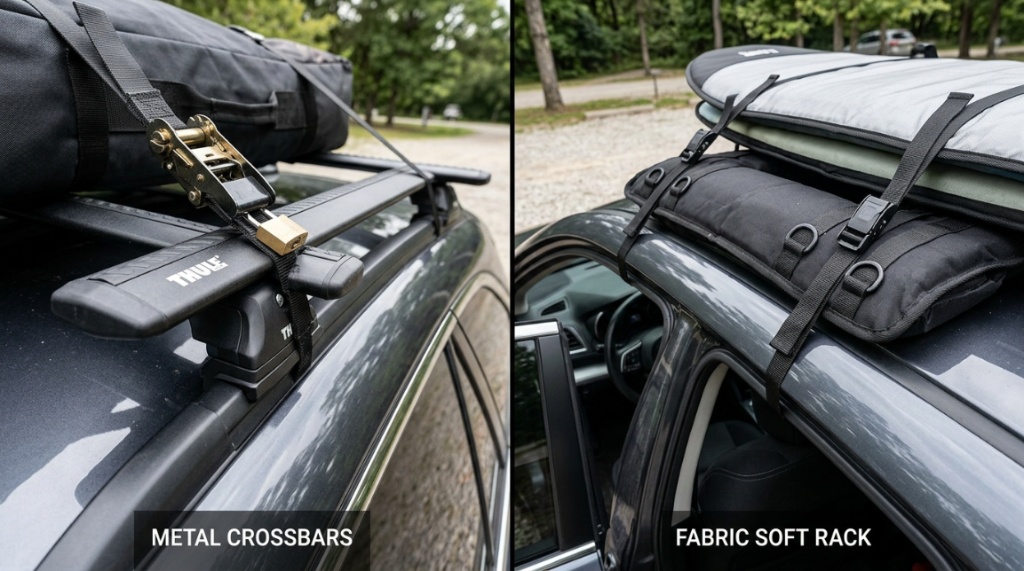
Soft racks are the most affordable and portable option. They consist of foam blocks that sit on your roof and straps that thread through your car’s doors.
Pros: They are cheap, easy to store, and can fit almost any vehicle. They are perfect for rental cars or occasional use.
Cons: They are not as secure as permanent racks. The straps can loosen over time, and they offer no locking mechanism. They also put pressure on the door seals, which can cause leaks if used constantly.
Permanent Roof Racks with Crossbars
This is the most common setup. You install crossbars on your roof and then attach surfboard cradles to them.
Pros: This system is highly stable, secure, and can be customized. You can swap out the surfboard caddies for bike mounts or cargo boxes when needed. They offer the best locking options.
Cons: They are more expensive and require a more complex installation. They also add permanent wind noise to your vehicle.
Tailgate Pads
If you drive a pickup truck, a tailgate pad is often the best choice. This is a thick padded cover that drapes over the tailgate, allowing you to rest your boards in the truck bed with the tailgate down.
Pros: Extremely easy to load and unload. You can carry multiple boards without worrying about roof height. They are also great for keeping sand and water out of your cab.
Cons: They are only suitable for trucks. They leave your boards exposed to theft and weather, and they increase the overall length of your vehicle.
How to Install Your Surfboard Rack Correctly
Proper installation is just as important as the rack itself. A poorly installed rack is dangerous. Here is a step-by-step guide to ensure a safe fit.
- Read the Manual: Every rack is different. Read the manufacturer’s instructions thoroughly before you start.
- Clean the Surface: Wipe down your roof or crossbars to remove dirt and debris. This prevents scratches and ensures a tight grip.
- Assemble the Cradles: Attach the rubber pads and cradles to the crossbars. Ensure they are evenly spaced to support the width of your board.
- Tighten Securely: Use the provided tools to tighten all bolts and clamps. Do not over-tighten, as this can strip threads or damage your roof.
- Test for Movement: Once installed, grab the rack and try to shake it. If it moves, tighten it more. It should feel rock solid.
- Load the Board: Place the board fin-up or fin-down depending on the rack design. Always secure the nose and tail straps.
Common Mistakes to Avoid
Even experienced surfers make errors when it comes to roof racks. Avoiding these pitfalls will save you money and frustration.
- Over-tightening Straps: Crank down too hard on the straps, and you risk crushing the rails of your board. The board should be snug but not squeezed.
- Forgetting the Bowline Knot: Always tie off the excess strap length. Flapping straps at highway speed will eventually fray and snap.
- Ignoring Wind Noise: If you hear a loud whistle, your rack is not aligned properly. Adjust the position to reduce drag and save fuel.
- Leaving the Rack On: If you have a permanent rack, remove the surfboard cradles when not in use. They create significant drag and reduce fuel economy.
Hard vs. Soft Padding: What’s the Difference?
The padding on the cradles is what actually touches your board. You generally have two choices: closed-cell foam or rubberized plastic.
Closed-cell foam is soft and conforms to the shape of your board. It provides excellent grip and prevents slipping. However, foam can absorb water over time and may degrade in harsh sunlight.
Rubberized plastic cradles are more durable and UV-resistant. They are easier to clean and don’t absorb water. However, they can be slippery when wet, so they often feature textured ridges to keep the board in place. For most surfers, high-density foam is the preferred choice because it offers the best protection for the board’s finish.
Budget Considerations: How Much Should You Spend?
Surfboard racks range from $50 to over $500. The price difference comes down to materials, security features, and brand reputation.
If you are on a tight budget, a soft rack is a viable option, but understand its limitations. If you surf weekly, investing in a mid-range permanent rack is worth the money. These typically cost between $150 and $300 and offer a good balance of durability and security. High-end racks are usually made of aircraft-grade aluminum and feature tool-free installation, but they are overkill for the average weekend surfer.
Frequently Asked Questions
Can I use a kayak rack for my surfboard?
Technically, yes, but it is not recommended. Kayak racks often use wider saddles that do not provide the same lateral support as surfboard cradles. Surfboards are thinner and more flexible, so they need padded cradles that grip the rails without pressure points.
Is it safe to drive on the highway with a surfboard on the roof?
Yes, it is safe if the rack is installed correctly and the straps are tight. However, you should drive slightly slower than usual and avoid sudden lane changes. Strong crosswinds can affect handling, so keep a firm grip on the wheel.
How do I stop my surfboard from sliding forward?
Most quality racks come with a nose and tail strap that loops through the board’s leash plug and attaches to your car’s bumper or tow hook. This prevents the board from sliding forward during hard braking.
Should I remove the fin before loading my board?
It depends on the rack. If your rack has a deep cradle, you can leave the fin on. If the board sits flat, the fin may hit the roof. Check the clearance before you drive off. If in doubt, remove the fin to avoid scratching your car.
Can I leave my surfboard rack on my car all year round?
You can, but it is not advisable. The constant exposure to sun, rain, and wind will wear down the rubber and straps faster. Additionally, an empty rack creates wind drag, which lowers your fuel efficiency by 5-10%.
Conclusion
Choosing the best surfboard car rack doesn’t have to be complicated. Start by assessing your vehicle’s roof setup and how many boards you typically carry. Decide whether you need a permanent solution or a portable one. Prioritize racks with secure locking mechanisms and high-quality padding to protect your investment. Avoid the temptation to buy the cheapest option if you surf regularly—durability matters. Once you have your rack installed, double-check all straps before every trip. With the right rack on your roof, you can focus on the waves ahead, knowing your board is safe and secure for the journey.




Leave a Reply