

Running a business in Texas comes with its own set of challenges heat, dust, high foot traffic, and spaces that range from tiny storefronts to sprawling warehouses. When your floor looks dirty, it reflects poorly on your brand, but dropping thousands on commercial equipment isn’t always an option. The real challenge is finding a budget vacuum that lasts for Texas business environments without falling apart after a few months of heavy use. This guide walks you through the practical steps to choose a machine that balances upfront cost with long-term durability, so you can keep your space clean without constantly replacing equipment.
Why Texas Business Conditions Demand a Different Approach
Texas isn’t just another market. The combination of climate and business density creates unique demands on cleaning equipment. From the dusty west Texas winds to the humid Gulf Coast air, your vacuum has to handle more than just carpet fibers and tile grout.
The Dust and Debris Factor
Texas is notorious for dust, especially in the central and western parts of the state. Construction sites, open doors, and constant foot traffic track in fine particulate matter that clogs standard household filters quickly. A budget machine with a basic filter will lose suction within weeks. Look for machines with cyclonic action or at least washable HEPA-type filters. These maintain airflow longer, which means consistent cleaning performance over the life of the machine.
Heat and Motor Strain
Heat is another silent killer of budget vacuums. If your vacuum is stored in a back room without air conditioning common in older Texas buildings the motor components experience thermal stress even before you turn the machine on. Motors with metal fan blades and thermal overload protection handle this better than cheap plastic impellers that warp. When comparing budget models, check the motor housing material and whether the unit has automatic shutoff to prevent overheating.
Key Features That Separate Durable Budget Vacuums from Disposable Ones
Not all budget vacuums are created equal. Some are designed to be replaced, while others are built with commercial-grade components at a reasonable price. Understanding what to look for helps you avoid wasting money on a machine that dies right after the warranty expires.
Motor Type and Brush Roll Design
The motor is the heart of the vacuum. For budget commercial use, a bypass motor is preferable to a direct-air motor. Bypass motors cool themselves with separate airflow, which prevents dust from damaging the motor bearings. This is critical in dusty Texas environments. Additionally, check if the brush roll has a metal or reinforced plastic axle. A metal axle with ball bearings lasts significantly longer than a simple plastic bushing design found in many consumer models.
Cord Length and Maneuverability
In a business setting, time is money. A vacuum with a short cord means constant unplugging and replugging, which wastes time and stresses the cord connections. Look for a cord of at least 30 feet. Also, consider the weight and wheel design. Hard rubber wheels on the rear and a swivel front castor handle uneven surfaces better than thin plastic wheels that crack. If your business has multiple levels or large open areas, a lightweight model with a long cord reduces fatigue and improves cleaning consistency.
Upright vs. Canister vs. Backpack: Which Is Right for Your Business?
The form factor of your vacuum matters just as much as the internal components. Each type has trade-offs, and the right choice depends on your specific floor types and layout.
Upright Vacuums for Carpeted Spaces
If your business is mostly carpeted think offices, hotels, or real estate agencies an upright vacuum with a powered brush roll is your best bet. Budget uprights from commercial brands like Sanitaire or Hoover Commercial are often built with metal bases and simplified wiring. They lack the fancy features of premium models but excel at one thing: consistent agitation of carpet fibers. The trade-off is that they are typically louder and less maneuverable around furniture.
Canister Vacuums for Hard Floors and Stairs
For retail stores, restaurants, or medical offices with tile, hardwood, or laminate, a canister vacuum offers better versatility. The hose and wand attachments make it easy to clean under counters, around display racks, and on stairs. Budget canisters with a motorized floor nozzle handle both hard floors and area rugs. The downside is that they can be awkward to pull around larger spaces, and the hose can kink if not stored properly.
Backpack Vacuums for Large Areas and Efficiency
Backpack vacuums are a growing favorite for janitorial crews and large commercial spaces. They distribute weight across your back, reducing fatigue during long cleaning sessions. They are also excellent for cleaning under desks and in tight aisles without bending. While budget backpack models exist, they often have smaller dust capacities. For a small business with a large square footage, a backpack vacuum can cut cleaning time by up to 30% compared to an upright. However, they require training to use safely, and the straps need to be durable to handle daily wear.
How to Evaluate Build Quality Without Spending a Fortune
Evaluating build quality without breaking the bank comes down to inspecting a few tactile indicators that reveal true manufacturing durability. Without needing an engineering degree, you can easily spot a resilient budget vacuum by checking for flexible, impact-resistant ABS plastic bodies rather than brittle alternatives, ensuring all latches, hinges, and hose connections snap securely into place with reinforced metal pins instead of flimsy plastic joints. Furthermore, you can pair these hardware assessments with workspace organization strategies; for more ways to keep your commercial or residential area spotless, check out to transform your tiny space with top deep cleaning hacks every small apartment needs.
Check the Body and Bumper
Look at the main body of the vacuum. Is it made of a single piece of thick plastic, or does it have multiple seams and thin panels? Thick, impact-resistant plastic (often ABS) handles bumps against walls and furniture better than brittle, recycled plastic. Also, check the bumper. A thick rubber bumper that wraps around the base protects both the vacuum and your walls. If the bumper is thin or only on the front, expect scuffs and cracks within a few months.
Inspect the Cord and Strain Relief
The cord is a common failure point. Look at where the cord enters the vacuum body. There should be a thick rubber strain relief that flexes. If the cord enters directly into a hard plastic hole, it will fray and short out quickly. Also, feel the cord itself. A thick, 14-gauge cord is more durable and less likely to overheat than a thin 18-gauge cord found on cheap household models.
Examine the Filter and Bag System
Bagged vacuums are often more durable than bagless models for business use. Bags hold more debris and prevent you from coming into contact with dust when emptying. If you prefer bagless, ensure the dirt cup has a metal or reinforced latch mechanism. Plastic latches break off easily. Also, check if the HEPA filter is washable. Replacement filters add to the total cost of ownership, so a washable filter saves money over time.
Common Mistakes to Avoid When Buying a Cheap Business Vacuum
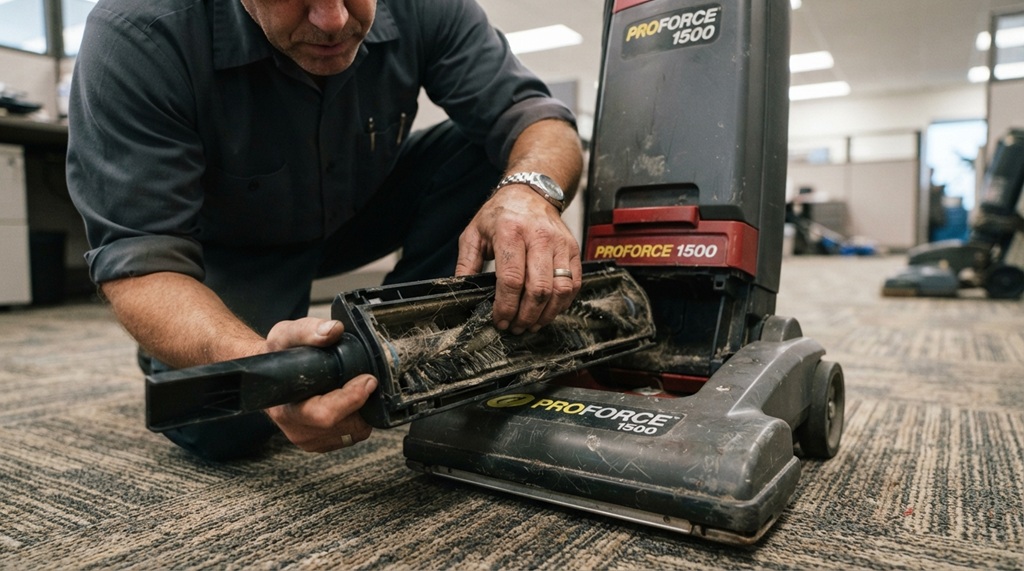
Many business owners make the mistake of buying the cheapest vacuum at a big-box store, only to replace it three months later. Avoiding these common pitfalls will save you money and frustration.
Ignoring the Total Cost of Ownership
The purchase price is only the beginning. Factor in the cost of bags, belts, filters, and potential repair labor. A $100 vacuum that needs a $30 belt replacement every two months is more expensive than a $200 vacuum that only needs a $10 belt twice a year. Calculate the cost per month of ownership, not just the sticker price. This is where finding a budget vacuum that lasts for Texas business becomes a strategic decision rather than a quick purchase.
Buying a Household Model for Commercial Use
Household vacuums are designed for 1-2 hours of use per week. Commercial use means 2-4 hours per day. The duty cycle is completely different. A household motor will overheat and fail under commercial load. Look for models labeled “commercial” or “light commercial.” These have reinforced motors, better cooling, and more durable cords. They may cost slightly more upfront, but they are designed to run for longer periods without failure.
Overlooking Warranty and Parts Availability
A budget vacuum is only a good deal if you can get parts for it. Check if the manufacturer sells belts, filters, and brush rolls directly. If you have to go through a third-party dealer and wait two weeks for a part, your business is left with a dirty floor. Look for brands with a strong distribution network in Texas. Also, read the warranty carefully. A 1-year warranty on a commercial machine is standard, but a 2-year warranty on the motor indicates the manufacturer trusts their product.
Practical Maintenance Tips to Extend the Life of Your Budget Vacuum
Even the most durable budget vacuum will fail prematurely without basic maintenance. Implementing a simple cleaning schedule can double the lifespan of your machine.
Weekly Filter and Brush Roll Checks
Set a reminder to check the filter and brush roll every Friday. Hair, string, and carpet fibers wrap around the brush roll and strain the motor. Cut these away with scissors. Tap out or wash the filter according to the manufacturer’s instructions. A clogged filter reduces airflow, which causes the motor to work harder and overheat. This simple 5-minute check prevents costly repairs.
Proper Cord Management
Never yank the cord out of the wall by pulling on the cord itself. Always unplug at the plug. When storing the vacuum, wrap the cord loosely around the hooks. Do not wrap it tightly, as this stretches the internal wires. Also, avoid running the vacuum over the cord, as this can crush the internal insulation and create a short circuit.
Empty the Bag or Canister Before It’s Full
Wait, isn’t it better to fill the bag completely? No. For optimal airflow, empty the bag or canister when it is about 70-80% full. A full bag restricts airflow, reducing suction and straining the motor. For bagless models, empty the canister after every heavy cleaning session. This keeps the cyclonic action working efficiently and prevents dust from reaching the motor.
Frequently Asked Questions
What is the ideal price range for a durable business vacuum?
For a light commercial vacuum that will last 2-3 years with proper maintenance, expect to spend between $150 and $350. Machines below $100 are typically household-grade and will not withstand daily commercial use. The sweet spot is around $200-$250, where you get commercial-grade motors and durable construction without paying for unnecessary premium features.
Can I use a regular home vacuum for a small retail shop?
Only if the shop is very small and you vacuum for less than 2 hours per week. If you have a small boutique or office, a high-end household vacuum might work for a year or two. However, if you have daily foot traffic and need to clean every day, invest in a light commercial model. The motor and cord are simply built to a higher standard.
Are bagged vacuums better than bagless for businesses?
For most businesses, bagged vacuums are more hygienic and often more durable. You don’t have to empty a dusty canister, which reduces allergen exposure. Bags also hold more debris, meaning less frequent emptying. The downside is the ongoing cost of bags. However, the time saved and the reduced dust exposure often justify the cost.
How often should I replace the belt on my vacuum?
Check the belt every month. If it looks stretched, cracked, or shiny, replace it. A worn belt slips on the motor shaft, reducing brush roll speed and causing the motor to overwork. Most commercial belts cost between $5 and $10. Replacing the belt every 3-6 months, depending on usage, is cheap insurance against a costly motor burnout.
What is the best way to store a vacuum in a hot Texas warehouse?
Store the vacuum in a shaded, dry area away from direct sunlight. Extreme heat can warp plastic parts and dry out rubber seals. If possible, keep it off the concrete floor on a shelf or a piece of cardboard to avoid moisture wicking from the ground. Ensure the cord is loosely coiled and the machine is upright to prevent oil from leaking out of the motor bearings.
Conclusion
Selecting a budget vacuum that lasts for Texas business environments comes down to understanding your specific needs, recognizing quality components, and committing to basic maintenance. You don’t need to spend a fortune, but you do need to avoid the trap of buying disposable household machines. Focus on bypass motors, durable cords, washable filters, and a form factor that matches your floor type. By evaluating the total cost of ownership and avoiding common mistakes, you can keep your business looking professional without constantly replacing equipment. Take the time to inspect the build quality, check the warranty, and implement a simple weekly maintenance routine. Your floors and your wallet will thank you.



Leave a Reply