
Most golfers spend hours researching clubs. They compare shaft flex, loft angles, and grip styles. However, when it comes to golf balls, many players simply grab the cheapest option available or stick with whatever brand they recognize. This is a mistake that quietly holds back your game.
The golf ball is the one piece of equipment you use on every single shot. It interacts with your driver, your irons, your wedges, and your putter. Therefore, choosing the right one is not a minor decision. It is one of the most impactful choices you can make.
This guide explains everything you need to know in simple, clear terms. By the end, you will understand what makes golf balls different from each other and how to find the one that works best for your game.
Why Not All Golf Balls Are Created Equal
Walk into any golf shop and you will find golf balls at wildly different price points. Some cost $15 a dozen. Others cost $55 or more. The difference is not just branding or marketing. It comes down to construction, materials, and the specific performance each ball is designed to deliver.
A ball built for a beginner plays very differently from one designed for a tour professional. Using the wrong ball for your skill level can cost you distance, accuracy, and feel around the greens. Additionally, it can make the game harder than it needs to be.
Understanding what is inside a golf ball and how it is built gives you the knowledge to shop with confidence.
Golf Ball Layers Explained
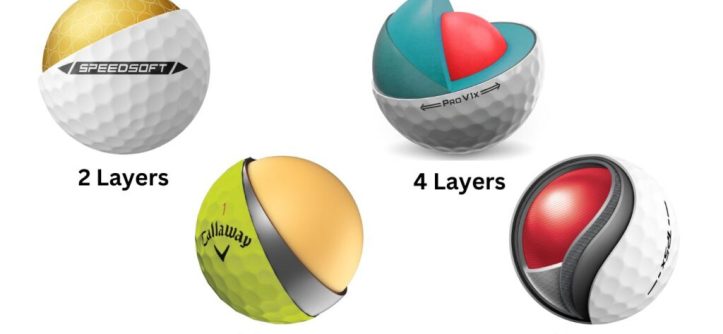
One of the most important things to understand when buying a golf ball is how it is constructed. Golf ball layers explained simply means understanding how many layers are inside the ball and what each one does.
One-Piece Balls
One-piece balls are the most basic type. They are made from a single solid material, usually a form of Surlyn. These balls are extremely durable but offer very little performance. You will mostly find them on driving ranges. They are not recommended for actual play on the course.
Two-Piece Balls
Two-piece balls are the most popular choice among recreational golfers. They consist of a large solid core and a tough outer cover. The core is designed to generate maximum energy on impact, which translates into distance. The cover is usually made from Surlyn, which resists cuts and scuffs well.
These balls are ideal for beginners and high-handicap players. They are forgiving, durable, and easy to hit far. Additionally, they tend to be the most affordable option in the performance category.
Three-Piece Balls
Three-piece balls add a middle layer, often called a mantle layer, between the core and the cover. This layer helps control spin. It reduces spin off the driver for more distance while allowing the softer cover to generate spin with shorter irons and wedges.
Three-piece balls are a great choice for mid-handicap golfers who want a balance of distance and control. They bridge the gap between beginner and advanced options.
Four-Piece and Five-Piece Balls
Four-piece and five-piece balls are the most advanced options available. Each additional layer serves a specific purpose. The innermost core generates speed. The next layers manage energy transfer and spin rates for different types of shots. The outer cover, usually made from soft urethane, delivers feel and short-game control.
These are the balls used by tour professionals and low-handicap players. They deliver the highest level of performance but require a skilled, consistent swing to benefit from everything they offer.
Understanding Compression Rating in Golf Balls
After construction, compression rating is the next most important factor to understand. Compression rating golf refers to how much a ball deforms when it is struck by a club. It is measured on a scale, generally from around 40 to over 100.
A low compression ball is softer and deforms more easily on impact. A high compression ball is firmer and requires more force to compress fully. Matching the right compression to your swing speed is essential for getting the most out of your ball.
Low Compression Balls
Low compression balls typically fall below 70 on the compression scale. They are designed for golfers with slower swing speeds, usually under 85 miles per hour with a driver. When a slower swing strikes a low compression ball, it deforms easily and springs back efficiently. This energy transfer produces better distance than a firm ball would at the same swing speed.
Additionally, low compression balls tend to feel softer, which many golfers find more comfortable around the greens. They are an excellent choice for seniors, juniors, and players who are still developing their swing.
Mid Compression Balls
Mid compression balls usually fall between 70 and 90 on the scale. They suit golfers with driver swing speeds between 85 and 100 miles per hour. These balls offer a balance between the softness needed for feel and the firmness needed for distance at moderate swing speeds.
Most mid-handicap golfers will find that a mid compression ball gives them the best of both worlds. They can generate solid distance off the tee while still enjoying decent spin control with their shorter clubs.
High Compression Balls
High compression balls sit above 90 on the scale, with some reaching over 100. These are built for golfers with fast swings, typically above 100 miles per hour. A fast swing generates the force needed to compress a firm ball fully. When that happens, the energy release is powerful and efficient.
However, a slower swing hitting a high compression ball will not compress it properly. The result is a loss of distance and a harder, less satisfying feel. Therefore, using a high compression ball without the swing speed to match it is counterproductive.
The Role of the Cover Material
The cover of a golf ball affects feel and spin more than almost any other factor. There are two main types of cover material used in modern golf balls.
Surlyn Covers
Surlyn is a hard, durable material used mostly on two-piece and some three-piece balls. It resists damage well, which means the ball holds up longer through repeated use. Surlyn-covered balls also produce lower spin rates, which helps reduce hooks and slices for less consistent swingers.
The trade-off is feel. Surlyn balls tend to feel harder at impact and generate less spin with wedges. For golfers who struggle with accuracy, this is often a fair trade.
Urethane Covers
Urethane covers are softer and more responsive. They interact with the grooves on your clubface to produce more friction and spin. This gives skilled players the ability to shape shots, control trajectory, and stop the ball quickly on greens.
Urethane is used on most three-piece, four-piece, and five-piece balls. It is the preferred material for serious players. However, it is less durable than Surlyn and tends to scuff more easily over time.
How Dimple Patterns Affect Flight
Every golf ball is covered in small dimples. These dimples are not decorative. They serve a critical aerodynamic function. When a ball flies through the air, the dimples create a thin layer of turbulence around its surface. This turbulence reduces drag and helps the ball stay in the air longer.
Different balls use different numbers and shapes of dimples. Some patterns are designed for a high, steep ball flight that stops quickly on landing. Others promote a lower, more penetrating flight that rolls out after landing. Therefore, understanding the flight characteristics of a ball before buying can help you match it to your typical course conditions.
Matching the Ball to Your Skill Level
All of this information leads to one simple question: which ball is right for you?
If you are a beginner or high-handicap golfer, start with a two-piece Surlyn ball with low to mid compression. Prioritize distance and forgiveness over feel and spin. As your game improves, you can experiment with softer options.
If you are a mid-handicap golfer, consider a three-piece ball with mid compression. Look for one that offers a soft urethane cover for improved feel around the greens without sacrificing too much distance.
If you are a low-handicap or scratch golfer, a four-piece or five-piece ball with a urethane cover and compression rating golf matched to your swing speed will give you the greatest performance advantage.
Tips for Testing Golf Balls Before You Buy
Buying a full box without testing is a common and avoidable mistake. Here are a few smart ways to try before you commit.
- Buy a sleeve of three balls and play a round with them.
- Pay attention to feel off the driver, irons, and putter.
- Notice how the ball responds around the greens when you chip and pitch.
- Ask your local pro shop about ball fitting sessions using a launch monitor.
- Take note of how the ball holds up over several holes in terms of scuffs and wear.
Testing takes a little time but saves money in the long run. Additionally, it gives you real-world data about how a ball performs in your hands, which no product description can replicate.
Conclusion
Choosing the right golf ball is not complicated once you know what to look for. Start with golf ball layers explained in terms of your skill level, then match the compression rating golf to your swing speed. Consider the cover material based on whether you prioritize durability or feel. Factor in your course conditions and personal preferences around the greens.
The right ball will feel natural off the clubface, help you hit it further with your driver, and give you the control you need with your short game. It does not have to be the most expensive option on the shelf. It just has to be the right fit for how you play. Take your time, test a few options, and let your game guide the decision.
Frequently Asked Questions
Does the golf ball really make a difference for average players?
Yes, it does. While a beginner will not feel every nuance, using a ball matched to your swing speed and skill level can genuinely improve distance and feel. The difference becomes more noticeable as your game develops.
What compression rating should a beginner use?
Beginners should look for low compression balls, generally rated below 70. These are easier to compress at slower swing speeds and produce better distance and a softer feel without requiring a fast or powerful swing.
Are expensive golf balls worth it for recreational players?
Not always. If you regularly lose balls or are still developing consistency, a quality mid-range two-piece ball offers excellent value. However, once your game becomes more consistent, upgrading to a urethane-covered ball can noticeably improve short-game control.
How long does a golf ball last before I should replace it?
A golf ball can last several rounds if it is not damaged. However, scuffs and cuts on the cover affect aerodynamics and spin. Inspect your ball regularly and replace it when you notice visible damage, especially to the cover.
Can I use tour-level balls if I am a mid-handicap player?
You can, but you may not get the full benefit. Tour balls are designed for fast swing speeds and precise shot-making. However, the soft urethane cover can still improve your feel around the greens even at moderate swing speeds, so it is worth experimenting.
Related Topics:
How to Pick Golf Pants for Rainy Days Without Losing Mobility




Leave a Reply