
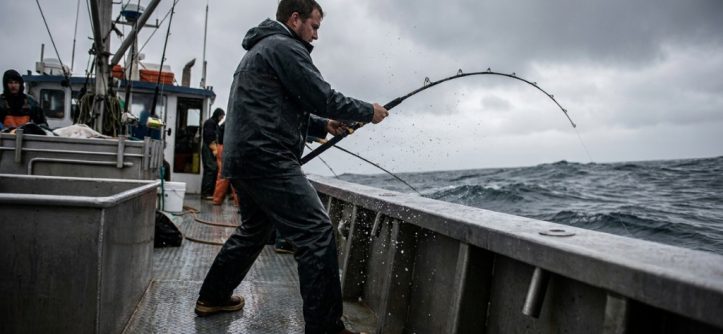
The US Coast Guard reports that slips and falls account for over 20% of all recreational boating injuries — and nearly every single one involves footwear that wasn’t designed for wet marine surfaces. Picking fishing shoes that won’t slip on wet boat decks requires understanding the specific physics of why standard shoes fail on fiberglass and composite surfaces when water is present. A non-slip fishing shoe features a specialized rubber outsole with siping patterns (thin razor-cuts), optimized durometer (rubber hardness), and tread geometry specifically engineered to maintain traction on smooth wet surfaces. The danger isn’t obvious until it happens — a perfectly smooth fiberglass deck covered with a thin film of saltwater becomes essentially frictionless for standard shoe soles. Your regular sneakers that grip dry pavement perfectly become skating rinks on a wet boat deck. One unexpected wave splash, one aggressive hook-set, one quick turn to grab a rod — and your feet are in the air. This guide covers exactly what makes non-slip fishing shoes actually grip wet decks, how to evaluate grip before buying, and which features separate genuinely safe options from marketing hype.
Why Do Regular Shoes Slip on Wet Boat Decks?
Regular shoes slip on wet boat decks because smooth fiberglass creates a hydroplaning effect — water trapped between the flat sole and smooth surface forms a frictionless film that standard tread patterns cannot break through or channel away.
The physics explained simply:
- Surface smoothness: Boat decks are engineered to be smooth — gelcoat and fiberglass create surfaces with minimal texture. Unlike concrete or asphalt (which have micro-roughness that breaks water film), boat decks offer no natural grip assistance to footwear.
- Water film effect: A thin layer of water (even 1mm) on a smooth surface eliminates virtually all friction. Your shoe sole rides on top of the water layer rather than contacting the deck surface directly — identical to hydroplaning in a car.
- Standard tread failure: Athletic shoe treads are designed for dry grip or pavement water displacement. Their channels are too wide and shallow to create the suction and micro-drainage needed for smooth wet fiberglass.
- Rubber compound mismatch: Standard shoe rubber hardens when cold and wet, reducing surface grip. Marine-grade rubber maintains softness (tackiness) in wet conditions — creating molecular-level friction that hard rubber cannot.
This is why “water shoes” often fail too. Most water shoes prioritize drainage and quick-drying over actual wet-surface grip. They’re designed for wading in water, not standing on wet smooth surfaces. The distinction is critical — being in water versus standing on wet surfaces are fundamentally different traction challenges.
What Outsole Technology Actually Prevents Slipping?
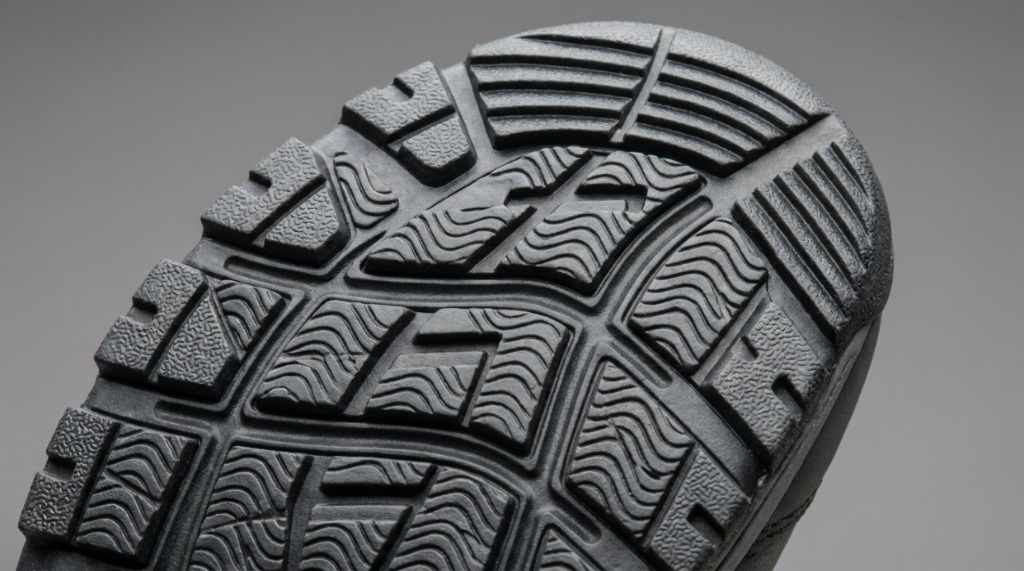
Three outsole technologies prevent slipping on wet boat decks: siping (razor-thin channels that create micro-suction), soft-compound rubber (maintains tackiness when wet), and multi-directional tread patterns (channels water outward from the contact area in all directions).
Detailed breakdown of each technology:
- Siping (most important): Thin cuts (1–2mm wide) sliced across the rubber sole create hundreds of tiny channels. When weight presses the sole against a wet surface, these channels compress — squeezing water out from under your foot and creating vacuum suction against the deck. More siping = more suction = more grip. Inspect any fishing shoe’s sole — visible razor-thin lines across the tread blocks indicate siping. Their absence indicates inadequate wet grip.
- Soft rubber compound (durometer 50–65): Rubber hardness is measured on a durometer scale. Standard shoe soles rate 70–85 (hard). Marine non-slip soles rate 50–65 (soft). Softer rubber conforms to microscopic surface irregularities and creates molecular adhesion — similar to how a slightly sticky surface grips better. This softness is why marine soles wear faster than standard soles — it’s a deliberate trade-off of longevity for grip.
- Multi-directional tread: Water must be channeled away from under your foot quickly. Tread patterns with channels running in multiple directions (not just front-to-back) displace water regardless of which direction force is applied. This matters because boat movement creates unpredictable force directions — you need grip laterally, forward, backward, and rotationally.
| Grip Technology | How It Works | Effectiveness on Wet Deck | Wear Trade-off |
|---|---|---|---|
| Heavy siping | Micro-suction channels | Excellent | Sipes wear smooth over 12–18 months |
| Soft rubber compound | Molecular adhesion to surface | Excellent | Faster overall sole wear |
| Multi-directional channels | Rapid water displacement | Very good | Minimal — channels maintain with wear |
| Standard athletic tread | Pavement friction (not water-optimized) | Poor on smooth wet surfaces | Slow wear but irrelevant — no grip when needed |
How Do You Test Fishing Shoe Grip Before Buying?
Test fishing shoe grip by pressing the sole against a smooth wet surface (tile floor or glass) and attempting to slide it — quality non-slip soles resist sliding with noticeable suction, while poor soles glide freely with minimal resistance.
In-store and at-home testing methods:
- Wet tile test: Find a smooth tile floor (bathroom, kitchen). Wet it with water. Press the shoe sole flat against the wet tile and push laterally. Quality marine soles resist with obvious friction. Standard soles slide with minimal effort. This replicates boat deck conditions closely.
- Glass test: Wet a glass surface (window, mirror). Press the sole against it. Non-slip soles with proper siping create visible suction — you’ll feel resistance and potentially hear a slight suction sound when peeling away. Standard soles create zero suction on wet glass.
- Finger press test: Press your thumb firmly into the outsole rubber. Quality marine-grade rubber feels slightly tacky and soft — your thumb impression stays visible for 1–2 seconds before the rubber springs back. Hard rubber (poor wet grip) shows no impression and feels rigid.
- Siping inspection: Flip the shoe over. Count visible sipe lines per square inch on the tread blocks. Quality fishing shoes show 8–15+ sipe lines per tread block. Fewer than 5 sipes per block indicates insufficient wet-surface grip engineering.
- Flexibility test: Bend the sole. Quality non-slip soles flex moderately — the siping opens visibly during flex, demonstrating how channels activate under foot pressure. Rigid soles that resist bending will resist conforming to deck surfaces under your weight.
If a store won’t allow wet testing: examine the outsole carefully for siping density, check the rubber softness with your thumb, and verify that the brand specifically markets the shoe for “wet deck” or “marine” use — not just “water” use generically.
Which Fishing Shoe Brands Have the Best Non-Slip Technology?
Grundéns, Shimano, XTRATUF, and Simms consistently deliver the best non-slip technology for boat decks — each using proprietary rubber compounds and siping patterns developed specifically for marine grip rather than adapted from athletic shoe designs.
Brand-by-brand non-slip assessment:
- Grundéns: Commercial fishing heritage means their soles are tested in the most demanding conditions — Alaska commercial boats where a slip means death, not just injury. Their Deck-Boss line uses soft rubber with aggressive siping that sets the industry standard for wet grip. Price: $80–$140.
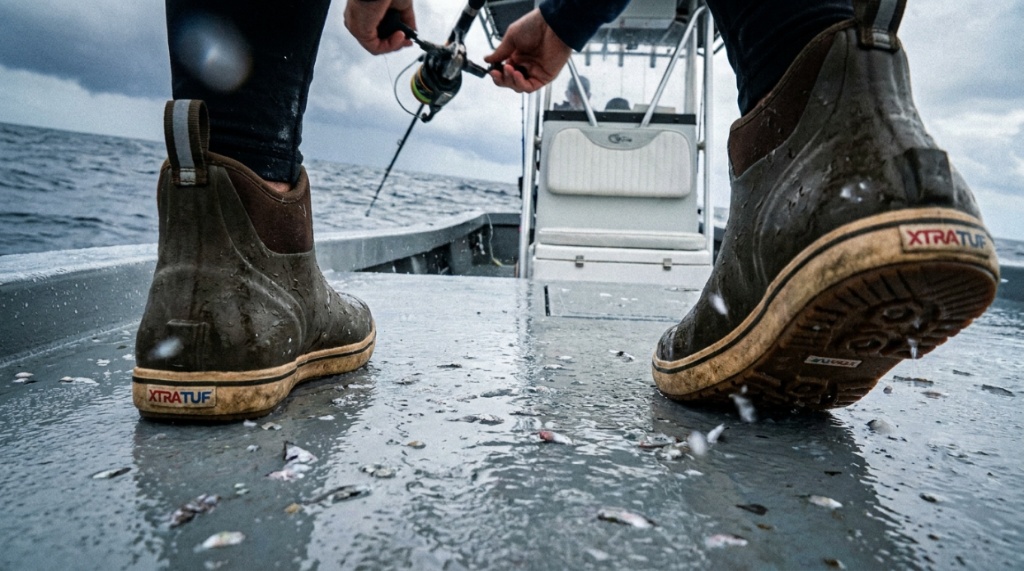
- XTRATUF: Alaska’s fishing boot brand for decades. Their legacy rubber compound (original XtraTuf boots) delivers exceptional wet grip through a combination of soft rubber and deep channel treads. Newer ankle-height options maintain this grip DNA. Price: $70–$130.
- Shimano: Their Evair line uses a proprietary EVA compound that’s both lightweight and grippy — unusual combination since EVA typically sacrifices grip for cushion. Multi-directional drainage channels double as grip channels. Price: $60–$100.
- Simms: Primarily known for wading boots, but their boat shoes (Challenger, Intruder) use proprietary rubber with siping designed for saltwater flats boats. Excellent grip and durability. Price: $90–$160.
- Huk: Newer brand but rapidly improving. Their Rogue Wave boots use non-marking rubber with visible siping and drainage. Good value entry point for non-slip boat shoes. Price: $50–$110.
Brands to approach cautiously: generic “water shoes” from non-fishing brands (Speedo, Merrell water models, generic Amazon options) prioritize water drainage and quick-drying over actual wet-deck grip. They may work for wading but frequently fail the smooth wet fiberglass test that defines boat safety.
Maintaining stability on deck is only half the battle when you’re out on the water; staying efficient with your gear is just as critical. Proper footwear keeps you grounded during a catch, but managing your tackle ensures you can actually land it. Mastering Fishing Line Management for Tangle-Free Casting prevents frustrating knots and nests, allowing you to focus entirely on your footing and your technique without losing valuable time resetting your rig.
What Features Beyond Grip Matter for Wet Deck Safety?
Beyond outsole grip, wet deck safety requires secure foot retention (lacing or strap systems that prevent the shoe from twisting under lateral force), toe protection from dropped tackle, and drainage that prevents water weight from destabilizing your stance.
Complete safety feature checklist:
- Secure closure system: Slip-on shoes can twist on your foot during sudden movements — creating ankle-roll risk even with good sole grip. Lace-up, BOA dial, or secure strap systems lock the shoe to your foot so it responds predictably to every movement. Speed-lacing or BOA systems allow tightening without untying during wet conditions.
- Toe cap/reinforcement: Fishing involves heavy objects near your feet — tackle boxes, anchors, lead weights, pliers, knives. A reinforced toe cap (rubber or composite) prevents crushing injuries from dropped gear. Open-toe sandals on boats create unacceptable injury risk.
- Heel retention: A raised heel counter or padded collar prevents upward foot movement inside the shoe. When the boat lurches, your foot stays planted rather than lifting within the shoe and losing traction control.
- Rapid drainage: Water inside the shoe adds weight unevenly and creates internal slippage between sock and insole. Drainage ports (4–8 holes in sides or sole) evacuate water within seconds of entry, maintaining consistent foot-to-shoe connection.
- Low center of gravity: Flat, wide-base soles provide more stable platform than raised or narrow heel profiles. Boat deck shoes should have minimal heel elevation and maximum sole footprint for stability during boat movement.
- Non-marking sole (protects your investment): While not a safety feature per se, marking a fiberglass deck creates a slippery residue layer over time — dark rubber deposits become additional slip hazards. Non-marking soles protect both the deck surface and long-term traction conditions.
How Do Weather and Water Conditions Affect Your Shoe Choice?
Cold water demands insulated waterproof boots with maximum coverage, hot conditions demand breathable drainage shoes that prevent overheating, and rough seas demand the highest ankle support and grip aggressiveness available.
Condition-specific recommendations:
- Hot calm days (summer inshore): Lightweight drainage shoes or ventilated deck shoes. Breathability prevents foot sweat that creates internal slipping. Light colors reflect heat from sun-exposed decks. Minimal ankle coverage allows air circulation.
- Cold rough days (winter offshore): Insulated rubber boots (XTRATUF, Grundéns) with maximum ankle coverage. Neoprene lining retains warmth. Higher shaft height prevents wave spray from entering. Aggressive sole grip handles deck movement during heavy seas.
- Rain/spray conditions: Water-resistant uppers with sealed seams prevent topside entry while drainage ports handle any water that does enter. Quick-dry materials ensure comfort doesn’t deteriorate throughout a rainy trip.
- Extreme heat (tropical/Florida summer): Maximum drainage and breathability. Consider lighter-weight options with mesh panels — but verify grip technology isn’t sacrificed for ventilation. Some ultra-breathable shoes reduce sole contact area for ventilation, inadvertently reducing grip surface.
Universal rule: never compromise grip for comfort or temperature management. If conditions require both warmth AND grip, buy boots with both features rather than choosing warm boots with inadequate soles. Safety always overrides comfort in prioritization.
How Long Do Non-Slip Fishing Shoes Maintain Their Grip?
Non-slip fishing shoes maintain effective grip for 12–24 months of regular use (2–4 trips monthly) before siping wears smooth and rubber compound hardens from UV/salt exposure — at which point grip performance drops significantly and replacement is needed.
Grip degradation timeline:
- Months 1–6: Peak performance. Siping channels are deep, rubber compound is fresh and tacky, full grip capability.
- Months 6–12: Slight siping reduction. Still highly effective. Regular anglers notice no performance change during this period.
- Months 12–18: Measurable siping wear. Grip begins declining on extremely wet surfaces. Most recreational anglers still find performance adequate.
- Months 18–24: Significant siping reduction. Grip on wet smooth surfaces noticeably decreased. Professional anglers and safety-conscious users should replace at this stage.
- Beyond 24 months: Siping largely worn smooth. Rubber compound hardened from UV exposure. Grip approaches (and may match) standard shoe levels. Replacement overdue.
Extending grip lifespan:
- Rinse with fresh water after every trip (salt accelerates rubber degradation)
- Store away from direct sunlight (UV hardens rubber compounds)
- Rotate between two pairs if fishing frequently (allows rubber recovery between uses)
- Avoid walking on concrete/asphalt in fishing shoes (abrasive surfaces accelerate siping wear exponentially compared to boat decks)
Conclusion
Non-slip fishing shoes aren’t a luxury — they’re the most important safety equipment on any boat after your life jacket. The physics of wet smooth surfaces make standard footwear genuinely dangerous, and the consequences of a fall on a boat (sharp equipment, hard edges, risk of going overboard) are severe. Choosing fishing shoes with proper siping, soft rubber compounds, and multi-directional tread patterns eliminates this preventable risk.
Test before you trust. Press soles against wet smooth surfaces. Inspect siping density. Verify rubber softness. Choose established marine brands with proven track records over generic alternatives. And replace shoes when grip degrades — no fishing shoe lasts forever, and worn soles return you to the dangerous baseline of standard footwear on wet decks. Your stability on the water depends on the few square inches of rubber between your feet and the deck. Make those inches count.
Frequently Asked Questions
Can boat shoes (Sperry-style) replace fishing-specific shoes?
Traditional boat shoes like Sperry Top-Siders provide moderate wet grip through their wave-siped outsole — adequate for casual boating. However, they lack the aggressive siping density, drainage systems, toe protection, and secure fit features of purpose-built fishing shoes. For active fishing involving sudden movements, heavy gear, and hook hazards, dedicated fishing shoes significantly outperform lifestyle boat shoes in both safety and function.
Are Crocs safe for fishing on boats?
Crocs are not safe for boat deck fishing. Their sole material provides poor grip on wet fiberglass, the loose fit allows dangerous foot shifting during boat movement, and the open design offers zero protection from hooks, knives, or dropped tackle. Crocs may work for casual dock fishing in calm conditions, but they’re inadequate and potentially dangerous for any active boat-based fishing.
How do I maintain non-slip grip on fishing shoes?
Rinse soles with fresh water after every trip to remove salt, sand, and fish oils that fill siping channels and reduce grip. Use a stiff brush monthly to clear debris from sipe cuts. Store away from UV exposure (sunlight hardens rubber). Never dry fishing shoes on heaters — extreme heat accelerates rubber compound degradation. When siping becomes visibly worn smooth, replace the shoes regardless of upper condition.
Do I need different shoes for different deck materials?
Fiberglass, painted aluminum, and composite decks all benefit from the same siping technology — soft rubber with razor-cut channels. However, bare aluminum (common on jon boats) provides more inherent texture than fiberglass, meaning even moderate-grip shoes perform adequately. Teak decks provide natural grip when wet. The smoothest and most dangerous surfaces are gelcoated fiberglass — prioritize maximum siping for these boats.
What should I do if my fishing shoes start slipping?
First, clean the soles thoroughly — fish slime, sunscreen, and oils create a lubricating layer over grip features. If clean soles still slip, inspect siping depth: if channels are worn smooth, replacement is necessary. For temporary improvement, roughen smooth areas with coarse sandpaper (80-grit) to restore micro-texture. However, this is a short-term fix — compromised soles should be replaced for safety.
Are steel-toe fishing boots necessary?
Steel-toe boots aren’t necessary for recreational fishing — they add significant weight and reduce foot flexibility. Rubber or composite toe caps provide adequate protection from dropped tackle without the weight penalty. Steel-toe boots are reserved for commercial fishing operations where extremely heavy equipment (crab pots, anchor chain, commercial tackle) creates crushing hazards beyond what recreational anglers encounter.


Leave a Reply