
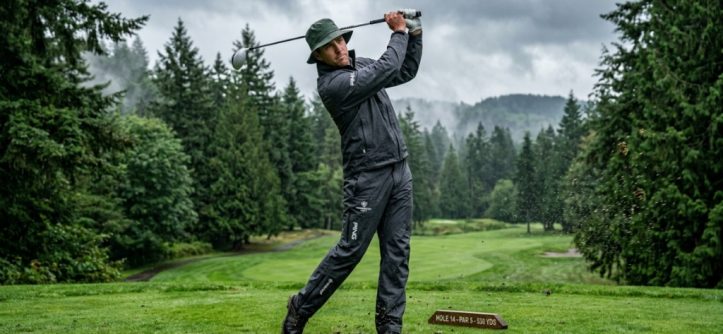
Washington golf is a test of patience, skill, and gear. The lush green fairways of the Pacific Northwest come with a price: relentless drizzle, sudden downpours, and wind that cuts straight through you. You have probably experienced that miserable round where the damp seeps into your bones, your grip slips on the 14th hole, and the only thing you are thinking about is the warm car. The problem is not the weather; it is the protection you are wearing. Finding the right rain jacket and suit for WA golf is not about luxury—it is about survival on the course. This guide breaks down exactly what to look for, how to layer, and which materials actually work in the unique climate of Washington State.
What Makes Washington’s Rain Different for Golfers?
Unlike a summer thunderstorm that passes in ten minutes, Washington rain is persistent, fine, and often accompanied by temperatures between 45°F and 60°F. This means your gear must handle constant moisture, not just a brief shower. The humidity levels are high, so breathability becomes just as critical as waterproofing. A jacket that traps sweat will leave you just as wet as the rain.
Understanding the “Misty” Conditions
The majority of rainfall in Western Washington is a light, continuous mist rather than heavy rain. This fine mist requires a tightly woven fabric or a durable water repellent (DWR) finish to bead up the water effectively. If your jacket has a low hydrostatic head rating, the mist will eventually soak through, leaving you chilled.
The Wind Factor in the Puget Sound Area
Wind accelerates heat loss exponentially. A rain jacket that is not windproof will feel useless when you are standing over a putt on the 8th green at Chambers Bay. You need a shell that blocks the breeze entirely while allowing vapor from your body to escape. Look for sealed seams and adjustable cuffs to lock out the drafts.
Temperature Swings Across the State
Playing in Spokane is different from Olympia. Eastern Washington is drier but colder. This means your rain suit must be versatile enough for both cold, dry conditions and cool, wet ones. A mid-layer under a quality shell is often the answer, but the shell itself must not be too insulated for the milder western side of the state.
Why Breathability Is Non-Negotiable for WA Golfers
Breathability is measured in grams (g/m²/24h). For Washington golf, you need at least 10,000g, but ideally 15,000g to 20,000g. If you skip this, you will experience condensation buildup inside the jacket. This internal moisture is caused by sweat and is often more uncomfortable than the rain itself.
The Science of Sweat and Vapor
As you walk 18 holes, your body generates significant heat. A non-breathable jacket turns into a personal sauna. The vapor cannot escape, so it condenses on the inside of the fabric. This makes your base layer wet and clammy. High breathability ensures the vapor molecule exits before it turns into liquid.
How to Check Breathability Ratings
Look for the “MVTR” (Moisture Vapor Transmission Rate) on the label. A rating of 20,000g is excellent and corresponds to heavy exertion. For golf, which involves walking and swinging, a 15,000g rating is a solid baseline. Golf-specific suits often prioritize breathability over ultimate waterproofing to accommodate the stop-and-start nature of the game. To ensure your equipment performs from tee to green in wet weather, pair your outerwear correctly and choose the right golf ball that maintains optimal spin and control even on damp fairways.
Ventilation Features That Help
Look for underarm zippers (pit zips) that allow you to dump heat quickly. In Washington, you often start a round cold, then warm up after two holes. Pit zips allow you to regulate temperature without removing the entire jacket. Mesh-lined pockets also help with airflow, though they are not critical if the fabric breathes well.
Which Materials Offer the Best Waterproofing?
There are three main types of waterproof fabrics: membrane laminates (like Gore-Tex), polyurethane (PU) coatings, and proprietary fabrics. For golf in WA, membrane laminates are the gold standard because they are durable and breathable. PU coatings are cheaper but often stiff and prone to peeling after a few washes.
Gore-Tex vs. Proprietary Membranes
Gore-Tex is the benchmark, but it is expensive. Many companies now offer their own membranes, such as Theraband or Z-Tex, that perform similarly at a lower price. The key is to check either the “hydrostatic head” rating (waterproof) or the “MVTR” (breathability). A 10,000mm hydrostatic head is adequate, but 20,000mm is better for prolonged exposure.
The Role of DWR Finish
The outer face fabric of your jacket is coated with DWR (Durable Water Repellent), which makes water bead up and roll off. Over time, DWR wears off, causing “wetting out.” This is when the outer fabric soaks through, but the membrane is still intact. You will feel dampness, but you won’t actually be wet. You must reapply DWR periodically to maintain performance.
Why 3-Layer Construction Trump’s 2-Layer
For serious WA golfers, a 3-layer fabric is superior. In a 3-layer build, the membrane is bonded to an outer shell and an inner knit mesh. This style eliminates the need for a separate liner, reduces weight, and prevents the membrane from rubbing against your clothes. 2-layer suits often feel taped and stiff, restricting your swing.
How Should a Rain Suit Fit for a Full Golf Swing?
Ill-fitting rain gear destroys your swing. You need a cut that allows for full shoulder rotation and a full hip turn. The jacket should not be so long that it bunches at your waist when you bend over. The sleeves must be long enough to cover your wrists in the address position without riding up on the backswing.
The “Address Position” Test
When you try on a rain jacket, put yourself in your golf stance. Reach down as if you are teeing up the ball. The sleeves should stay comfortably placed on your wrists. The back of the jacket should not pull tight across your shoulder blades. If it does, the cut is too narrow.
Shoulder and Sleeve Articulation
Look for gusseted underarms or articulated elbows. These allow the arms to move freely without lifting the entire jacket. Raglan sleeves are also a good choice because they offer more mobility around the shoulder joint. Avoid jackets with heavy shoulder seams that can restrict movement.
Trouser Fit for the Golf Swing
Rain trousers must be tailored, not baggy. Excess fabric flaps in the wind and gets tangled in your leg on the follow-through. Look for an elasticated waist and adjustable hems. You want them to sit high enough to cover your lower back when you bend over, but not so high that they are uncomfortable.
Can a Rain Suit Be Lightweight and Still Keep You Dry?
The short answer is yes. Modern technology allows for ultra-lightweight shells that can pack into a small pouch. Many of these weigh under 300 grams. The trade-off is durability. A lightweight suit is perfect for mild, 50°F rain, but it might not withstand a sustained downpour or the friction of a golf bag for years.
Ultra-Lightweight vs. All-Day Duty
If you are a fair-weather golfer who only plays when the forecast looks slightly damp, a lightweight jacket is fine. If you play every weekend regardless of the conditions, you need a heavier, more durable shell. In WA, you often face two seasons in one round, so a melange of both is ideal—light enough to pack but tough enough to last.
Packing and Storage
Check if the jacket stuffs into its own pocket. This is a lifesaver when the sun comes out. In Washington, the weather can change in 20 minutes. Having a small, packable shell in your bag means you are always prepared without carrying extra bulk. Look for a “storage bag” or a “stuff sack” included.
Durability in the Bag
The zippers are the weakest point on lightweight gear. Ensure they are waterproof or at least have a storm flap behind them. YKK Vislon zippers are the best. A flimsy zipper will fail after a handful of rounds. Inspect how the fabric is taped at the seams; taping that is poorly applied will peel and cause leaks.
Which Features Are Worth Paying Extra For?
You do not need to buy the most expensive suit, but certain features are worth the investment. A two-way front zipper allows you to unzip the bottom when sitting in a cart. Adjustable hoods that fit over a baseball cap are essential. Velcro cuffs are better than elastic because they allow for a custom fit.
The Importance of a High Collar
A high, fleece-lined collar protects your neck from cold wind and rain. In WA, you often face gusts that drive rain straight down your collar. A collar that stands up and closes securely will keep you dry far better than one that folds flat. Look for a chin guard to prevent zipper chafing.
Zipper Types and Storm Flaps
Waterproof zippers are excellent but expensive. A cheaper alternative is a standard zipper covered by a large storm flap that is secured with snaps or magnets. This prevents water from penetrating through the teeth. Ensure the flap is long enough to cover the entire zipper track during a swing.
Pocket Placement and Design
You need a pocket to hold your scorecard or tees. However, the pockets should not be in the way of your swing arc. Look for high, chest-level pockets or hand-warmer pockets that sit just below the hip bone. Interior pockets are useful for valuables, but they must be lined with a waterproof membrane.
What Is the Best Way to Layer Under Your Rain Suit?
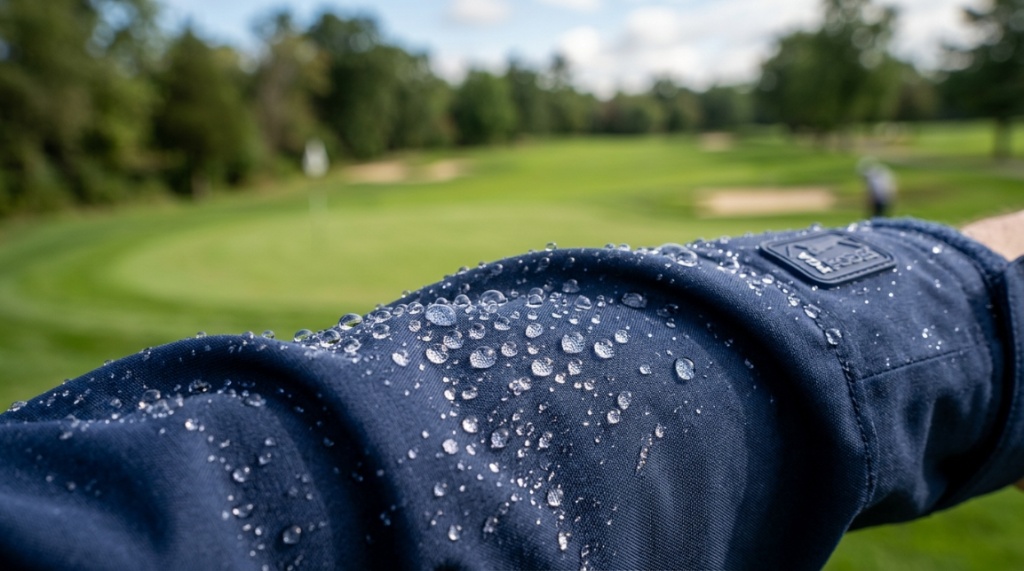
Layering is the most effective way to stay warm and dry. The system is simple: a wicking base layer, an insulating mid-layer, and the waterproof shell. Avoid cotton at all costs because it absorbs moisture and holds it against your skin. You want fabrics that are engineered to move moisture away.
Base Layer Selection
Merino wool or synthetic polyester blends are your friends. These materials wick sweat away from your body and dry quickly. For 50°F weather, a lightweight 150-weight merino shirt is ideal. For colder days near freezing, go with a thicker 250-weight. Do not use cotton t-shirts.
Mid-Layer Insulation for WA
Your mid-layer should be a fleece or a light, packable down jacket. However, remember that down loses its insulation when wet. For this reason, a synthetic puff jacket (like PrimaLoft) is a better choice under a shell in wet climates. It retains warmth even when damp. A vest is often sufficient for high-exertion rounds.
Avoiding the “Boil-in-the-Bag” Effect
If you overlayer, you will sweat. Sweat equals moisture, and moisture equals cold. On mild days, you may only need the shell over a simple polo. Give yourself the option to adjust. Your shell must have enough room to accommodate a mid-layer without feeling restrictive during your swing.
How Do You Care for Your Rain Gear to Ensure Longevity?
Your rain suit is an investment. Proper care will extend its life significantly. The most common mistake is using standard laundry detergent, which leaves a residue that breaks down the DWR and clogs the membrane. You must use a specialized technical cleaner.
Washing Your Rain Jacket
Wash your jacket separately with a liquid detergent that is free of fabric softeners. Use a gentle cycle with warm water. Do not use bleach. Rinse thoroughly to remove all soap. It is recommended to wash the jacket after every few uses if it gets dirty, or at least once a season.
Drying and Reproofing
Tumble dry on low heat, but ensure the jacket is not too hot. For reproofing, use a spray-on DWR treatment while the fabric is slightly damp. This reactivates the water repellency. Alternatively, some products are wash-in. Always air-dry the item after treatment to let the DWR set.
What to Avoid
Avoid fabric softeners, ironing, and dry cleaning. These can damage the membrane and delaminate the layers. Do not store your jacket compressed in the stuff sack. Hang it up in a cool, dry place. Compression can cause creases that weaken the fabric over time.
What Are the Most Common Mistakes Golfers Make When Buying Rain Gear?
Many golfers buy based on price or brand name without considering the specific demands of PNW golf. The most common mistake is buying a jacket that is too small to swing in. The second is overlooking the trousers. A waterproof jacket is useless if your pants are soaking wet.
Ignoring the Trousers
Your legs take a beating from wet fairways and rain bouncing off the ground. Many golfers buy a jacket and wear jeans underneath. Wrong. Waterproof trousers are essential. Look for half-zip pants that pull over your normal golf pants. They are easier to remove between rain delays.
Choosing Style Over Substance
Some brands sell “fashion” rain jackets that look good in the clubhouse but fail on the course. They lack taped seams or have a low hydrostatic head. Check the spec sheet, not just the look. Your jacket must have at least a 10,000mm waterproof rating and fully taped seams.
Not Testing the Fit with a Swing
Always try on the gear and mimic a swing. This is crucial. You should not feel any resistance from the jacket or pants. If you feel pulling in the shoulders or hips, the fit is wrong, and it will affect your performance.
Is a Golf-Specific Rain Suit Better Than a General Rain Jacket?
Yes, usually. Golf-specific suits have a tailored fit for the golf posture. They are shorter in the front and longer in the back to cover you when you bend. They also have shoulder seams that are shifted forward for a swing. General-purpose hiking jackets are often too long and bulky.
The Cut and Styling Differences
A golf jacket has a drop-tail hem. This keeps your lower back and kidneys dry when you are in your stance. It may also have a slightly longer sleeve length to accommodate the forward arm extension. General outerwear is designed for a neutral standing posture, which falls short on the course.
Pockets and Access for Golf
Golf suits often include a special pocket for a glove and a ring for a towel. The pockets are positioned to be accessible when you are wearing the suit during a round. General-purpose jackets may have these, but they are not always in the right spot for the golf swing. The added convenience is worth the price.
When a General Jacket Suffices
If you are on a tight budget and already own a high-quality hiking shell, you can make it work. You just need to ensure it has a hood that can be packed away and a fit that is loose enough for the swing. However, for the specific weather patterns of Washington, a dedicated golf suit is the superior choice.
What Is the Perfect Rain Gear Setup for a Winter Round in WA?
The ideal setup for a typical 50°F wet round is a base layer of merino wool and a mid-layer of fleece. Your outer layer should be a 3-layer waterproof and windproof jacket with pit zips, paired with half-zip rain trousers. This system is flexible enough to handle 45°F to 60°F conditions.
Components of the Ideal Kit
Start with a jacket from a premium brand like Galvin Green, ProQuip, or Sunice. These brands design specifically for golf. Pair it with trousers that have an elastic waistband and reinforced hems. You might also need a waterproof winter glove and a watch cap that fits under your hood.
Footwear and Grip
Waterproof shoes are non-negotiable. Spiked shoes are better for grip in wet conditions. You also want to carry a spare towel and a waterproof hat. Your grip pressure must be slightly firmer, but your gear cannot be slick.
Staying Dry Inside and Out
Remember that keeping dry is about managing both external rain and internal sweat. Use your pit zips proactively. When you are walking, open them. When you are standing over a shot, close them to keep the warmth in. This active management is the key to comfort.
To see specific models and compare top-rated gear recommended by local Pacific Northwest players, you can check out this detailed guide on the best rain jacket and suit for WA golf.
Frequently Asked Questions
Q: Is Gore-Tex worth the extra cost for golf in Washington?
Gore-Tex offers the best durability and breathability. If you play frequently in heavy rain, yes. If you only play occasionally, a proprietary membrane with similar ratings is a better value.
Q: Can I use a ski jacket for golf in the rain?
No. Ski jackets are too insulated and bulky. They restrict your swing and cause overheating. You need a shell, not a heavily insulated jacket.
Q: How do I know if my rain suit is too small?
If you feel tension in the shoulders or back when you mimic a swing, it is too small. The jacket should feel slightly roomy when standing in a neutral position.
Q: How often should I reapply DWR to my rain jacket?
Check the water beading. If water soaks into the face fabric instead of beading up, it is time. Usually, you will need to reproof every 3-5 washes or after several heavy uses.
Q: What is the best base layer for a rainy round?
Merino wool is the best. It retains warmth even when wet and resists odor. Synthetic polyester is a close second. Avoid cotton at all costs.
Q: Do I really need waterproof trousers?
Yes, absolutely. You will get soaked just from the wet grass and rain bouncing off the course. Waterproof trousers are not optional for WA golf.
Q: What is a good hydrostatic head rating for a golf jacket?
You need at least 10,000mm. For players who spend hours in the rain, 20,000mm is better. Anything above 20,000mm offers diminishing returns.




Leave a Reply