
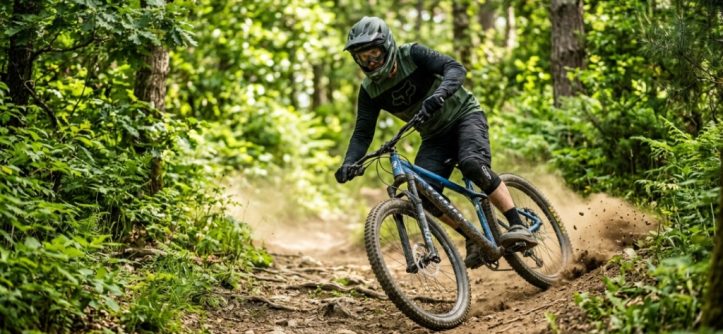
A riding buddy on a brand-new $2,000 29er asked how I was keeping pace on my “outdated” 26 inch mountain bike during a technical descent last month — the answer is simple: smaller wheels accelerate faster out of corners, snap between line changes quicker, and feel more playful on twisty singletrack than the wagon wheels everyone insists are necessary. The industry moved to 27.5 and 29-inch wheels and declared 26ers dead, but the physics did not change — 26-inch wheels still do specific things better than larger wheels, and millions of riders still enjoy them on trails every weekend. A trail riding bike with 26-inch wheels is not obsolete; it is specialized for a riding style that values agility, acceleration, and playfulness over rollover speed and momentum maintenance. This guide honestly evaluates where 26ers still excel, where they genuinely fall short, and who benefits from choosing them in 2025.
What Are the Real Advantages of 26 Inch Wheels on Trails?
26-inch wheels provide three measurable advantages over larger wheels: faster acceleration from standing start and out of corners (less rotational mass), quicker handling response and direction changes (shorter wheelbase, lower center of gravity), and better fit for shorter riders (proportional frame geometry without sizing compromises).
- Faster acceleration: Smaller wheels have less rotational inertia — they spin up faster with the same pedal force. On trails with frequent stops, starts, and corner exits, this acceleration advantage is noticeable and genuine. The difference: approximately 8–12% faster spin-up versus equivalent 29er wheels.
- Quicker handling: Smaller wheels create shorter wheelbases and lower front-end height. The bike responds faster to steering input, changes direction more quickly between obstacles, and feels more “flickable” on tight, technical singletrack.
- Better short-rider fit: Riders under 5’4″ often struggle with 29er geometry that raises standover height and stretches reach. 26-inch wheels allow properly proportioned small frames without the geometric compromises that make small 29ers feel awkward.
- Lighter total weight: Smaller wheels, tires, and tubes weigh 1–2 lbs less than 29er equivalents. For riders who prioritize climbing efficiency or total bike weight, this advantage is real.
- Stronger wheels: Shorter spokes on 26-inch wheels create a stiffer, more laterally rigid wheel that resists flex under hard cornering forces better than the longer spokes of 29ers.
What Are the Honest Limitations of 26 Inch Wheels?
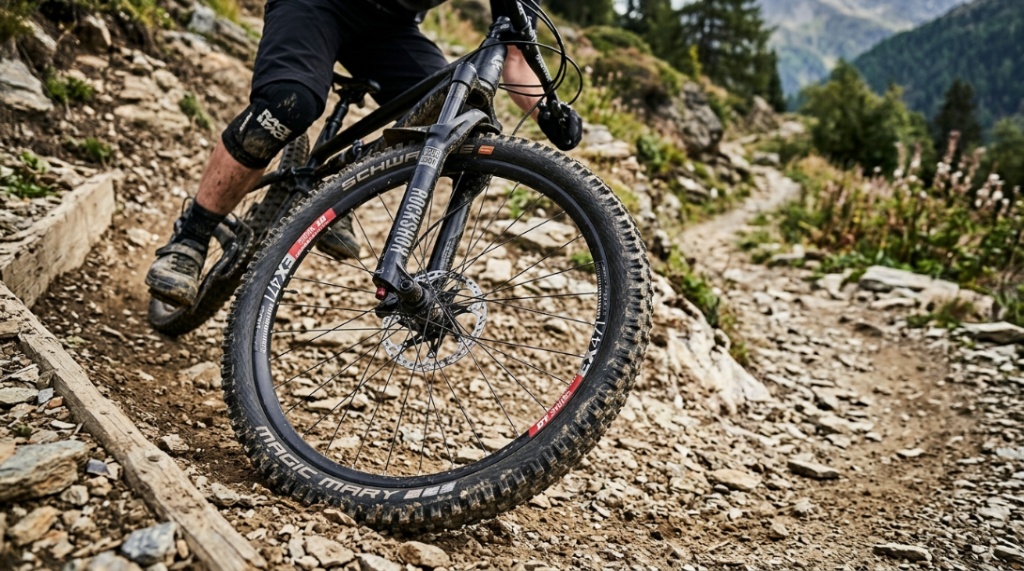
26-inch wheels have two genuine performance limitations: reduced rollover capability (they deflect more off rocks and roots that 29ers simply roll over) and lower momentum maintenance (they decelerate faster through rough terrain because the smaller diameter catches on obstacles rather than bridging them).
- Rollover limitation: A 26-inch wheel contacts obstacles at a steeper angle than a 29-inch wheel (geometry of circle meeting square edge). This means 26ers “catch” on roots and rocks that larger wheels glide over. The rider must actively manage line selection and momentum where 29er riders can be lazier.
- Momentum loss: Each obstacle that catches the wheel scrubs speed. Over a rough trail section, 26ers lose more accumulated speed than 29ers — requiring more pedal effort to maintain the same pace through sustained rough terrain.
- Contact patch: Smaller diameter creates a shorter contact patch for the same tire width. Slightly less traction in straight-line braking and climbing grip (though tire compound and width compensate significantly).
- Industry support declining: Fewer new tire options, fork options, and complete bikes are available in 26-inch. Replacement parts are still available, but the selection shrinks annually. Not an immediate problem but a long-term consideration.
The honest assessment: on smooth or moderately technical trails, 26ers perform within 5% of larger wheels. On sustained rough, rocky terrain, 29ers provide measurable advantages. The gap between wheel sizes is smallest on the trails most recreational riders actually ride.
Who Should Still Choose a 26 Inch Mountain Bike in 2025?
26-inch mountain bikes remain the right choice for: riders under 5’4″ who need proportional geometry, budget-conscious buyers finding excellent used 26ers at 40–60% off, riders who prioritize playful handling over raw speed, and anyone whose local trails are tight and technical rather than fast and rough.
- Short riders (under 5’4″): Frame geometry designed around 26-inch wheels provides natural proportions for smaller bodies. XS and Small 29er frames often compromise standover, reach, or handling geometry to fit the larger wheel — creating bikes that technically fit but handle awkwardly.
- Budget buyers: The used market is flooded with high-quality 26-inch bikes at fraction of original price because the industry declared them “outdated.” A 3-year-old $1,500 26er for $400–$600 delivers component quality that no new bike at that price can match.
- Technical trail riders: On tight, twisty singletrack with frequent direction changes, the 26-inch wheel’s quick handling creates a more engaging, playful riding experience than larger wheels that feel like steering a bus through the same tight sections.
- Kids/teens transitioning: Youth riders moving from kid bikes to adult-sized bikes often fit 26ers perfectly before growing into 27.5 or 29-inch frames. A quality 26er serves as a 2–4 year transitional bike.
- Commuter/utility riders: For mixed-use bikes (trails + errands + commuting), 26-inch wheels offer adequate trail capability with better urban maneuverability and lower overall bike weight for daily use.
The BrightPeak 26-inch mountain bike represents the modern affordable 26er category — offering adults a capable trail platform at a price point that 29ers cannot match while providing the quick handling that makes recreational trail riding genuinely fun.
How Does a 26er Compare to 27.5 and 29 on Real Trails?
On smooth to moderate trails (80% of recreational riding), the performance difference between wheel sizes is 3–5% — perceptible to experienced riders but negligible for most recreational trail users. The difference becomes meaningful (10–15%) only on sustained rough, rocky terrain or high-speed descents where rollover advantage compounds over distance.
| Trail Type | 26″ Performance | 27.5″ Performance | 29″ Performance |
|---|---|---|---|
| Smooth singletrack | Excellent (quick, playful) | Excellent | Excellent (efficient) |
| Tight/twisty trails | Best (quickest handling) | Very good | Good (feels large) |
| Moderate technical | Good | Very good | Very good |
| Heavy rocks/roots | Adequate (requires technique) | Good | Best (rolls over easily) |
| Climbing | Very good (light, quick spin-up) | Good | Good (momentum helps) |
| High-speed descents | Good (less stable at speed) | Very good | Best (most stable) |
The takeaway: for 80% of what recreational riders do, wheel size matters far less than fitness, technique, and component quality. A skilled rider on a 26er outperforms a beginner on a 29er every single time. Wheel size is a refinement — not a revolution.
What Should You Look for in a Modern 26 Inch Trail Bike?
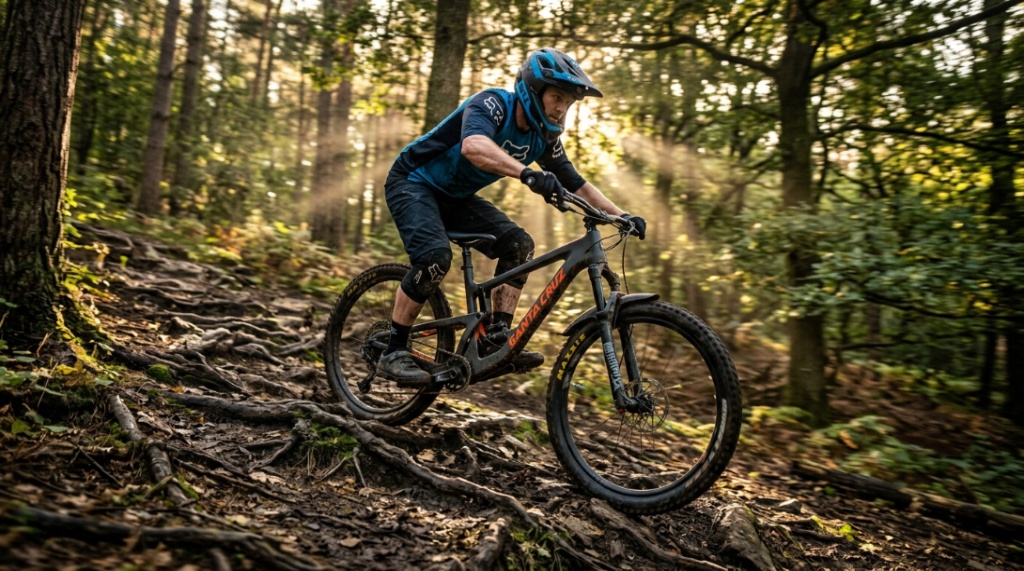
Modern 26-inch trail bikes should have: hydraulic disc brakes (non-negotiable), a quality suspension fork with 100–120mm travel, a 1x drivetrain for simplicity, and a frame with modern geometry (slack head angle, short chainstays) — older geometry 26ers from 2010 and earlier ride significantly worse than modern-geometry options.
- Frame geometry: Look for head tube angles of 66–68° (not the 70–71° of old-school 26ers). Modern slack geometry transforms how 26-inch bikes handle descents — they become confident rather than twitchy at speed.
- Suspension: 100–120mm fork travel handles the trail demands that 26-inch wheels face. Ensure the fork is from a reputable brand (RockShox, Fox, SR Suntour upper range) with available service parts.
- Brakes: Hydraulic disc brakes are essential regardless of wheel size. The smaller wheel’s reduced momentum means less braking force is needed — but hydraulic modulation provides the control that technical trail riding demands.
- Tires: 2.2–2.4 inch wide tires compensate for the smaller wheel’s reduced contact patch by providing width-based grip. Tubeless-ready rims allow lower pressures for additional traction and comfort.
- Drivetrain: 1×10 or 1×11 systems provide adequate gear range with trail-friendly simplicity. 26-inch wheels need slightly different gearing than 29ers — a 30T or 32T chainring with 11-46T cassette provides equivalent range.
When assessing how well smaller wheels perform on technical terrain, remember that equipment size dictates your entire ride experience. Alongside wheel diameter, matching your physical geometry to your bike is critical for handling tight singletracks. Finding the Right Mountain Bike Frame Size for Comfort and Control ensures that your body weight is distributed perfectly over the axles, allowing you to maximize the nimble, snappy advantages that a classic 26-inch platform naturally delivers.
Conclusion
A 26-inch mountain bike is genuinely good for trail riding — not just “acceptable” or “outdated but functional.” On tight singletrack, in the hands of short riders, at budget price points, and for playful riding styles that prioritize snap and agility over raw rollover speed, 26ers deliver specific advantages that larger wheels cannot replicate. Their limitations (reduced rollover, faster momentum loss on rough terrain) matter primarily on sustained rocky descents that most recreational riders rarely encounter.
Choose a 26er with confidence if: your trails are tight and twisty, your height favors smaller wheel proportions, your budget benefits from the excellent used market, or you simply prefer the quick, playful handling that makes recreational trail riding feel like play rather than work. The right bike is the one that puts a grin on your face — and for many riders, that is still a 26-inch mountain bike.
Do you still ride a 26er — and what keeps you on it over larger wheels? Share your experience below.
Frequently Asked Questions
Are 26 inch mountain bikes obsolete?
No — obsolete means non-functional, and 26ers function perfectly on trails. They are less commercially supported (fewer new models, shrinking tire selection) but remain fully capable trail bikes. Millions of riders worldwide still ride 26ers daily. The industry moved on; the physics did not change.
Can I still buy tires and parts for a 26 inch mountain bike?
Yes — all major tire brands (Maxxis, Schwalbe, Continental, WTB) still produce 26-inch trail tires. Selection is reduced versus 29er options but adequate. Forks, wheels, and components remain available. Parts will stay available as long as the installed base of 26ers remains large — which will be years yet.
Should I upgrade my 26er or buy a new 29er?
If your 26er frame has modern geometry (post-2015) and accepts current components, upgrading makes financial sense — $200–$400 in targeted upgrades (fork, brakes, tires) transforms the ride. If your 26er has outdated geometry (steep head angle, long stem), selling it and buying a new bike provides more improvement than any component upgrade can deliver.
Is a 26 inch bike good for a tall rider?
Riders over 6′ generally benefit from larger wheels that provide proportional geometry. 26-inch wheels on XL frames create visual and geometric awkwardness — short wheelbase relative to rider height, cramped cockpit feel. Tall riders should prefer 29ers for proper frame proportions. 26ers are optimal for riders under 5’8″.
Do 26 inch wheels make climbing easier?
Slightly — less rotational mass means faster spin-up for each pedal stroke, which helps on short punchy climbs. On long sustained climbs at steady pace, the difference is minimal because momentum (where 29ers shine) matters less during steady-state climbing. Overall climbing difference: approximately 3–5% in 26er’s favor for short steep efforts.
Can 26 inch mountain bikes handle downhill trails?
Yes — with appropriate technique. 26ers require more active riding on descents (choosing lines, maintaining momentum, body positioning) versus 29ers that plow through rough sections more passively. For skilled riders who enjoy active, engaged descending, 26ers provide a more exciting experience. For riders who prefer a stable, forgiving descent platform, larger wheels serve better.



Leave a Reply