
Maintaining a hybrid bike mainly requires regular checks, cleaning, lubrication, and timely part replacement. A simple routine keeps shifting smooth, braking reliable, tires responsive, and everyday rides comfortable. The need matters because the latest CPSC report estimated 1,332,100 bicycle related emergency visits from 2022 through 2024. Falls caused about 40% of riding related incidents during that period. These numbers reinforce one simple point: a well maintained bike deserves attention before problems become safety concerns. Fortunately, you do not need advanced mechanical skills for most routine care. You need a repeatable inspection habit and a few basic tools.
Build a Maintenance Routine Around Riding Frequency
A hybrid bike responds best to consistent care rather than occasional intensive servicing. Your riding distance, weather, storage conditions, and road surfaces should guide your routine.
For everyday commuting, perform quick checks before rides and basic cleaning each week. Riders who face rain, dirt, or road salt should inspect and clean components more frequently.
Use This Simple Maintenance Rhythm
A practical schedule can keep maintenance manageable:
- Before each ride: Check tires, brakes, wheels, and quick release points.
- After wet rides: Dry the frame, wheels, chain, and other exposed components.
- Every week: Clean the bike and inspect the drivetrain for dirt or unusual wear.
- Every few weeks: Check chain lubrication, tire pressure, brake pads, and shifting.
- Every few months: Inspect cables, bearings, fasteners, tires, and drivetrain wear.
- Annually: Consider a professional inspection if you ride frequently or notice persistent problems.
This schedule does not replace manufacturer instructions for specific components. Instead, it creates a practical baseline for everyday hybrid bike care.
Start With a Quick Pre Ride Inspection
A thirty second inspection can reveal problems before they affect your ride. Make this check automatic whenever you prepare to leave.
First, squeeze both brake levers and confirm that each brake responds firmly. Next, check both tires for low pressure, cuts, embedded objects, or unusual bulges.
Spin each wheel and watch for obvious wobbling or rubbing. Then push the bike gently while listening for loose parts, clicking sounds, or unexpected movement.
Check the Tires First
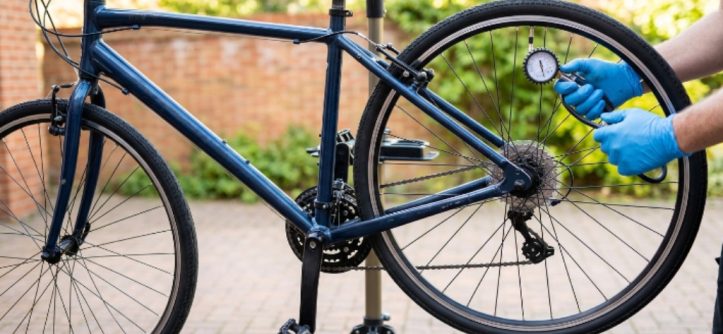
Correct tire pressure strongly affects comfort, handling, rolling resistance, and puncture protection. Always follow the pressure range printed on your tire or specified by the manufacturer.
Use a reliable floor pump with a pressure gauge for consistent inflation. Avoid guessing pressure by squeezing the tire because your hands cannot measure pressure accurately.
Inspect the tread and sidewalls during inflation. Replace tires when you find severe cuts, exposed casing, major cracking, or dangerous deformation.
Test the Brakes
Your brakes should engage smoothly without requiring excessive lever travel. If the lever touches the handlebar during normal braking, stop riding until you correct the problem.
Check the brake pads for wear and contamination. Disc brake users should keep oil and grease away from the rotor and pads.
Rim brake users should inspect the braking surface and pad alignment. If braking feels weak after adjustment, ask a qualified bicycle mechanic to inspect the system.
Keep the Chain Clean and Properly Lubricated
The chain deserves special attention because it connects pedaling effort with drivetrain movement. Dirt mixed with lubricant creates abrasive grime that can accelerate component wear.
Clean the chain when it looks dirty or feels gritty. After cleaning, dry it thoroughly before applying bicycle specific chain lubricant.
Apply Chain Lube Correctly
Place a small amount of suitable lubricant onto the chain while slowly rotating the pedals. Focus the lubricant on the moving chain links rather than flooding the entire drivetrain.
Allow the lubricant to settle briefly before wiping away excess fluid. Too much lubricant attracts dirt and creates a sticky surface across the drivetrain.
Match the lubricant to your riding conditions. Wet formulas suit frequent rain, while dry formulas usually work better in dusty conditions.
Do not treat household penetrating oils as your regular chain lubricant. Use a product designed specifically for bicycle chains and follow its application instructions.
Watch for Chain Wear
A worn chain can shift poorly and accelerate wear on expensive drivetrain components. Check chain wear periodically with a compatible chain measuring tool.
Different drivetrains use different replacement limits. For that reason, follow the specification for your particular chain and drivetrain system.
Replace the chain before excessive wear damages the cassette and chainrings. This simple habit can prevent a relatively small maintenance task from becoming a larger repair.
Clean Your Hybrid Bike Without Overdoing It
Regular cleaning removes grit, road film, sweat, and contaminants from important components. However, aggressive cleaning can push water and dirt into bearings or other sensitive areas.
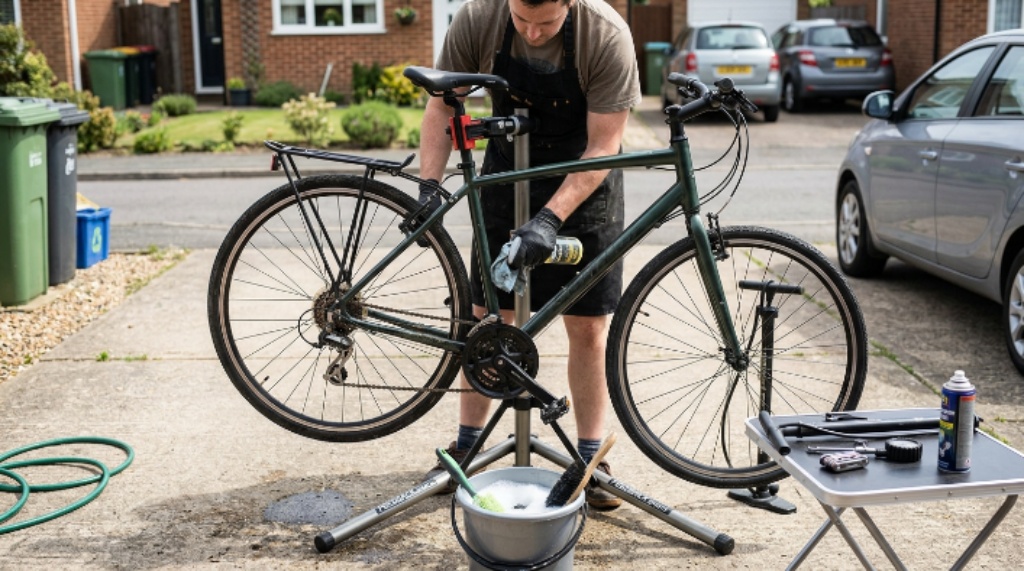
Start with a soft brush, clean water, mild bicycle cleaner, and several clean cloths. Work from cleaner areas toward dirtier areas so you do not spread grime unnecessarily.
Follow a Simple Cleaning Sequence
Use this order for routine cleaning:
- Rinse loose dirt gently with low pressure water.
- Clean the frame, fork, saddle, and handlebar with a soft brush.
- Clean the wheels and tires while checking them for damage.
- Clean the drivetrain separately with an appropriate degreasing product.
- Rinse away remaining cleaner without forcing water toward bearings.
- Dry the bike thoroughly with clean towels.
- Lubricate the chain after it becomes completely dry.
Avoid blasting the bike with a high pressure hose. Strong water pressure can drive moisture and contaminants into bearings, seals, and other moving areas.
Inspect the Gears and Shifting System
A hybrid bike should shift without loud grinding, repeated hesitation, or excessive chain noise. Poor shifting often signals dirt, cable problems, adjustment issues, or drivetrain wear.
Shift through the gears while the bike remains stationary when possible. Watch the rear derailleur and listen for hesitation as the chain moves between sprockets.
Correct Small Shifting Problems Early
Start by cleaning the drivetrain before making adjustments. Dirt can create symptoms that resemble a mechanical adjustment problem.
If shifting remains inconsistent, inspect the shift cable and housing for visible damage. Also check whether the derailleur hanger appears bent after a crash or impact.
Avoid turning adjustment screws randomly. Make small changes only when you understand their purpose or have the correct service instructions.
Inspect Wheels, Spokes, and Bearings
Your wheels carry your weight and absorb repeated impacts from roads and paths. Therefore, wheel condition deserves regular attention even when the bike rides normally.
Lift each wheel and spin it slowly. Look for severe side to side movement, rubbing, loose spokes, or unusual sounds.
Hold the rim and gently move it sideways when the wheel sits securely. Noticeable looseness can indicate bearing or axle problems that require further inspection.
Check the Headset and Bottom Bracket
The headset controls steering, while the bottom bracket supports crank movement. Problems in either area can affect control, comfort, and pedaling efficiency.
Apply the front brake and gently rock the bike forward and backward. Feel for knocking around the headset area during this test.
Rotate the crank slowly and listen for grinding or rough movement. Persistent play, grinding, or clicking deserves professional attention.
Keep Fasteners Secure
Vibration can gradually loosen certain bolts and fasteners. However, excessive tightening can damage components, especially lightweight parts.
Check the stem, handlebar, seatpost, saddle, rack mounts, and accessory bolts periodically. Use a torque wrench whenever the component manufacturer provides a specified torque value.
Never assume tighter always means safer. Correct torque protects both the fastener and the component.
Protect Your Bike From Weather and Storage Problems
Storage conditions influence maintenance just as much as riding conditions. Moisture, sunlight, temperature changes, and poor positioning can gradually damage components.
Store your hybrid bike somewhere dry and reasonably protected from direct sunlight. Avoid leaving it outdoors overnight whenever possible.
After riding through rain, wipe the bike down before storage. Pay particular attention to the chain, cassette, brake hardware, and other exposed metal surfaces.
Handle Winter Road Salt Carefully
Road salt can accelerate corrosion on exposed metal components. Riders in areas that use winter deicing products should clean their bikes more often.
Rinse contaminated areas gently and dry the bike afterward. Then inspect bolts, cables, chains, and other metal parts for early corrosion.
Do not ignore small rust spots. Early cleaning and appropriate protection can prevent corrosion from spreading into harder to service areas.
Know Which Maintenance Jobs Need a Professional
Basic maintenance works well for cleaning, inflation, lubrication, and routine inspection. More complex repairs can require specialized tools, measurements, and mechanical experience.
Seek professional help when you notice serious problems with these components:
- Hydraulic brake systems
- Damaged carbon components
- Wheel bearing systems
- Bottom brackets
- Bent derailleur hangers
- Severely damaged wheels
- Persistent brake problems
- Cracked frames or forks
A professional inspection makes particular sense after a major crash. Stop riding immediately if you find a structural crack or serious component damage.
Keep a Small Home Maintenance Kit
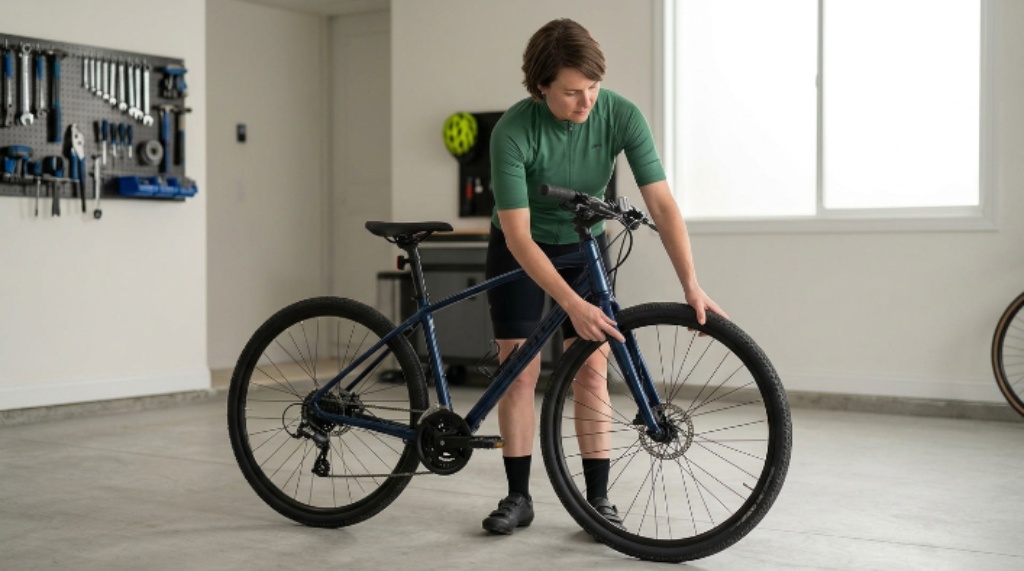
You do not need a full workshop to maintain a hybrid bike. A compact set of useful tools can handle most routine jobs.
Keep these essentials available:
- Floor pump with pressure gauge
- Tire levers
- Spare inner tube or suitable puncture repair supplies
- Bicycle specific chain lubricant
- Bicycle cleaning brush
- Clean microfiber cloths
- Mild bicycle cleaner
- Appropriate degreaser
- Hex key set
- Torque wrench
- Chain wear checker
- Portable pump or inflation device
A small saddle bag can also carry basic roadside repair supplies. This preparation helps you solve common problems without turning every minor issue into a shop visit.
Learn the Difference Between Dirt and Damage
Not every strange sound means a major mechanical failure. However, recurring symptoms deserve attention because they can reveal developing problems.
A dirty chain may create noise, while worn drivetrain parts may cause repeated skipping. Similarly, brake squeal can result from contamination, alignment, moisture, or worn components.
Keep notes when a problem appears. Record when it started, what happened before it started, and whether cleaning changed the symptom.
This simple habit helps you identify patterns over time. It also gives a bicycle mechanic useful information if you eventually need professional service.
Create a Five Minute Weekly Check
A short weekly inspection can prevent maintenance from becoming overwhelming. Set aside a few minutes after cleaning or before your weekend ride.
Use this sequence:
- Check tire pressure and inspect both sidewalls.
- Test front and rear brakes.
- Inspect the chain for dirt and lubrication.
- Check shifting across several gears.
- Spin both wheels and listen for unusual sounds.
- Check visible bolts and accessories.
- Wipe away accumulated grime.
- Record anything that needs deeper attention.
Consistency matters more than complexity. A short routine performed regularly usually works better than a long inspection performed only after something breaks.
Avoid These Common Maintenance Mistakes
Many maintenance problems come from using too much force, too much lubricant, or the wrong product. Small habits can protect components and reduce unnecessary repairs.
Avoid these common mistakes:
- Riding with visibly damaged tires
- Applying excessive chain lubricant
- Using high pressure water
- Spraying lubricant near brake surfaces
- Ignoring unusual drivetrain noises
- Tightening bolts without torque guidance
- Delaying chain wear checks
- Storing a wet bike for long periods
- Adjusting components without understanding their function
- Continuing to ride after discovering structural damage
Good maintenance combines cleaning with observation. The goal is not simply making the bike look clean, but keeping every system working predictably.
Make Maintenance Part of Your Riding Habit
The easiest maintenance routine fits naturally into your existing schedule. Check the bike before riding, wipe it after wet trips, and clean the drivetrain regularly.
Also, pay attention to changes in sound, shifting, braking, steering, and tire behavior. These signals often appear before a small maintenance issue becomes a larger repair.
Most importantly, treat safety related symptoms differently from cosmetic issues. A dirty frame can wait, but weak brakes, damaged tires, loose wheels, or structural cracks should not.
Conclusion
Maintaining a hybrid bike does not require advanced mechanical skills or hours of workshop time. Regular tire checks, brake inspections, chain care, cleaning, and fastener checks can keep everyday riding smooth.
Start with a five minute weekly routine and add deeper inspections as your mileage increases. Keep basic tools nearby, follow component instructions, and seek professional service when a repair exceeds your experience.
Your hybrid bike rewards consistent attention with better shifting, steadier handling, quieter operation, and greater reliability. Start your next ride with a quick inspection, and make bike maintenance part of the journey rather than an emergency task.
Frequently Asked Questions
How often should I maintain my hybrid bike?
Check it before every ride and perform a basic cleaning and inspection at least once each week.
How often should I lubricate a hybrid bike chain?
Lubricate the chain when it becomes dry or noisy, especially after cleaning or riding through rain.
Should I wash my hybrid bike with a hose?
Yes, but use gentle water pressure and avoid directing strong streams toward bearings or other sensitive components.
How do I know when my hybrid bike needs professional service?
Seek professional service when you notice structural damage, persistent brake problems, severe wheel movement, or difficult drivetrain issues.
Can regular maintenance improve hybrid bike performance?
Yes, regular maintenance helps the bike shift, brake, roll, and steer more consistently during everyday riding.


Leave a Reply