
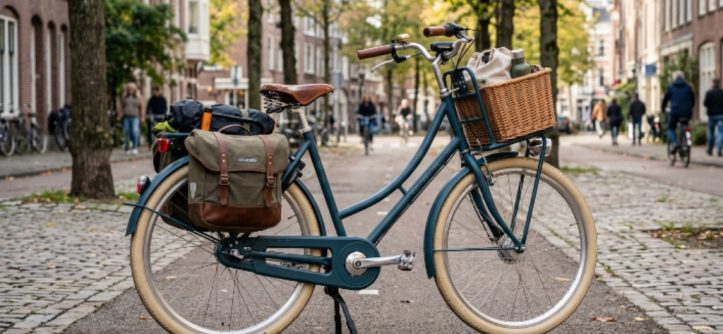
Yes, you can use a cruiser bike for commuting if you set it up for your daily route. Adjust the riding position, add practical storage, improve visibility, and plan quieter streets before your first regular trip. The right setup makes a cruiser comfortable for moderate distances without sacrificing control or convenience.
Why a Cruiser Bike Can Work for Commuting
A cruiser bike favors comfort, stability, and relaxed handling rather than aggressive speed. Its upright riding position lets you keep your back relatively straight during ordinary city rides. That posture can feel easier during short and moderate commutes.
However, comfort alone does not make a cruiser ideal for every commute. Long hills, rough roads, heavy traffic, and extended distances can expose its limitations. Therefore, match the bike to your route before committing to daily use.
Consider these factors first:
- Commute distance: Short and moderate trips generally suit cruiser bikes well.
- Road surface: Smooth pavement makes the ride more comfortable and predictable.
- Elevation: Frequent steep climbs can make a heavy cruiser tiring.
- Traffic: Quieter streets can make a relaxed bike much easier to manage.
- Storage needs: A rear rack or basket can turn the bike into practical transportation.
Start With the Right Riding Position
Your riding position affects comfort, control, and endurance throughout the commute. A cruiser should feel relaxed without forcing you to stretch or twist unnaturally.
Start by checking the saddle height. Your knee should retain a slight bend when the pedal reaches its lowest position. If your leg stays almost straight, lower the saddle slightly.
Next, check your reach toward the handlebars. You should reach them without locking your elbows or rounding your shoulders excessively. A comfortable reach helps you maintain steering control when traffic conditions change.
Adjust the Saddle for Daily Comfort
A saddle that feels comfortable during a five minute ride may feel different after thirty minutes. Therefore, test your setup on a longer practice ride before commuting regularly.
Move the saddle slightly forward or backward if your knees feel poorly positioned. Make small adjustments instead of changing several settings simultaneously. This approach helps you identify which adjustment actually improves comfort.
Also, keep the saddle level unless your body position requires a small change. An extreme tilt can create pressure points and reduce your stability.
Set the Handlebars Correctly
Cruiser handlebars usually support a relaxed, upright posture. Keep your hands in a position that allows easy braking without excessive wrist bending.
Your fingers should reach both brake levers comfortably. Practice braking with both hands before entering traffic.
If your shoulders feel tense, reassess your reach and grip. Relaxed hands usually improve steering precision and reduce fatigue.
Make Storage Part of the Bike Setup
Commuting becomes much easier when your belongings stay secure and balanced. Instead of carrying everything on your back, use the bike itself for routine cargo.
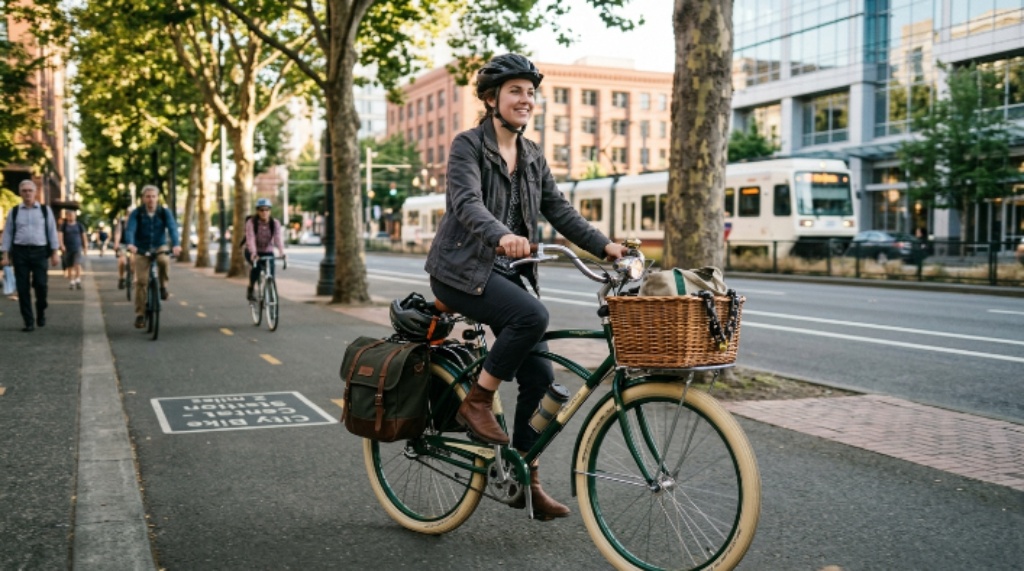
A rear rack works well for bags, groceries, work items, and lightweight packages. A front basket provides quick access to smaller items, although it can affect steering when heavily loaded.
For daily commuting, consider these storage options:
- Rear rack: Useful for panniers, bags, and heavier everyday items.
- Front basket: Convenient for lightweight items that need frequent access.
- Frame bag: Keeps small essentials close to the center of the bicycle.
- Handlebar bag: Works well for compact items such as snacks and sunglasses.
- Backpack: Useful when your destination requires you to carry items afterward.
Keep heavy items low and centered whenever possible. Uneven loads can affect steering and make the cruiser feel awkward at low speeds.
Secure every item before leaving home. Loose straps can catch wheels, pedals, or other moving components.
Protect Electronics and Work Items
Commuters often carry phones, laptops, tablets, documents, or other fragile equipment. Use padding and waterproof protection when your route includes unpredictable weather.
A waterproof bag can protect important items during sudden rain. If you use a basket, place sensitive belongings inside a secured inner bag.
Before riding, shake the loaded bike gently. If anything shifts noticeably, secure it again.
Prepare the Cruiser for Everyday Riding
A recreational cruiser may need several practical upgrades before becoming a reliable commuter. Focus on equipment that improves safety, visibility, control, and reliability.
Check these items regularly:
- Brakes: Confirm that both brakes stop the bike smoothly.
- Tires: Inflate them according to the recommended pressure.
- Chain: Keep it clean and properly lubricated.
- Lights: Use front and rear lights when visibility becomes limited.
- Bell: Use a clear warning when approaching pedestrians or other riders.
- Reflective elements: Improve your visibility during darker conditions.
- Lock: Carry a dependable lock whenever you leave the bike unattended.
Tire pressure deserves special attention because it affects comfort and rolling resistance. Underinflated tires can feel sluggish and increase the chance of pinch damage.
At the same time, avoid excessive tire pressure. Follow the pressure range printed on the tire sidewall or recommended by the manufacturer.
Wear the Right Clothing for Commuting
You do not need specialized cycling clothing for every cruiser commute. Instead, prioritize comfortable movement, visibility, and weather protection.
Choose clothing that allows unrestricted leg movement. Avoid loose pant legs that could catch the chain or crank.
During cooler weather, use layers rather than one bulky garment. You can remove a layer after your body warms during the ride.
For rainy conditions, consider these essentials:
- Waterproof outer layer: Helps keep your upper body dry.
- Water resistant pants: Protect clothing during longer rides.
- Shoe covers: Reduce discomfort from wet feet.
- Waterproof bag cover: Protects work items and electronics.
- Clear glasses: Help shield your eyes from rain and road spray.
Build a Safer Commuting Routine
Cruiser bikes encourage relaxed riding, but relaxed riding should never mean careless riding. Treat every commute as transportation rather than casual recreation.
Wear a properly fitted bicycle helmet on every ride. A helmet cannot prevent every injury, but it can reduce the risk of serious head injury.
The CDC reports nearly 1,000 bicyclist deaths and about 120,000 emergency visits annually. These figures show why routine safety habits matter even during familiar commutes.
Improve Your Visibility
Drivers need enough time to recognize your position and respond. Therefore, make yourself visible from the front, rear, and sides.
Use a white front light and a red rear light when visibility is poor. Add reflective clothing or accessories when riding around dawn, dusk, or at night.
Avoid assuming that daytime automatically means maximum visibility. Shade, rain, fog, parked vehicles, and glare can make cyclists difficult to notice.
Ride Predictably
Predictability gives other road users more information about your intentions. Maintain a steady line and avoid sudden movements whenever possible.
Signal before turning or changing position. Check behind you before moving toward another lane or avoiding an obstruction.
Also, make eye contact with drivers when practical. Never assume eye contact guarantees that a driver will yield.
Handle Intersections Carefully
Intersections deserve extra attention because several traffic movements can happen simultaneously. Slow down when visibility becomes restricted by vehicles, buildings, trees, or parked cars.
Look for turning vehicles before entering an intersection. Watch for drivers who may cross your path while focusing on another direction.
When conditions feel uncertain, slowing down gives you more time to respond. Arriving slightly later matters less than arriving safely.
Plan a Better Commuting Route
The fastest route is not always the best bicycle route. A slightly longer route can provide quieter roads, smoother pavement, fewer difficult intersections, and better bicycle infrastructure.
Before commuting regularly, compare several possible routes. Consider the entire journey rather than only the distance.
Evaluate each route for:
- Traffic volume: Lower traffic can reduce stress and improve comfort.
- Road width: Wider roads may provide more space for safe positioning.
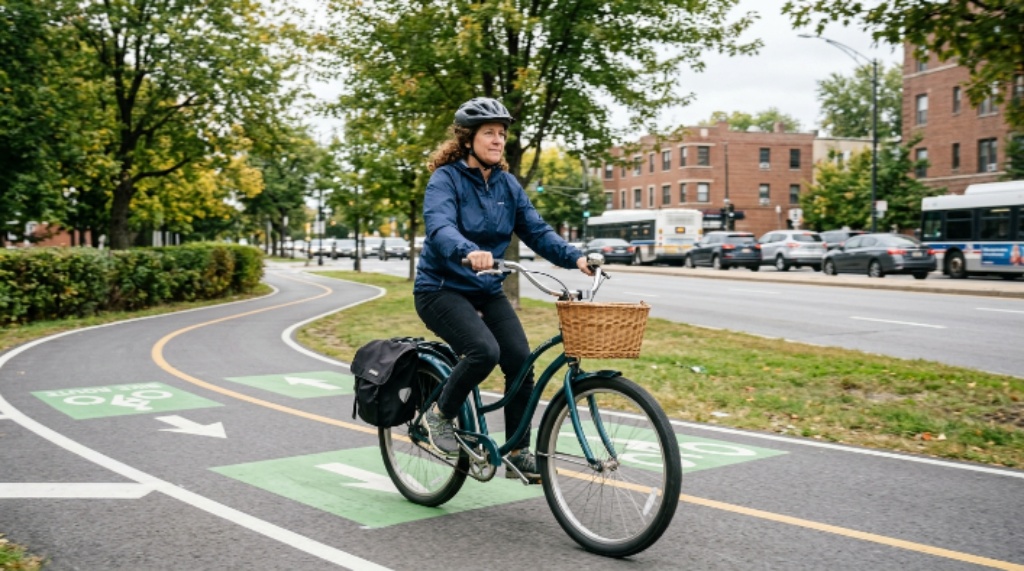
- Bicycle facilities: Bike lanes and paths can reduce interaction with motor vehicles.
- Intersections: Fewer complicated crossings can simplify the ride.
- Surface quality: Smooth pavement reduces vibration and improves control.
- Elevation: Gentle climbs can make daily riding more sustainable.
- Lighting: Well lit streets can improve visibility during darker periods.
- Services: Water, repair shops, and public facilities can provide useful backup options.
Test the Route Before Your First Workday
Do not make your first commute a route experiment. Ride the planned route during a similar time of day beforehand.
Pay attention to traffic patterns, difficult turns, road damage, construction, and parking behavior. Then adjust the route while you still have flexibility.
If the route feels stressful during practice, change it. A comfortable route usually makes regular cycling easier to maintain.
Learn How to Manage Hills
Cruiser bikes can handle hills, but their weight and relaxed geometry may make steep climbs demanding. Use your gears efficiently if your cruiser includes multiple speeds.
Shift into an easier gear before the climb becomes difficult. Maintaining a steady cadence usually works better than forcing a high gear.
Stand briefly on the pedals only when necessary. Excessive standing can waste energy and reduce traction on loose or wet surfaces.
For steep routes, consider whether another street provides a gentler incline. Route planning can save more energy than trying to overpower every hill.
Manage Weather and Seasonal Conditions
Weather can change the practical difficulty of a commute. Check conditions before leaving and prepare accordingly.
Rain can reduce traction and visibility while increasing stopping distance. Slow down, brake earlier, and avoid painted road markings when they become especially slippery.
Strong wind can also affect a cruiser because its upright position exposes more of your body. Keep both hands ready and expect sudden gusts near open areas.
During hot weather, carry water and avoid unnecessary midday exposure. During cold weather, protect your hands, ears, and exposed skin.
Lock the Bike Correctly at Your Destination
A good commute can become a bad experience if the bike disappears afterward. Use a strong lock and secure the frame to a fixed object.
Position the lock through the frame rather than relying only on a wheel. If possible, secure the frame and one wheel together.
Choose a visible, well used location for parking. Avoid isolated areas where someone can work on the lock without attracting attention.
Also, remove lights, bags, computers, and other easily detachable accessories. Keeping valuable accessories with you reduces theft opportunities.
Build a Simple Pre Ride Checklist
A short checklist can prevent many avoidable problems. Use the same routine before every important commute.
Check the following:
- Tires: Confirm they feel properly inflated.
- Brakes: Test both levers before entering traffic.
- Chain: Look for obvious dryness, damage, or unusual noise.
- Cargo: Confirm every bag or basket item stays secure.
- Lights: Make sure front and rear lights work.
- Helmet: Check the fit and buckle before departure.
- Lock: Confirm that you packed it.
- Route: Check road conditions and major disruptions.
This routine takes only a few minutes. More importantly, it creates consistency that can prevent small problems from becoming roadside emergencies.
Make Comfort Sustainable Over Longer Commutes
Comfort depends on more than the saddle and handlebars. Your riding habits also determine how your body feels after repeated commuting.
Start with shorter rides if you are new to daily cycling. Gradually increase distance as your legs and posture adapt.
Change hand positions occasionally when your handlebars allow it. Relax your shoulders and avoid gripping the bars harder than necessary.
Take brief breaks during unusually long rides. Drink water before significant thirst develops, especially during warm weather.
If persistent pain develops, stop and reassess the setup. Pain that repeatedly returns can indicate an incorrect fit or unsuitable equipment.
When a Cruiser Bike May Not Suit Your Commute
A cruiser bike can serve many commuters well, but every route has different demands. Consider another bicycle style when your commute requires sustained speed or frequent climbing.
A hybrid bike may suit longer mixed surface routes. A road oriented bicycle may better support faster pavement travel.
An electric bicycle can reduce the effort required for longer distances or significant hills. However, the best option remains the one that fits your route, comfort needs, storage requirements, and riding habits.
Do not force a cruiser into a commute that consistently feels exhausting. A practical bicycle should make transportation easier, not create another daily burden.
A Practical Cruiser Commuting Formula
The most reliable approach combines four elements: comfort, control, storage, and planning. Each one supports the others during a real commute.
Use this simple formula:
- Comfort: Adjust the saddle and handlebars for relaxed control.
- Storage: Carry belongings securely without overloading the bike.
- Safety: Use protective equipment, lights, predictable riding, and careful intersections.
- Planning: Select routes based on safety, surface quality, traffic, and elevation.
When these elements work together, a cruiser becomes much more than a leisure bicycle. It becomes a practical transportation tool for everyday trips.
Final Thoughts
Learning how to use a cruiser bike for commuting starts with realistic route planning and proper setup. Improve your riding position, distribute cargo carefully, maintain the bike, and build consistent safety habits. Then test your route before making it part of your daily routine.
Start with one manageable commute this week and evaluate the experience afterward. Adjust the bike, storage, clothing, or route until the ride feels comfortable, controlled, and repeatable.
Frequently Asked Questions
Is a cruiser bike good for commuting?
Yes, a cruiser works well for short and moderate commutes on relatively smooth routes.
Can I ride a cruiser bike long distances?
You can ride longer distances, but weight, gearing, posture, and terrain may increase fatigue.
What should I carry on a cruiser bike commute?
Carry essentials such as water, identification, repair supplies, work items, and a secure bike lock.
How can I make my cruiser bike safer?
Use a properly fitted helmet, working lights, reflective accessories, reliable brakes, and predictable riding habits.
Should I use a bike lane with a cruiser bike?
Yes, when available and appropriate, a suitable bike lane can provide more separation from motor traffic.



Leave a Reply